



The Great Pretender







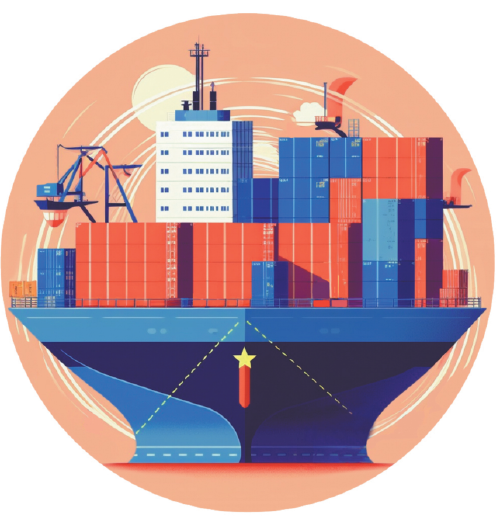
The IPEF is not a regional trade pact but a tool of the US aimed at excluding China from the global supply chains
Stable global supply chains rest on free and open access at all levels of the trade relationship. Physical barriers are the most obvious impediments, but tariffs, incompatible data exchange, protectionist policies and politically motivated unilateral sanctions are also threats to supply chain stability and reliability.
The attempted de-globalization of trade with its "near-shoring" and "friend — shoring" is all about reducing trade with China and boosting the economy of the United States. The latest "Indo-Pacific Economic Framework for Prosperity" meeting seeks to "revitalize US manufacturing, facilitating the steady supply of the materials, components, and inputs that US companies rely on to compete effectively on the world stage".
Despite the latest "improvement "of the IPEF, the agreement continues in its attempts to exclude, isolate and counter China in its role of maintaining global supply chains.
When global trade was widely impacted by the COVID-19 pandemic, the world realized just how reliant they had become on some supply chains that were located in China. It sparked a quest to diversify supply chains away from China. But diversification did not mean the exclusion of China from supply chains.
However, in Washington this "diversification" became a political move as it has been transformed into "on-shoring" with preferential treatment and tariff barriers used to protect uncompetitive domestic industries by substituting China products with expensive replacements. This policy's role in sparking inflation is yet to be fully examined.
As a convenient collateral impact, the policy also served to advance the anti-China agenda which lies at the heart of the IPEF. Former Malaysian prime minister Mahathir Mohamad quickly recognized this, criticizing the IPEF as an initiative intended to isolate China, saying "many countries recognize that this is not an economic grouping but it is truly a political grouping".
The need to diversify supply chains morphed into a broader China-threat narrative. The concept of supply chain risk persisted because Washington then claimed that China was a "threat" to a free and open "Indo-Pacific". The assertion makes no sense as China's own diversified trade depends on free and open trade routes in the "Indo-Pacific".
Actually, the IPEF is not a bilateral agreement, nor is it a true multilateral agreement. It might best be called a mini-lateral agreement. Membership offers no significant trade or tariff concessions. The IPEF amounts to an "all-pain, no gain economic deal" for Southeast Asian countries. The pain comes from the deliberate exclusion of China and the development of "new rules" that are clearly designed to make it more difficult to conduct trade with China. It's a no gain deal because the IPEF does not offer increased access to US markets.
Initiated by the US, the IPEF has selected like-minded countries as members. It was supposed to greatly enhance supply chain resiliency and security. Diversifying supply chains makes sense for any economy, but it's another step altogether to change from hedging against risks to militarizing the need for diversification.
The IPEF has always at heart been a blueprint for the US economic engagement in the region. One of four pillars of the IPEF, the supply chain pillar, became a stalking horse for the imposition of standards for the digital economy that excluded China.
Launching the IPEF, President Joe Biden said the US would decide the "rules of the road" for "Indo-Pacific" economic activities. Ignorant of, or perhaps frightened of, the advanced development of the digital economy in China, it was believed by the US side that it enjoyed a first-mover advantage through its involvement in key trade deals with digital components. However, without the incentive of increased market access, the IPEF members, particularly those that are not parties to the Comprehensive and Progressive Agreement for Trans-Pacific Partnership, are unwilling to offer more concessions on digital trade rules. In contrast, the Regional Comprehensive Economic Partnership, which includes China among its members, will assume a more proper role in developing key digital agreements and standards.
If the IPEF continues to exclude China, it will undermine the effectiveness and relevance of its policy decisions. It can make no claim to contribute to an inclusive global rules-based order.
The Belt and Road Initiative and the Global Development Initiative contribute to the stability of global supply chains because they are inclusive programs that do not rest on trade barriers, tariffs, protectionism and the exclusion of some countries from membership. Besides, the supply chain efficiency is being improved with China's use of block chain certified documentation for cross-border transactions and movements. China's initiatives and actions in maintaining global supply chains contribute to global economic prosperity in a way that the IPEF cannot.
The author is an international financial technical analyst and a former national board member of the Australia China Business Council. The author contributed this article to China Watch, a think tank powered by China Daily. The views do not necessarily reflect those of China Daily.
Contact the editor at editor@chinawatch.cn.





