



ROK must avoid US trap to improve ties with China







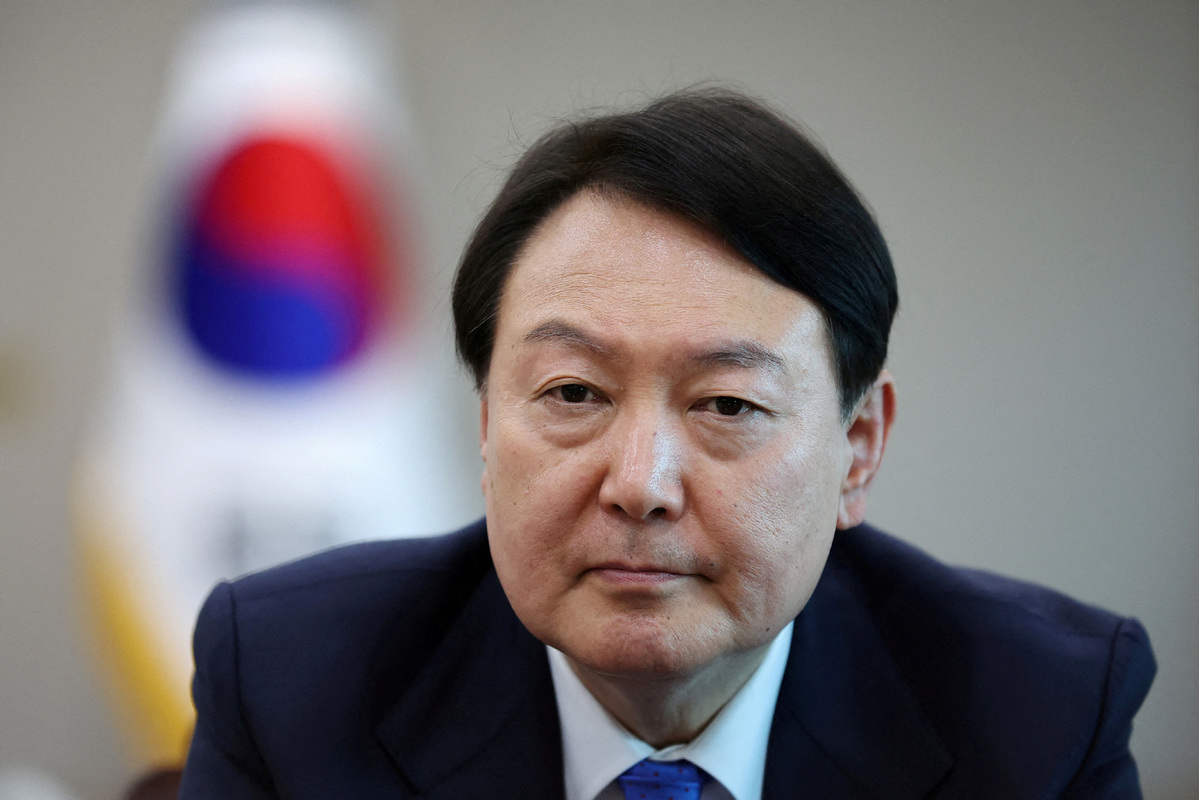
The relationship between China and the Republic of Korea turned turbulent when ROK President Yoon Suk-yeol criticized China's domestic policies during his visit to the United States in late April. What made matters worse is the White House statement that Washington is committed to enhancing the deployment of US strategic assets in and around the Korean Peninsula, in particular US nuclear-capable platforms.
Further, during US President Joe Biden's visit to the ROK in May, the two sides agreed to upgrade their bilateral ties to a "global comprehensive strategic alliance "not only to counter the growing threat posed by the Democratic People's Republic of Korea, but perhaps also to contain China.
Friendly ties and cooperation have marked China-ROK relations over the past 30 years, with the most important lesson for the two countries being respecting each other's core interests and concerns, and maintaining regular communication to promote economic cooperation.
True, China-ROK relations have not been wholly smooth when seen in the context of the deadlock between the DPRK and the ROK. But the US, as a backstage influencer in the Asia-Pacific region, has been trying to muddy the historical issues China and the ROK have with Japan. The US is also responsible for the deteriorating Sino-US ties.
It seems the ROK has now adopted a tactic to maximize benefits by maintaining a delicate balance between strong economic ties with China and security dependence on the US. Since taking office one year ago, Yoon has been trying to "upgrade the US-ROK alliance", which the two sides ultimately agreed to during Biden's visit to the ROK. This has not only impacted China-ROK relations but also increased tensions on the Korean Peninsula and in Northeast Asia.
Disputes between China and the ROK that were confined to the political domain have now extended to economic and cultural fields, raising worries about China-ROK ties spiraling downward. But in the national interests of the two sides and for long-term regional security, Beijing and Seoul should take measures to halt the deterioration in bilateral relations.
First, China and the ROK should keep making efforts to promote mutual respect and trust, maintain peace in the region, and pursue win-win cooperation, the important factors they highlighted when establishing diplomatic ties in 1992. The two neighbors have common interests in facilitating regional development and contributing to regional peace and security.
Second, the ROK has the right to deepen relations with other countries but not at the expense of harming the interests of any third party or disturbing regional peace and stability. Yoon tried so hard to please Washington during his visit to the US that he said the Taiwan question "is not simply an issue of China but a global issue", which is a direct interference in China's internal affairs and a breach of the one-China principle, the political foundation of China-ROK ties.
In addition, the Yoon administration arranged for active interactions with Japan despite their deep-rooted historical problems, which many ROK nationals criticized as giving in to Japan's ploy to avoid facing its militarist past and surrendering to the wishes of the US. This US-centric diplomacy of the ROK has disturbed the traditional balance among China, the US, Japan and Russia in the region, shrinking the space for diplomatic maneuverings.
Third, sacrificing its win-win economic relations with China for the faux security guaranteed by the US is not in the interest of the ROK. Economic cooperation outweighs competition between China and the ROK, and that's why the US is desperately trying to prevent the ROK and Japan from strengthening their cooperation with China. If the ROK wants to enhance its international status, it should seek to resolve contentious issues with the help of other parties, instead of taking sides.
As an export-oriented economy with a saturating market, the ROK has to look for new growth points. More important, the ROK needs external mediation to help reduce the nuclear risks on the Korean Peninsula. And China can play a key role in this context.
And fourth, it is in the common interest of Beijing and Seoul to develop stable bilateral relations. China attaches great importance to its relations with the ROK and remains committed to maintaining friendly bilateral ties. To achieve that, China adheres to the philosophy of harmony in diversity and resolving disputes through dialogue.
Also, Seoul should realize that Beijing is a stakeholder in the Korean Peninsula denuclearization issue. But despite having a stable relationship with the DPRK, China has no intention of meddling in inter-Korean issues beyond the basic security requirements. China does not want inter-Korean relations to harm China's security interests either.
The Yoon administration should give its US-centric diplomacy a serious rethink, because it is essential for China and the ROK to respect each other's interests, avoid misunderstandings and miscalculations, and improve cooperation. However, in spite of China-ROK ties fluctuating in the short term, cooperation remains an irreversible trend in the long run.
The author is a professor of international relations at Yanbian University.
The views don't necessarily represent those of China Daily.
If you have a specific expertise and would like to contribute to China Daily, please contact us at opinion@chinadaily.com.cn, and comment@chinadaily.com.cn.





