Surveillance still a concern 10 years after Snowden leaks







Mass surveillance
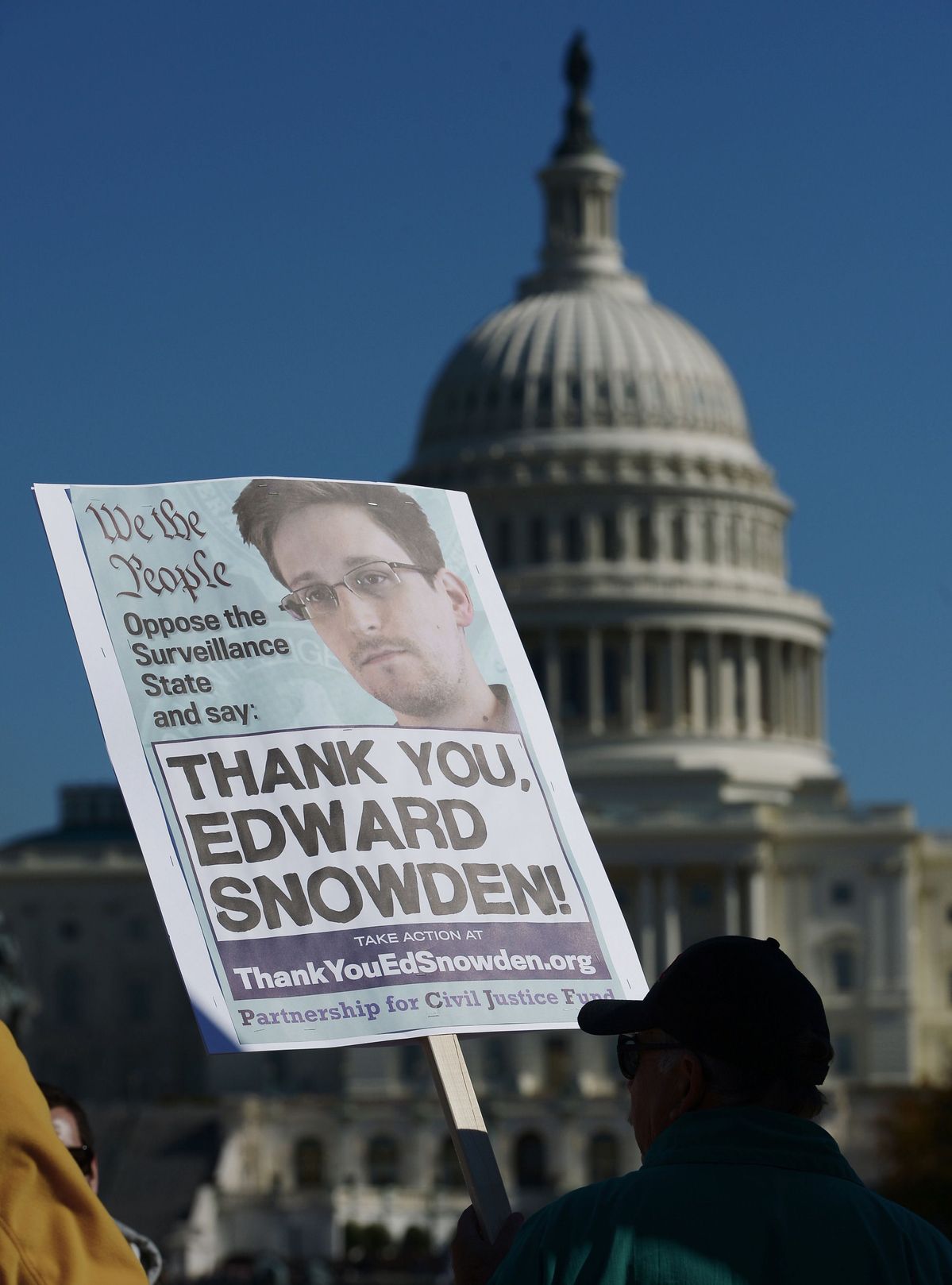
Snowden's leaks revealed numerous global surveillance programs previously unknown to the US public. The programs involved collecting private citizens' emails, search history, phone records and file transfers without their knowledge or court orders. He also exposed the NSA harvesting data from big internet companies, including Google, Facebook and Microsoft.
After fleeing to Hong Kong, Snowden told the media the NSA had led more than 61,000 hacking operations worldwide, including many in China. "We hack network backbones — like huge internet routers, basically — that give us access to the communications of hundreds of thousands of computers without having to hack every single one," he said.
Germany's Der Spiegel magazine reported that the NSA also spied on European Union offices in the US and Europe and ran a continent-wide surveillance program in South America. It also spied on the presidents of Brazil and Mexico.
An analysis by The Washington Post of the Snowden leaks found some 90 percent of those being monitored were ordinary US citizens "caught in a net the National Security Agency had cast for somebody else".
The Snowden revelations named two of the key types of surveillance the NSA conducts — Prism and Upstream.
Through the Prism program, the agency collects internet communications from various US internet companies. The information includes email communication, voice calls, SMS, social media communications, metadata, video calls and search preference.
The Upstream program aims to intercept telephone and internet traffic from the internet backbone — major internet cables and switches, domestic and foreign.
Seven years after Snowden blew the whistle on the mass surveillance programs, the Prism program was ruled unlawful by a US court in 2020.
The US Court of Appeals for the Ninth Circuit said the warrantless telephone dragnet that secretly collected millions of citizens' telephone records violated the Foreign Intelligence Surveillance Act, and that the US intelligence leaders who publicly defended it were not telling the truth.
Although there are legal cases pending against the US government, Prism and Upstream are still in operation under the auspices of Section 702 of the Foreign Intelligence Surveillance Act, which Snowden called out in 2013 for its abuse in spying on US citizens.
Section 702 is a law that allows the government to collect — on domestic soil and without a warrant — the communications of foreign targets who are not protected by the Fourth Amendment, including when those people are interacting with US citizens.
Under that law, the NSA can order companies such as Google to turn over copies of all messages in the accounts of any foreign user and network operators like AT&T to intercept and furnish copies of any phone calls, texts and internet communications to or from a foreign target.
Critics of the law are worried that it also gathers data about US citizens, for instance, when they communicate with people overseas.
The newly unsealed Foreign Intelligence Surveillance Court opinion shows that the Federal Bureau of Investigation, or FBI, has continued to abuse its access to information collected under Section 702, including by searching for activist groups and political campaign donors.
The court document also reveals that the FBI used the warrantless foreign intelligence surveillance authority improperly more than 278,000 times in 2021. US citizens involved in the improper searches include people suspected of taking part in the Jan 6, 2021, attack on the US Capitol and those in the George Floyd protests against police brutality and racism in 2020.
The recent revelation of the FBI's search for those rioters and protesters in the spy database has set back the administration of President Joe Biden's effort to renew Section 702, which was last renewed in 2018 and will expire this year.
The Biden administration has been lobbying Congress for months to renew Section 702 without any changes, saying it is a critical tool for counterterrorism operations, cybersecurity and understanding rivals such as China.
To stop mass surveillance, advocates are calling on Congress to end Section 702 in the autumn so that the Prism and Upstream programs will end along with it.
In an article reflecting on the 10th anniversary of the Snowden revelations, security expert Bruce Schneier said the US government did not play its part in addressing the privacy concerns.
"Despite the public outcry, investigations by Congress, pronouncements by President Obama, and federal court rulings, I don't think much has changed," Schneier, adjunct lecturer in public policy at Harvard Kennedy School, wrote in the article for the Internet Engineering Task Force.
"The NSA canceled a program here and a program there, and it is now more public about defense. But I don't think it is any less aggressive about either bulk or targeted surveillance. Certainly its government authorities haven't been restricted in any way. And surveillance capitalism is still the business model of the internet," he said.