Experts' take on G7 summit







Editor's note: The G7 hardly ever mentions the UN Charter, instead, it keeps talking about "democracy" and the so-called rules-based international order. However, when the G7 countries talk about international rules, they mean the rules set by the West that draw lines based on the ideology and values of a small circle and could escalate regional confrontations. Three experts share their views on the issue with China Daily.
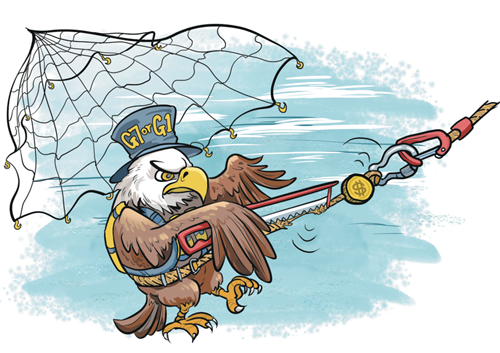
US tech decoupling self-destructive
Dan Steinbock
US President Joe Biden's expanded technology war is bad news to American business, financial giants, high-tech industries and consumers. Over time, it will penalize Asia's economic recovery and global economic prospects.
Under pressure to clarify its economic and security policies toward China, the Biden administration recently dispatched two top emissaries to "explain "that the United States does not seek to "decouple" from China (which it effectively seems to be doing).
Both US Treasury Secretary Janet Yellen and National Security Advisor Jake Sullivan left unanswered the question of how Washington plans to curb tech transfers to and investments in China. That fostered perception that the new US measures could harm investors and disrupt the world's trading system. The US is risking a misguided tech war.
Over the past few years, US Congress has strengthened the Committee on Foreign Investment in the United States, while using its authority to scrutinize some of the US enterprises' overseas investments. In 2018, Congress also overhauled the systems screening investments into the US and imposing controls on the exports of goods and technology. Last October, the Biden administration announced sweeping and highly controversial restrictions on the exports of sensitive technologies to China with the aim of undermining the country's ability to buy advanced chips and chip-making equipment.
Also, the administration has built "guardrails" into the CHIPS and Science Act by limiting the investments recipients of subsidies can make in China. Besides, financial sanctions have been added to the Treasury's "specially designated nationals" list.
Hence, to argue, as Yellen and Sullivan did, that the administration will only impose "narrow" investment restrictions, is self-illusionary. After all, the measures have both broad and untargeted negative implications, especially at a time when the US economy is teetering at the edge of recession, and facing a spreading banking crisis and rising debt default risk.
In addition to the proposed ban on foreign investment by US companies in Chinese tech companies, the administration now wants to restrict the number and kinds of technologies that can be sold to China. With their initial focus on high-end semiconductors, the guidelines may extend to artificial intelligence, quantum computing, electric vehicles and rare earth metals; in brief, the perceived emerging industries of the future.
Ironically, both the White House and a bipartisan group in Congress have had a hard time reaching a consensus on restriction on outward investment. Seeking competitive leverage as always, US businesses and financial giants still want to work with China, while ordinary Americans, any day, prefer cheap, affordable prices. Yet the Biden administration, Capitol Hill and the Pentagon have different goals.
As US think tanks have projected, Biden's executive order targeting China will have far-reaching impacts on investments in publicly-listed Chinese enterprises by individuals and companies, investments in startups by venture capital and private equity funds, investments by US companies, typically in research and development or production facilities in China, and the activities of US companies' subsidiaries and foreign enterprises' US subsidiaries.
Despite the administration's efforts to multilateralize these misguided policies, the US will likely be alone in having to walk the talk. Although the European Union has signaled rhetorical interest in an outbound regime, it is unlikely to turn its willingness into action in the near term. And Japan and the Republic of Korea do have outbound investment review regimes, but both are narrowly targeted.
If that's the case, why is the Biden administration in such a hurry? Two weeks after Biden announced his re-election campaign, his approval ratings sank to a record low of 36 percent. As the administration failed to reset its ties with China, opted to expand the trade war into a tech war, issued contested economic policies and engaged in a controversial proxy war in Ukraine, Biden's ratings began to plunge.
And with fiscal policy feeding into runaway inflation, the intensifying banking crisis and another debt-limit debacle, this trend is not likely to change anytime soon.
Whatever meager security benefit the Biden administration hopes to gain from withholding US investment and international recognition from Chinese high-tech companies may be offset by the huge collateral damage these new restrictions are likely to cause.
Over time, the restrictions may virtually ensure that Americans will not learn from Chinese tech companies, many of which are already at or close to the top in their fields in science and technology.
In early 2021, former World Trade Organization economist Anne Krueger said that previous US president Donald Trump's modus operandi was to bully Beijing "on trade, foreign investment, cyberspace, e-commerce, intellectual property, the South China Sea, Taiwan, and other issues". She proposed a thorough reset in the US-China trade ties.
If Trump's bombastic, go-it-alone approach was fundamentally flawed, Biden's tech restrictions will penalize US businesses, investors and consumers, and derail global recovery, while causing massive losses in missed opportunities. It is the wrong thing to do at the wrong time.