All you need to know about Qinqiang Opera








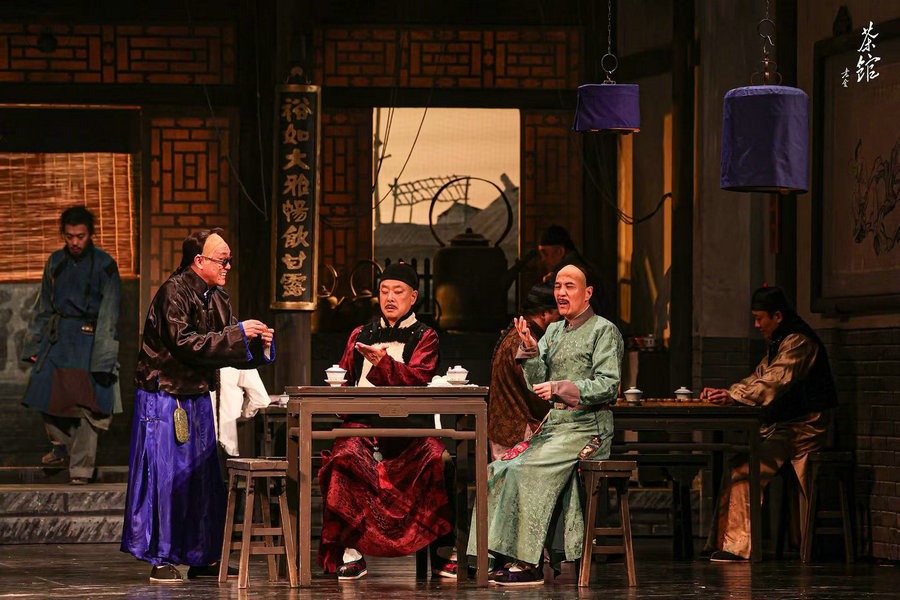
Qinqiang Opera is a local Chinese opera that mainly thrives in north China's Shaanxi Province, as well as its neighboring regions in Northwest China, like Gansu and Qinghai provinces and the Ningxia Hui and Xinjiang Uygur autonomous regions. It boasts the most ancient, affluent and largest musical system of all Chinese operas. It was added to China's list of intangible heritage items in 2006.
The opera first originated from local folk songs and dance forms in the Yellow River Valley of Shaanxi and Gansu provinces - the birthplaces of Chinese culture. According to historical records, the opera first appeared in the Qin Dynasty (221-206BC), experienced great refinement in the Han Dynasty (206 BC-220 AD), flourished in the Tang (618-907), was formally integrated as an opera form in the Yuan Dynasty (1271-1368), matured in the Ming Dynasty (1368-1644) and became widespread in the Qing Dynasty (1644-1911). Its time-honored history has endowed Qinqiang with a reputation as the forefather of Chinese operas.
Its repertoires usually feature such themes as anti-aggression wars, the fight between the loyal and the treacherous and the struggles against oppression, as well as a number of other topics of strong human interest that reflect the honest, diligent, brave and upright characteristics of the local people.
Qinqiang is also one of the earliest operatic musical systems to reflect the emotions of human beings. Equipped with a set of performing skills created by the artists, Qinqiang has greatly influenced other operatic forms. During the Qing Dynasty, Qinqiang Opera entered Beijing and directly affected the formation of Peking Opera. Qinqiang Opera thrived during the reign of Emperor Qianlong (1736-1795) when Qinqiang troupes were disseminated throughout the country.
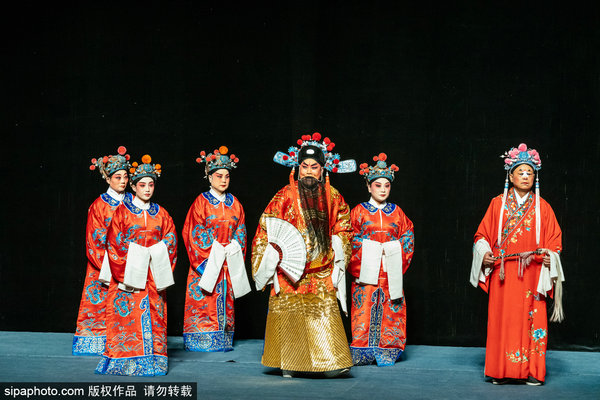
There are generally two kinds of arias in Qinqiang Opera: huan yin (joyous tune) and ku yin (sad tune). Each type is used in accordance with the plots and figures. The major accompanying instrument used is the banhu (a stringed instrument), featuring a clear and melodious sound.
Qinqiang performances are characterized by a simple, bold, exquisite and penetrating, yet exaggerated style. The roles are categorized into 13 types, namely, four types of sheng (male roles in traditional Chinese opera), six types of dan (female characters), two types of jing (painted-face characters), and one type of chou (clown).
The different dialects of various areas and types of folk music have contributed to slight differences in the opera itself in terms of pronunciation, aria, music, and so on, forming four major genres. In recent years, the major genre in and around Xi'an has played a dominant role in innovating and developing the art form.
Qinqiang Opera songs are sonorous, bold, and touching; its music is colorful and elegant; and its performances on the whole are plain, exquisite and lively. Furthermore, it boasts such unique performing skills as spitting fire and hat dances by the performers.
Nowadays, cultural specialists are working hard to preserve the art form.
The first Qinqiang Opera Festival was held in Xi'an in 2000, and it has been held nine times so far.
The Museum of Qinqiang Opera in Shaanxi Province officially opened in Xian Jiaotong University on Sept 26, 2009. More than 500 exhibits displayed in the museum introduce Qinqiang Opera in 13 sections, including an overview and performances.