Cutting-edge technologies central to Chinese modernization







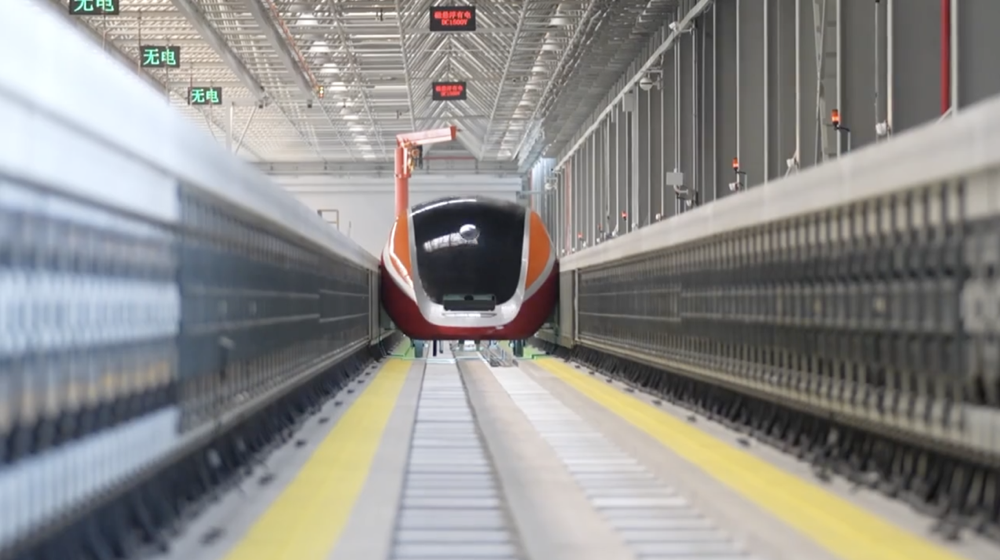
In the latter part of April 2023, a scientific research team in China successfully completed the country's first full-size superconducting test run for an ultra-high-speed magnetic levitation (maglev) train. Combining maglev technology with low vacuum technology, the train, which will become the fastest means of on-ground transport once completed, will be capable of running up to 1,000 kilometers per hour. Home to by far the world's largest high-speed railroads network – with 155,000 km of railways in operation, including 42,000 km of high-speed lines as of the end of 2022, the addition of ultra-high speed magnetic trains to China's rail network, will further truncate travel time for people and cargo – improve economic efficiency and significantly reduce greenhouse gas emissions – promoting the harmonious coexistence of people and nature, the bedrock of Chinese modernization.
In the country's pursuit of modernization, thus, Chinese modernization, a unique development pathway for more than 1.4 billion people – prioritizing common prosperity for all and promoting peaceful coexistence of mankind and the natural environment, China has increasingly leveraged cutting-edge technologies, including high-speed railroads and the internet of things to drive development – these tools were central to concerted efforts dedicated to achieve the first centenary goal – they ensured that the country's development improved the lives of its people. By the end of 2020 exactly 10 years since China became the world's second-largest economy, the Asian giant succeeded in using its rapid economic growth to eradicate extreme poverty, first time in its history – China's economic rise has lifted nearly 800 million people from poverty and improved living standards of its people. Surprisingly, this outstanding achievement, which is also the first in human history, was realized 10 years ahead of the poverty eradication target set out by 2030 Agenda for Sustainable Development – a remarkable achievement, driven partly by cutting-edge technological solutions.
From widespread adoption of internet of things, high-speed railroad network, machine learning, drones, electric batteries, photovoltaics and several other technologies dominated by China, these cutting-edge technologies, have increasingly accelerated the country's social, economic and environmental progress – fostering efficiency and improving productivity in various sectors including transportation, agriculture, healthcare, ICT and energy – mitigating inequality, promoting inclusive growth and protecting biodiversity. All of which contributed significantly in building a moderately prosperous society by 2021 – successfully achieving the first centenary goal. To build on this development, China, under the strong leadership of the CPC has embarked on a new journey, the second centenary goal – once again, leveraging cutting-edge technologies to build China into a great modern socialist country in all respects and to advance its rejuvenation on all fronts by 2049.
One of the key areas, presently driving China's development to this goal is the mobile industry. As the world's largest 5G market, accounting for more than 60 percent of global 5G connections by the end of 2022 (exceeding 2.3 million 5G base stations), China's mobile industry has yielded colossal social, economic and environmental gains – increasingly integrating communities across the length and breadth of the country – linking production and consumption across rural and urban areas – a profound transformative change, that fosters rural revitalization and concurrently spurs development in urban settlements – further driving Chinese modernization, with greater impact expected in the coming years. By the end of 2022, almost 1.3 billion people in China subscribed to a mobile service. In that year, mobile technologies and services contributed $1.1 trillion of economic value to the Chinese economy, accounting for 5.5 percent of GDP.
With China projected by the latest GSMA report (2023) to be the first market to reach 1 billion 5G connections by 2025, accounting for almost a third of the global total connections by 2030, the rapid mobile connectivity, which ultimately will underpin future mobile innovation and services – building on the current deployment and adoption will most likely, further boost the country's social, environmental and economic development. At present, China's increased mobile connectivity has a tremendous impact on the Sustainable Development Goals. Recent analysis shows that in spite of daunting challenges posed by COVID-19, SDG 6 (clean water and sanitation) and SDG 9 (industry, innovation and infrastructure) scored the highest in 2021, mainly attributed to rapid mobile internet adoption and rising-use of mobile-enabled services.
In the case of SDG 6, widespread adoption of mobile technologies such as the internet of things and artificial intelligence have enhanced capacities of communication and payment channels that provide water and sanitation services. With just a smartphone, people in urban and rural areas in China are able to directly access utilities and other public services including education and healthcare – in fact, the mobile industry increasingly facilitates logistics for SDGs. For SDG 9 in China, one of the two SDGs with the highest scores in recent years, the mobile industry has been a pillar in the building of resilient infrastructure, promoting innovation, inclusive and sustainable industrialization. For example, China Mobile, which has established 1.28 million 5G base stations, provides digital services to more than 20 million small and medium-sized enterprises and information technology products. In 2022 China Mobile assisted 5 million SMEs to transition to digital operation in China – enabling these enterprises to access new and larger markets, bolster innovation and productivity and foster inclusive growth.
So far, China's increased mobile connectivity has had a tremendous positive impact on SDGs but there is still room for improvement. To accelerate China's development to meet the second centenary goal by 2049, it is incumbent on policymakers to implement germane policies to advance innovative and new technologies in key sectors such as energy, agriculture, healthcare and transportation to complement efforts from the mobile industry. For example, plans to adjust about 20 percent of university majors in China by 2025 – introducing majors focusing on cutting-edge technologies and new industries and dropping majors unfit for socio-economic development is a step in the right direction. Such actions will make available adequate human capital needed to create innovative and cutting-edge technologies to further drive Chinese modernization.
Alexander Ayertey Odonkor is a global economist with keen interest in the social, environmental and economic landscape of both developing and developed countries, particularly in Asia, Africa and Europe.
The opinions expressed here are those of the writer and do not necessarily represent the views of China Daily and China Daily website.
If you have a specific expertise and would like to contribute to China Daily, please contact us at opinion@chinadaily.com.cn, and comment@chinadaily.com.cn.