Unified registry paves way for property tax, though not imminent







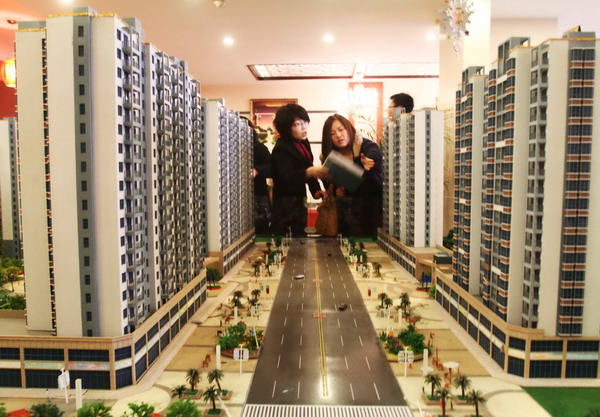
The new unified property registration system implemented across China is expected to enhance the nation's real estate transaction efficiency, better protect the legal rights of property owners and lay the foundation for property tax collection in the future, industrial experts said on Wednesday.
They noted that the tax regime is not imminent, given that the property market is still in the process of a gradual recovery.
After a decade of efforts, the country has established a unified registration system that covers all types of immovable property rights, Minister of Natural Resources Wang Guanghua was quoted as saying by Xinhua News Agency on Tuesday. Wang made the remark at a national work conference on natural resources and immovable property registration.
In March 2013, China decided to set up an agency for the unified registration of immovables and to integrate related responsibilities assigned to multiple departments. It proposed to unify registration administration, documents, and certificates, as well as the information platforms.
Over the past decade, China issued more than 790 million immovable property rights certificates and 360 million registration documents. The nation also slashed the time required to make regular or collateral registrations to no more than five days, according to official data.
China's property registration, perfected over the years, has lent better protection to property rights and enabled safer transactions, forming a stronger foundation for the socialist market economy regarding property rights, Wang said.
"The greatest significance of building a national and unified system for real estate registration is providing the basis of modern public finance and laying the foundation for future taxation system reform," said Li Yujia, chief researcher at the Guangdong Planning Institute's residential policy research center.
According to Li, the key objectives of implementing a unified property registration system are fulfilling the clauses of the nation's property law, ensuring the security of property transactions and protecting the lawful rights of property owners.
The Property Law, which came into effect in 2007, stipulates that "the State practices a unified system of registration with respect to immovable property".
"By integrating the fragmented information on property, policymakers and executors are offered the basic data for improving governance efficiency and standard," Li said.
Chen Wenjing, director of research with the China Index Academy, said the unified registration system lays a solid foundation for raising property taxes, but the imposition of a tax regime may not be immediate.
Data from the National Bureau of Statistics shows that property sales are gaining traction in the first quarter of 2023, but indexes including property development investment and new property construction remain feeble. These indicate that the real estate sector has yet to become a driver for the macroeconomy, Chen explained.
In April, the new home market dynamics remained insufficient. For example, in the 50 key cities that China Index Academy monitors, the weekly transaction volume of new homes saw a 20 percent decline compared with March, resulting in calls for further efforts to stabilize market expectations and boost policy support.
"All the above-mentioned factors suggest that the time is not ripe for launching a property tax trial," Chen added.
The building of a unified registration system is a milestone for the property sector, which indicates that the macro control measures in the real estate industry have shifted from focusing on the transaction process to ownership, said Zhang Dawei, chief analyst at Centaline Property Agency.
Although all the technical conditions for launching property taxes have been met, the chances of rolling out the tax regime in the short term are slim. "We are just one step closer," Zhang said.
Xinhua contributed to this story.






- China, Algeria expand space cooperation with new satellite launch
- Cross-Strait Chinese New Year bazaar unites cultures in Fuzhou
- Emergency Management Minister Wang Xiangxi under investigation
- Overseas-Chinese group tours Xinjiang as special guests
- China launches satellite for Algeria
- Capital accelerates humanoid robot mass production