Nanjing riverine revival







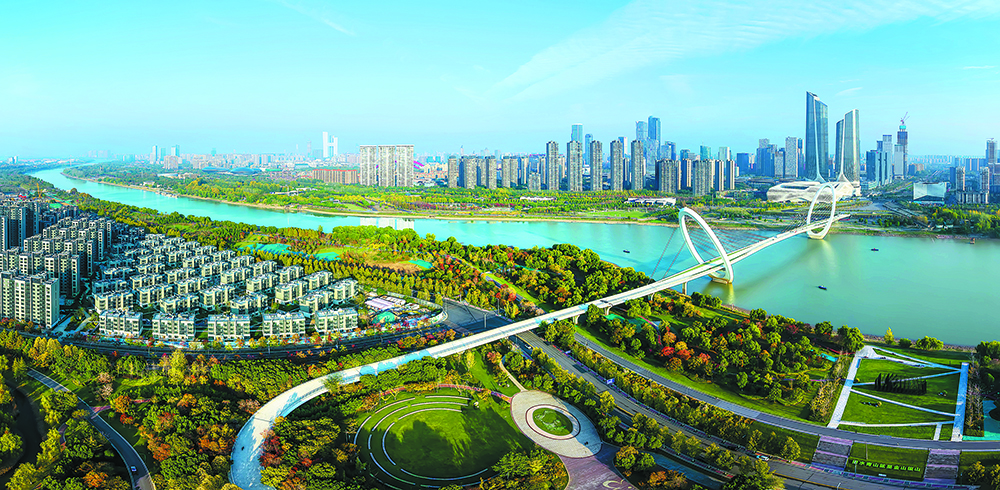
The city's Yangtze banks have been focus of conservation efforts, green development
A volunteer at the Nanjing Finless Porpoise Conservation Association, surnamed Wu, was overwhelmed with joy to see "Panda Eye" — the nickname of a finless porpoise with black birthmarks around both eyes — emerge in Jiajiang River in the city's Jianye district in early March.
"It caught my attention 10 years ago because it loves to jump and is more active than most other porpoises," said Wu. "I didn't expect to see it again 10 years later."
He added that he saw "Panda Eye" near the Nanjing Yangtze River Bridge in January 2013. But now the living area of the porpoises and its family members has expanded significantly from Pukou district to Jianye district thanks to the efforts made by local environmental protection and fisheries administration departments.
The number of finless porpoises now stands at 62 in the capital city of Jiangsu province, living in four families separately. The number increased by nearly 24 percent from 2017 to 2023.
What makes the volunteers even happier was that they observed 11 cubs recently in the Yangtze's Nanjing section, which might indicate that the number of the species will keep increasing.
The finless porpoise is the only remaining freshwater dolphin in the Yangtze River after the Baiji dolphin was declared functionally extinct in 2006.
Though the Yangtze's Nanjing section is one of the species' most important habitats, the porpoises never showed up in the city's Jianye district due to their high demand for water quality.
After years of efforts to improve ecology, the water quality of the Yangtze's Jianye section has been bettered. Not only has it become a water supply source for local residents, but the finless porpoises have chosen it as a breeding site.
"The increasing number of the species and their expanding living area have showed that the country's conservation efforts and the 10-year fishing ban in the Yangtze River have turned out to be fruitful," said Wu.
Nanjing is the only city along the Yangtze River where finless porpoises can be observed in the downtown area. To better promote environmental responsibility, the Nanjing Finless Porpoise Conservation Association has set up two observation stations in Jianye district to attract more people to observe and protect the "giant panda of the water".
Jiang Meng, secretary-general of the association, said that the observation stations allow visitors to closely observe the finless porpoises playing and jumping out of the water.
"We hold the 'Finless Porpoise Charity Run' in Jianye district every year and try to call for more people to participate in the conservation of the porpoises," said Jiang.
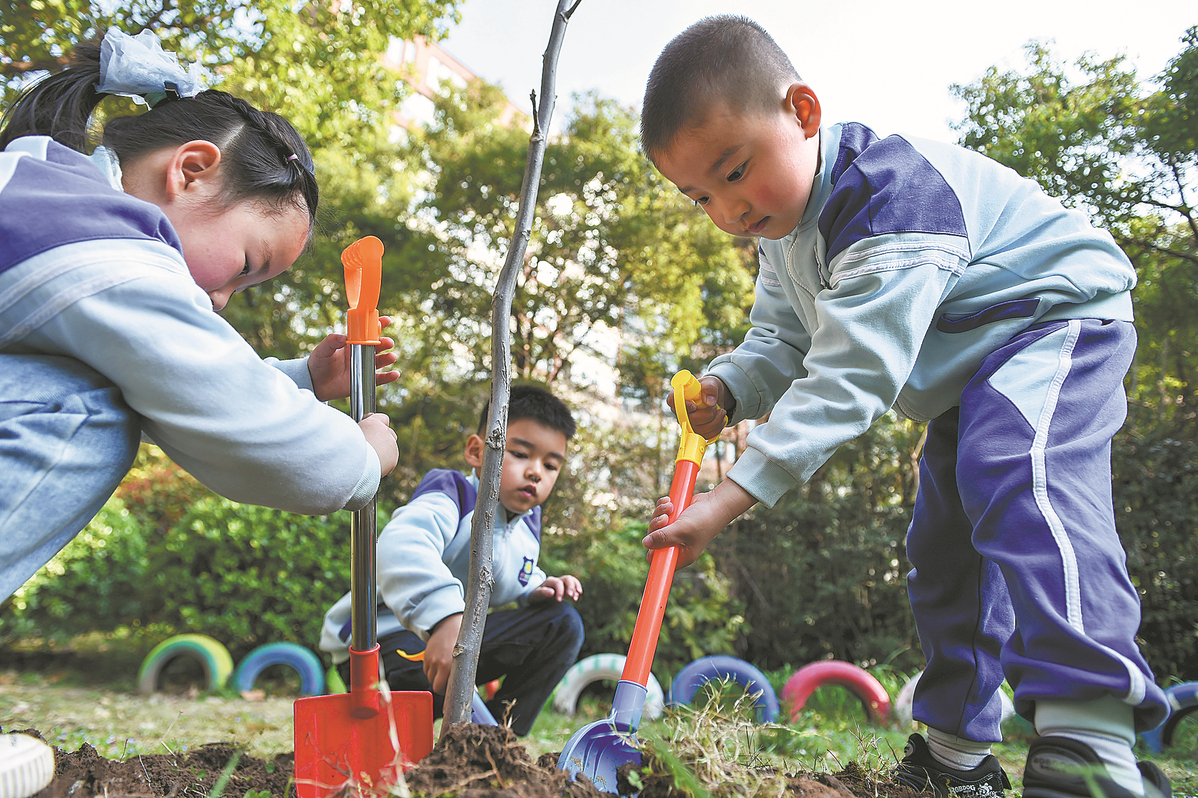
The district has also established the Nanjing Yangtze River Finless Porpoise Science and Education Center, which is open to the public for free. It also organizes a series of activities every year to raise public awareness, especially young people's awareness of the conservation of the Yangtze and habitat biodiversity.
The city's first volunteer service station for the finless porpoise has been set up in Jianye, where visitors can learn about the Yangtze and the porpoises and participate in volunteer work.
Jiang Weilin, who lives near the Yangtze, said that he chose to move to Jianye district due to its comfortable living environment.
"Born and raised in Nanjing, I knew that small factories and cluttered docks were scattered in the district. No one wanted to live here at that time. But after years of pollution control, it has become one of the city's most modern districts with both modern buildings and a good living environment."
"I want my family members to live in such an environment," said the 37-year-old.
Hexi New Town, which is located in Jianye district, has long been committed to promoting urban ecology. It has won many honorary titles such as "National Green Ecological Demonstration City", "National Smart City" and "National Green Business District".
In Hexi New Town, the green area per capita stands at about 17 square meters. Many buildings are equipped with a variety of renewable energy systems, such as photovoltaic, solar and ground source heat pumps. After treatment, rainwater is also used for watering plants grown on roadsides and cleaning roads and underground garages.
"We have paid huge attention to green development while establishing the new town," said Xu Jing, director of the New Town's management committee. "We believe that we should combine low-carbon ecological technologies with the improvement of the whole city's living and cultural atmosphere."
Before Jianye district started its ecological construction along the banks of the Yangtze, oil depots for refueling cargo ships and sand mines not only seriously polluted the water but also damaged the river banks. Industrial waste and domestic sewage, which gave off a pungent smell, were discharged directly to the Yangtze.
After shutting down all the polluting sources along the river, the district invited famous designers and design institutions, both at home and abroad, to design five parks that totaled 308 hectares in area.
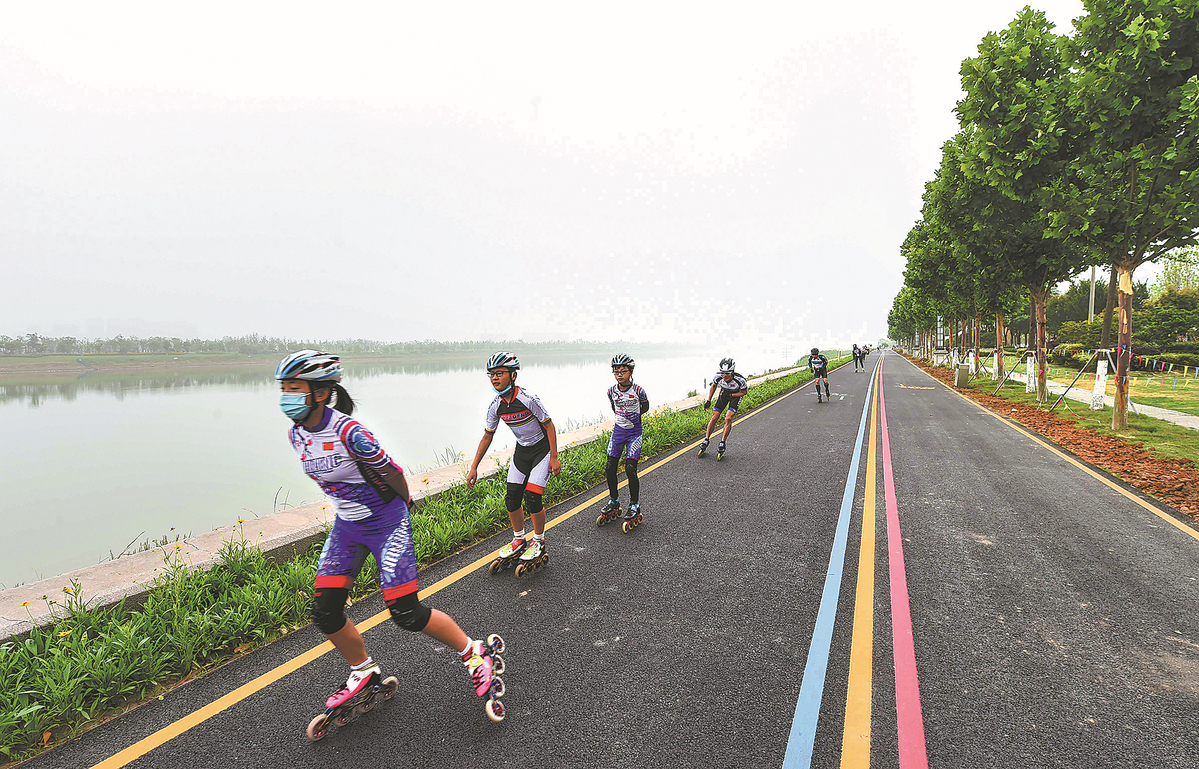
The Hexi Riverside Scenic Belt has become a hit online and a leisure resort for local residents and tourists. Now, nearly 6 million tourists visit the scenic belt every year. Its footpaths amid reeds, platforms to appreciate the Yangtze with a panoramic view, and a giant, red-and-white lighthouse have impressed millions of visitors.




- Chongqing's air-raid shelter-turned-bookstore becomes tourism touchstone
- Shanghai sees record-high expat accommodation registrations in 2025
- Chinese couple turns 100,000 photos of Great Wall into a museum
- Tsakhor village prepares for Losar New Year
- Aoshan Mountain rescue concludes, final missing hiker found dead
- Global mayors learn to carve ice in Harbin