China, Brazil to trade in local currencies







The Chinese renminbi is speeding up in expanding its global use, a trend that will help build a more resilient international monetary system, one that is less dependent on the US dollar and more conducive to trade growth, experts said on Thursday.
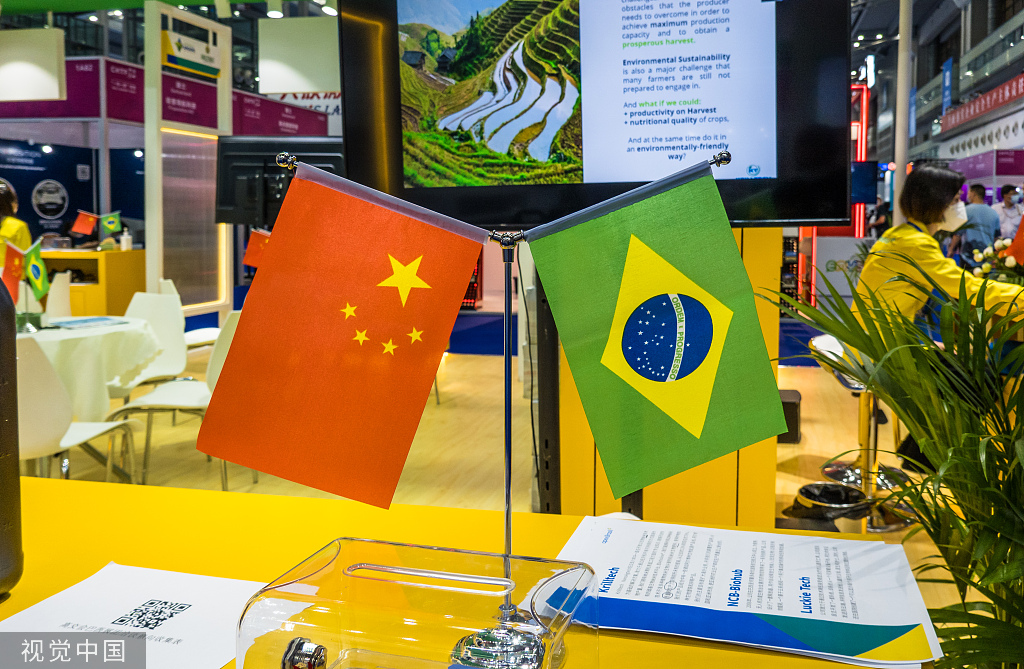
They commented after China and Brazil — two major emerging economies and BRICS members — reportedly reached a deal to trade in their own currencies, ditching the US dollar as an intermediary.
The deal will enable China and Brazil to conduct their massive trade and financial transactions directly, exchanging the RMB for reais and vice versa, instead of going through the dollar, Agence France-Presse reported on Wednesday, citing the Brazilian government.
The report comes amid the rising global use of the RMB. China's first cross-border RMB-settled liquefied natural gas transaction was completed on Tuesday, after the Export-Import Bank of China achieved the first RMB loan cooperation with the Saudi National Bank, the largest bank in Saudi Arabia, earlier this month.
Zhu Min, vice-chairman of the China Center for International Economic Exchanges, said the trend is underway that more economies are willing to use the RMB in clearing and payments, which is a "significant step" for the Chinese currency to internationalize and reflects the international community's growing trust in it.
The financial sanctions adopted by the United States since the start of the Ukraine crisis have triggered a "crisis of confidence" for the dollar to some extent, boosting the global use of other currencies, including the RMB, Zhu said on the sidelines of the Boao Forum for Asia Annual Conference.
Zhou Maohua, a macroeconomic analyst at China Everbright Bank, said the use of local currencies in bilateral trade will be a win-win situation for China and Brazil, reducing the risk of exchange rate fluctuations facing foreign trade companies, and thus boosting trade growth.
In February, China and Brazil signed a memorandum of understanding on setting up RMB-clearing arrangements in Brazil, which is deemed by experts as a necessary infrastructure for the two economies to trade in local currencies.
The arrangements will help the two countries' enterprises and financial institutions use the RMB for cross-border trade, and facilitate bilateral trade and investment, Foreign Ministry spokeswoman Mao Ning said on Thursday.
Financial infrastructure associated with the internationalization of the RMB should be further improved, said Pan Gongsheng, vice-governor of the People's Bank of China, the country's central bank, in early March. The nation will further improve its trading and settlement system for cross-border investment and financing using the currency, Pan added.
"I think renminbi internationalization will likely accelerate," said Hong Hao, chief economist at GROW Investment Group, a China-based global asset management company, underlining that the recent developments indicate that an alternative monetary system outside the US dollar hegemony is being developed.
With US financial sanctions hurting the dollar's status as a global currency, many economies, such as Saudi Arabia, Russia and Brazil, are pursuing an alternative to the existing dollar-centric system, contributing to the rising global use of the RMB, Hong said.
China and its trade partners establishing more local currency settlement arrangements can help lessen their dependence on the US dollar, bring down transaction costs and make foreign exchange management more straightforward, Hong said.
Payments in the RMB accounted for 2.19 percent of global payments by value last month, up from 1.91 percent in January, ranking fifth among major currencies for the 13th month in a row, according to financial messaging services provider SWIFT.
Mo Jingxi contributed to this story.
Contact the writers at zhoulanxv@chinadaily.com.cn