



Economic growth: whence it came, where it is going







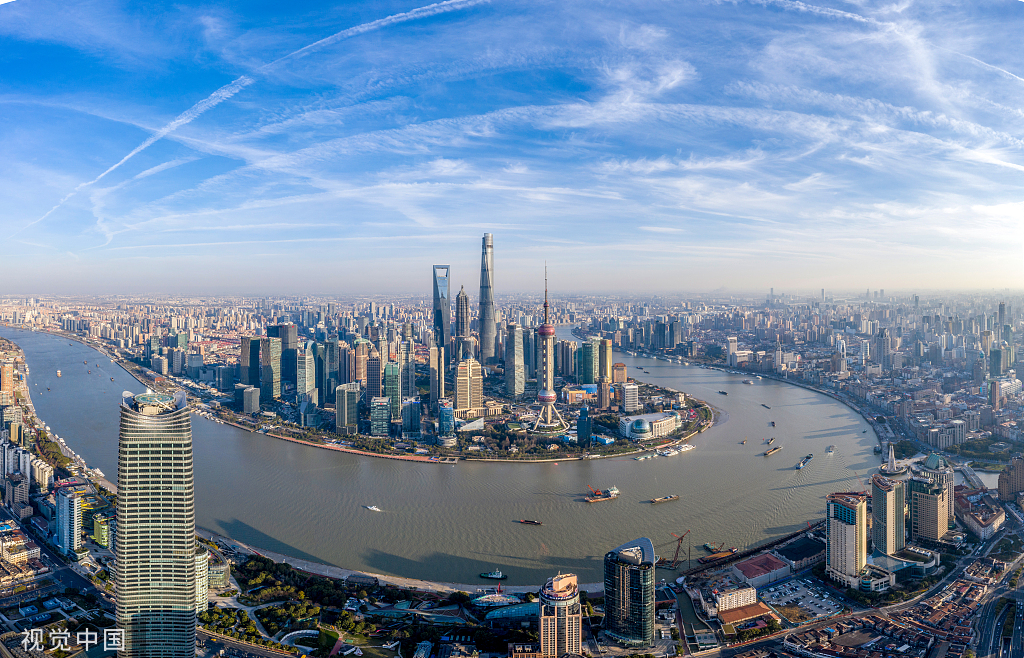
The recent history of economic growth can be divided into two phases: before and after the 2008 global financial crisis. Prior to 2008, the global economy experienced a period of sustained growth, a Goldilocks period including here in China but also in other developing countries and in the developed world.
The global financial crisis marked a sharp turning point in this process. Developed countries have struggled since then to sustain high levels of growth, and emerging markets have been growing more slowly.
During this time, a far more significant transformation has also taken place. Where we once assigned growth an exalted place at the altar of public policy priorities, it has now revealed itself to be an insufficient objective. China has said that meeting people's aspirations for a better life is the ultimate goal for government. At the Asian Development Bank we now define our purpose not simply in terms of growth, but as building a prosperous, resilient, inclusive and sustainable Asia.
These new, more nuanced goals reflect the realization that growth alone or prosperity alone is no holy grail. In fact, growth can be damaging to the very social fabric from which it emanates if it is not equitably shared, if it is accomplished in a manner that imposes costs on others or on our planet, or if it is so fragile as to crumble in the face of unexpected challenges.
Nothing demonstrates this point more than the urgent, pressing challenge of climate change, which emerges directly from and threatens to upend much of the progress that came before it.
But where is economic growth headed?
We appear to be at a fork in the road with respect to the future of growth. On the one hand, the odds stacked against accelerating growth appear formidable: high inflation and interest rates, trade and political fragmentation, a stalling, if not reversal, of the long-standing trend toward freer flow of capital. There are reasons to believe that the post-2008 period of difficult growth will continue and that a return to pre-2008 good times may not be around the corner.
But, on the other hand, there are also reasons for optimism. Human ingenuity and technology continue to surprise. Artificial intelligence, robotics, biotech, digitalization all have the potential to substantially increase productivity gains and economic growth.
An even stronger reason for possible optimism lies, in my opinion, in the developing world. Going forward, the world's population growth will take place entirely in developing countries. Therefore, despite it not being an easy exercise, massively increasing the flow of financing and capital both through public sector institutions and private markets, makes basic economic and financial sense.
As Larry Summers, an economist and former US Treasury secretary, said, the single thing about Earth that would most surprise an alien economist observing our planet is the lack of “large continuing flows from the aging, slowly growing global north to the much broader global south”. The task of expanding the circle of human prosperity is still far from over.
No matter which path we take — the slow growth path or a high-quality growth path — it will be affected by the policy choices developing countries make, especially in the context of climate change and energy transition, and by the actions of those that have resolved to work with them, from the public sector to the private.
As the world's second-largest economy committed to promoting circular economy, and pursuing green development to achieve carbon neutrality before 2060, China has the opportunity to play a key role in this journey both at home and abroad, and the ADB is committed to being its partner in this process.
Developing countries, especially upper middle-income countries such as China, can further accelerate the path to a more sustainable growth model. First, we need to adopt an approach that reflects that “decarbonization is development”. Increasing investment in this sector can yield commercial benefits. We need to carefully map out where the specific opportunities lie;
Second, we also need to establish a new social contract between public and private sectors in pursuit of those opportunities, including by leveraging fiscal and monetary policy and using available levers to accelerate the flow of finance in order to incentivize technology transformation and deployment at scale .
Third, it is essential that we identify key choke points in the transition process and find ways to address such challenges. For organizations like the ADB, the challenge of helping countries' transition to a new growth model means we need to be ready to support governments in the developing world in this process, including by revisiting certain historic assumptions, for example, about the optimal relationship between the public and private sectors during periods of structural transformation.
And fourth, we have to find new ways and partnerships to catalyze the flow of private capital into developing countries.
We at the ADB are still in the early phases of this journey. We have substantially raised our total climate finance ambition to $100 billion by 2030. We are working with governments on decarbonization pathways to come up with new development ideas, turn those ideas into policies, and the policies into action. And we are launching experimental new partnership platforms, philanthropic vehicles, blended finance tools and new forms of transition finance, and working with a broader range of partners than ever before.
This journey demands the best from all of us — the public sector, the private sector, finance and philanthropy. The most successful organizations will always be those that solve significant societal problems. We are all in this together. Whether we transition to new, more robust models of growth, whether we are able to accelerate the process of energy transition, it will take a collective effort. Working together for common cause we can replenish our store of public trust and social capital, the public good that lies behind other public goods.
The author is vice-president for East Asia, Southeast Asia and the Pacific, Asian Development Bank.
The views don't necessarily reflect those of China Daily.
If you have a specific expertise, or would like to share your thought about our stories, then send us your writings at opinion@chinadaily.com.cn, and comment@chinadaily.com.cn.





