



China, US need to stop spiraling relations







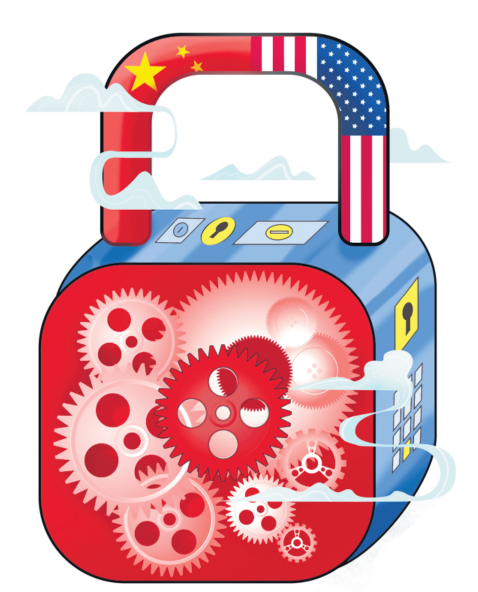
Editor's note: As the world's two largest economies, China and the US are at critical stages of development. Faced with multiple challenges, China and the US need to increase communication and cooperation, and shoulder their share of international responsibilities, and work together to advance the noble cause of world peace and development. Four experts share their views on the issue with China Daily.
With China easing the pandemic prevention and control measures, the world is wondering whether there will be a thaw in China-US relations and the two sides will restart normal communication in 2023. Hopes of a thaw in China-US relations rose after the meeting between President Xi Jinping and US President Joe Biden on the sidelines of the G20 Summit in Bali, Indonesia, on Nov 14, and the phone talks between US Secretary of State Antony Blinken and newly appointed Chinese Foreign Minister Qin Gang earlier this month.
Blinken will visit Beijing on Feb 5-6, marking the first trip by the top US diplomat in four years. US Treasury Secretary Janet Yellen is also expected to travel to China soon.
However, conceptual obstacles between the two countries are so hard to surmount that it would be over-optimistic to predict a substantial improvement in Sino-US relations soon.
Since assuming office in 2020, the Biden administration did not reverse, and instead strengthened the competitive strategy against China that his predecessor Donald Trump had championed.
Using its overall national strength, the United States tries to overpower its rivals through fierce competition. Accordingly, the US has labeled China as a major rival and dragged China into a fierce competition in all fields. And according to the Pentagon's National Security Report in October, the US has adjusted its military strategy to target China.
To isolate China, the US has spread anti-China sentiments across the international community by portraying China as a threat to Western society, institutions and lifestyle. It has also formed new anti-China alliances such as the Indo-Pacific Economic Framework for Prosperity, AUKUS (Australia, the United Kingdom and the US defense alliance) and the Quad (security partnership between the US, India, Japan and Australia). The US has roped in its allies and partners to squeeze China out of the global supply chains and to check its economic and high-tech development.
Since 2018, the US' machinations and strategy against China have undermined Sino-US mutual trust. And bilateral relations teetered on the brink of collapse after previous US House of Representatives speaker Nancy Pelosi's visit to Taiwan in August.
The root cause of today's crisis is the shrinking mutual trust and strategic mutual interests.
Misunderstandings and lack of cultural exchanges cause suspicion. The West believes international politics is a zero-sum game of power and views China's philosophy of peaceful development with suspicion. Such a mindset is driving the US to trigger another Cold War against China.
Besides, the US is too proud of its political institutions and values to accept the success of institutions that do adhere to the US way of thinking.
Instead of the disagreement on the international order and interests, the difference in political thoughts is at the root of the frigid China-US relationship today. And the two countries should sincerely communicate with each other, so as to figure out how to break the deadlock and revive normal bilateral ties.
Only if Washington abandons its sense of supremacy, and understands and respects non-US values and development models will the vicious spiral of China-US relations end.
However, the risk of China-US disputes escalating will remain, according to Alan W. Wolff, a distinguished visiting fellow at the Peterson Institute for International Economics. First, even if the Biden administration wants to improve Sino-US ties, China will be constrained to reciprocate because of the hard-line anti-China stance prevailing in Washington, just like the reviving McCarthyism in the US Congress.
Losing control of the House of Representatives in the November midterm elections, the Democratic Party will have a hard time fulfilling its domestic agenda goals. So the Biden administration is likely to pay greater attention to making diplomatic achievements in order to ensure victory in the 2024 presidential election. For that to happen, however, the White House has to expand communication with China.
Bilateral channels of communication were reopened after the Bali meeting between presidents Xi and Biden. But anti-China rhetoric was used as a political tool to get more votes in the midterm elections — the ploy was used by both the parties — amid the polarization of US domestic politics. Worse, the Republican-led House of Representatives recently voted to establish a select committee on strategic competition with China.
Second, Washington has limited choices to improve relations with China. The anti-China alliances that the US has built using the carrot-and-stick policy are flimsy. Many countries have just paid lip service to the US' policies while sitting on the fence.
The US is facing the pressing problem of declining hegemony. Tensions have sparked between the US and its European allies due to the energy crisis following the Russia-Ukraine conflict, and the US Inflation Reduction Act. The US' influence has declined in the Middle East, too, while India has shown little interest in the US' "Indo-Pacific strategy" and has been importing Russian oil despite Washington's objections. And the rise of the left in Latin America in 2022 is a slap in Washington's face, while the Association of Southeast Asian Nations has maintained its close economic ties with China.
In addition, Washington showing signs to improve its ties with China will render its anti-China cliques inactive, prompting Washington to calculate whether it needs such alliances.
The Taiwan question has come under the spotlight in China-US frictions and may become the last but the most disastrous card the US plays if it does not get satisfying results from the high tariffs, trade sanctions, supply chain disruptions, technology blocking and media warfare against China.
Washington does not want to lose the important tool to contain China so it has been more frequently interfering in affairs concerning the Chinese island of Taiwan, challenging Beijing's redline. In fact, the Biden administration has maintained strategic ambiguity on Taiwan while trying every possible way to hollow out the one-China principle. Such a contradictory narrative has narrowed the room for improving China-US relations.
But that does not mean China-US relations will head toward disaster.
China and the US have remained in agreement that the two countries cannot bear the consequences of decoupling. That's why they have been saying they are willing to maintain communication to avoid miscalculations and manage conflicts.
While China held the 20th National Congress of the Communist Party of China, the US held the midterm elections in 2022. Along with that, the meeting between the two presidents has opened a window of opportunity for the two countries to increase communication. If they can work together to improve bilateral relations and continue cooperation, they will benefit people not only in the two countries but also the whole world.
Chen Qi is the director of the Center for US-China Relations at Tsinghua University.
Xue Jing is a contract research fellow at the Center for US-China Relations at Tsinghua University.
The views don't necessarily represent those of China Daily.
Washington in disarray after House speaker debacle
http://m.ming7.cn/a/202301/30/WS63d70602a31057c47ebabb23.html
Reforming cultural exchanges to help build stronger trust
http://m.ming7.cn/a/202301/30/WS63d706aaa31057c47ebabb27.html





