



Infectious diseases monitoring and early warning systems bolstered







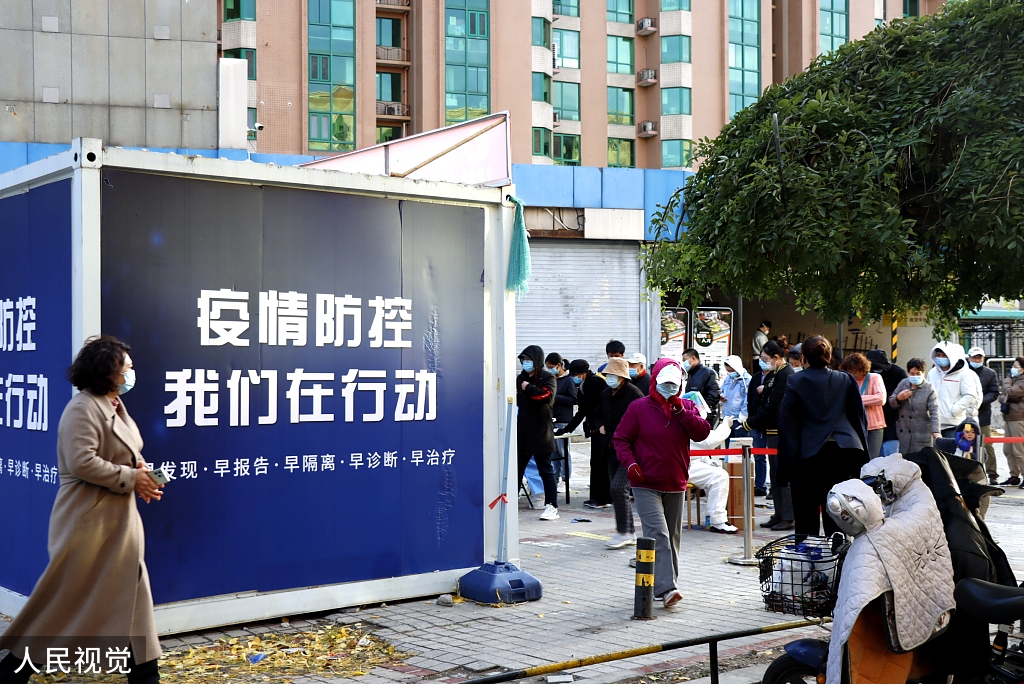
China has been strengthening its monitoring and early warning system against infectious diseases and boosting medical networks to safeguard people's health, according to officials and experts.
These efforts are being made as the COVID-19 pandemic lingers and new public health threats continue to emerge worldwide, they said.
According to the report delivered by Xi Jinping, general secretary of the Communist Party of China Central Committee, to the 20th CPC National Congress in October, the nation will deepen collaboration and integration between hospitals and disease control institutions.
It will also improve the ability to detect major epidemics promptly and increase treatment and emergency response capacity to stem outbreaks of major infectious diseases, the report said.
Li Qun, head of the Chinese Center for Disease Control and Prevention's Emergency Operations Center and a delegate to the 20th CPC National Congress, said the requirements raised by Xi are not only greatly significant in tackling the epidemic, but also in informing response strategies for future outbreaks.
The key to protecting people's health and reining in the virus is early detection. During a symposium on June 2, 2020, Xi mentioned strengthening early surveillance and precautions as the top priority in improving public health systems."
Li said such work has proved that China's capability to identify severe contagious illnesses has improved, with its recent handling of mpox a fitting example.
In May, mpox began to spread, particularly in Europe and North America, prompting the World Health Organization to declare a global health emergency in late July.
Li said China quickly set up a reporting system for the disease, formulated targeted diagnosis and prevention and control guidelines, and developed and distributed testing kits to different areas.
Meanwhile, Li said Chinese health authorities have devised surveillance protocols, focusing on monitoring inbound travelers, MSM (men who have sex with other men) groups considered at high risk, and residents in port cities.
"The first mpox case on the Chinese mainland was reported on Sept 14 in an international passenger in Chongqing, which was detected the day he arrived in the city. The quick identification meant there was no risk of the virus spreading further," Li said.
Li added that more efforts should be made to increase the scope and sensitivity of related information, laboratory testing abilities, cooperation across different sectors, as well as using more intelligent and digital tools.
Meanwhile, priority has been given to reinforcing medical systems, especially intensive care resources.
Due to China's huge population and uneven distribution of healthcare resources, the National Health Commission said that in recent years, there have been only about 6.7 hospital beds available per 1,000 people, lagging behind developed countries.
The 20 adjusted measures announced on Nov 11, as well as a COVID-19 triage treatment protocol released by the commission on Wednesday, urge hospitals to step up the preparedness of intensive care units and improve treatment capacity.
Jiao Yahui, director of the commission's bureau of medical administration, said on Friday that China currently has about 138,000 care beds for critically ill patients, or 10 such beds per 100,000 people.
There are 80,500 critical care specialists and 220,000 intensive care nurses, as well as more than 106,000 doctors and 178,000 nurses capable of handling intensive care unit work, Jiao said.
High-level hospitals are required to maintain the number of intensive care unit beds at no less than 4 percent of the total, and increase the number of convertible beds to guarantee sufficient capacity when necessary, Jiao added.
"Internal medicine, emergency care and pediatric specialists are also required to receive training in critical care, so that they can be deployed to care for such patients when necessary," she said.


- Fujian reiterates private sector as a pillar of high-quality growth
- Video of two tigers at Chongqing theme park goes viral
- Former deputy head of China Tobacco sentenced to 12 years for bribery
- Chasing the skywalker: A ranger's 17-year journey
- China's science museums draw 3.5m visitors over Spring Festival holiday
- Yuexiu Group wins Guangzhou land plot after 243 bidding rounds








