



Latest RRR reduction aims to ease pressure







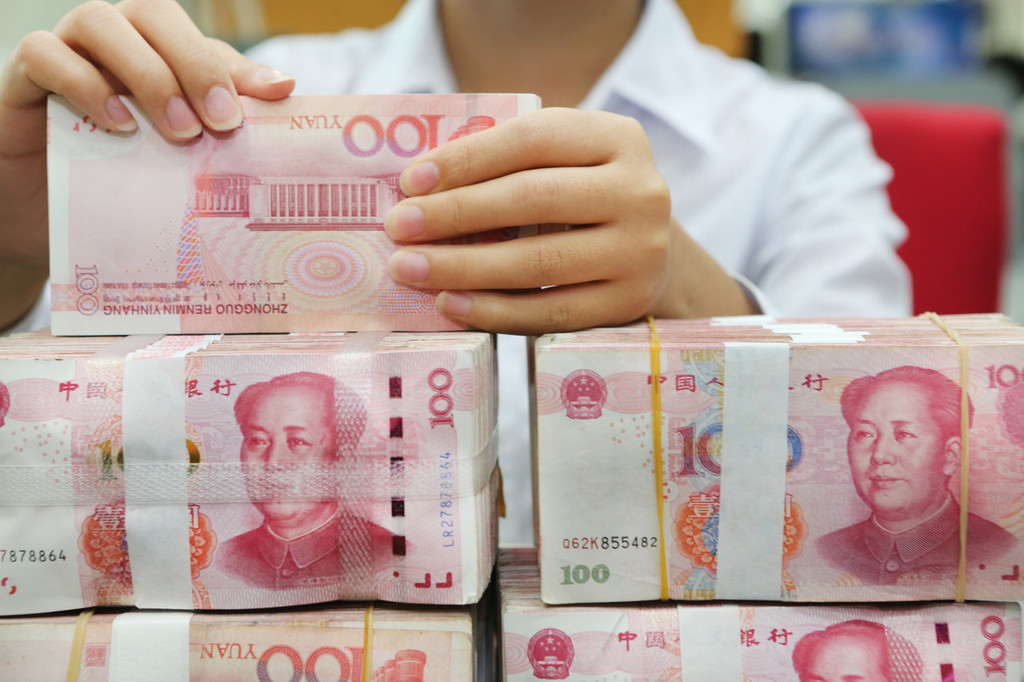
Represents 14th such cut by central bank since 2018
More cuts in banks' reserve requirement ratio remain possible in the first half of next year if downward economic pressure necessitates more easing measures, experts said following the latest RRR cut taking effect on Monday.
The RRR refers to the proportion of money that lenders must hold as reserves. Effective on Monday, the People's Bank of China, the country's central bank, reduced the RRR for financial institutions by 0.25 percentage point, injecting about 500 billion yuan ($71.95 billion) in long-term liquidity.
Experts said the cut will help maintain ample market liquidity at the end of the year and expand financial institutions' funding sources while reducing their funding costs. This will help boost their lending to the real economy, as part of the country's ramped-up efforts to stabilize economic growth in the face of COVID-19 uncertainties.
Also, the move marks the second RRR cut this year following another one of the same extent in April, indicating that the easing cycle of the country's monetary policy has yet to finish, they said.
Zheng Houcheng, director of Yingda Securities Research Institute, said a cut of 0.25 percentage point-instead of one of 0.5 percentage point that is more frequently used-may indicate that the PBOC is saving some policy leeway for next year.
Zheng said it is likely to see another RRR cut in the first half of 2023 when the economy may continue to feel some downward pressure while inflation remains low.
A weak global economy and a high comparison base this year mean that factory-gate prices may continue to fall early next year. Meanwhile, the combination of COVID-19 uncertainties and slowing exports may restrict the strength of economic recovery in the first half, Zheng said.
Zhu Haibin, JPMorgan's chief China economist, also said in a recent report that he expects another RRR cut of 0.25 percentage point in mid-2023, as China's monetary policy is projected to maintain the current stance in a low inflationary environment.
As Monday's cut points to a continuation of an accommodative policy stance while recent optimizations in COVID-19 containment lifted investor sentiment, China's A-share market has sustained a rebound that started at the beginning of November.
Led by State-owned construction companies and telecommunications operators, the benchmark Shanghai Composite Index rose 1.76 percent on Monday to close at 3211.81 points, the first time that the index ended above the 3200 level since mid-September.
Nevertheless, experts said the forecast of more RRR cuts might still be weakened by the PBOC's growing attention to inflation and a currently rather low level of RRR that could narrow room for future cuts.
Yi Gang, China's central bank governor, said in November that the country has cut the RRR 13 times since 2018, lowering the average RRR from 15 percent to about 8 percent.
Monday's cut has further brought the weighted average RRR to 7.8 percent, a level that experts said is relatively low both in history and when compared to other developing economies.
"Whether there will be more cuts in interest rates and the RRR depends on the COVID-19 situation and economic data," said Shan Hui, chief China economist at Goldman Sachs.
While China's monetary policy is projected to remain overall accommodative in the first half of next year, policy normalization may start from the second quarter if the economy gradually overcomes COVID-related disruptions, Shan said.
Moreover, the PBOC flagged the possibility of a future rise in inflation in its third-quarter monetary policy report, which experts said has implied a more cautious stance in maintaining an accommodative monetary policy.




















