



For a world thriving with life







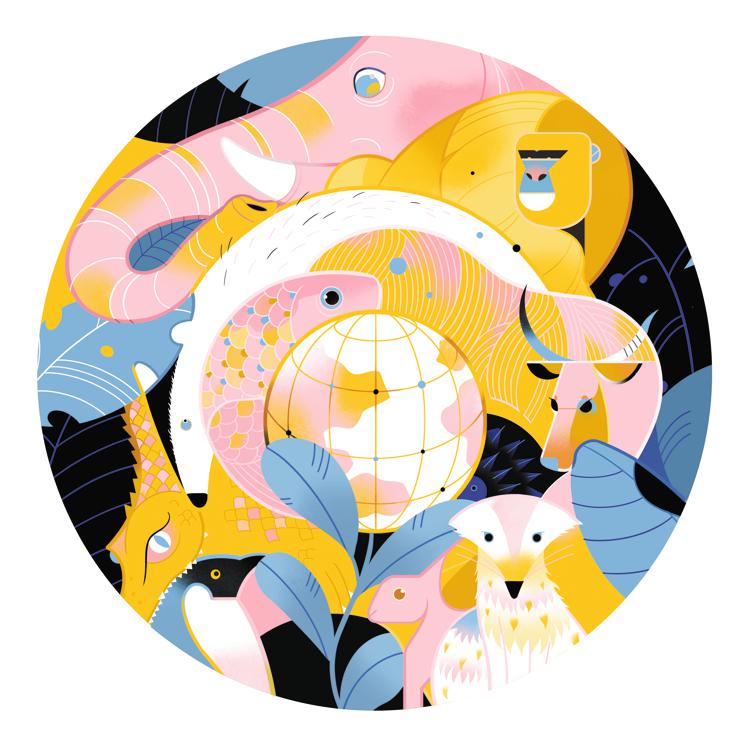
This year marks the 30th anniversary of the adoption of the Convention on Biological Diversity. The second part of the 15th meeting of the Conference of the Parties to the CBD will be held in Montreal, Canada, in December.
COP 15, under the theme of"Ecological Civilization: Building a Shared Future for All Life on Earth", is tasked with formulating and adopting the post-2020 Global Biodiversity Framework, which is of great significance to global biodiversity conservation and sustainable development. Holding the COP 15 Presidency, China is responsible for the substantive and political affairs of the conference.
Biodiversity is critical to human health and well-being. Natural ecosystems absorb and store about one-third of the greenhouse gas emissions human activities release each year, more than two-fourths of the global GDP depends on natural resources, and over 3 billion people depend on marine and coastal biodiversity for their livelihoods. Biodiversity loss at an accelerated pace, which severely threatens human health and the sustainable development of economies and societies, is a critical issue that humanity must face and solve.
As an important participant, contributor and leader in the construction of a global ecological civilization, China has long been advancing global biodiversity governance with concrete actions.
With the guiding principle of Xi Jinping Thought on Ecological Civilization, biodiversity conservation has been elevated to a national strategy in China. By drawing up "redlines" for ecological conservation and stepping up efforts to establish and optimize a system of protected areas with national parks as the mainstay, China has effectively protected 90 percent of typical terrestrial ecosystem types and brought 74 percent of key State-protected wildlife species under effective protection. The concept of an ecological civilization enjoys popular support in China, and harmonious coexistence between man and nature has become a consensus and aspiration of the Chinese people — constantly injecting new impetus into the country's biodiversity conservation.
As one of the first countries to sign and ratify the CBD, China has over-fulfilled three of the 20 Aichi Biodiversity Targets — an ambitious set of global biodiversity goals that were to be attained by 2020 — and is making solid progress on achieving another 13. Generally, the performance of China in implementing the Aichi targets is better than the global average.
Since 2019, China has become the largest contributor to the core budget of the CBD and its Protocols, strongly supporting the operation and implementation of the CBD. In recent years, China has become the largest developing donor country to the Global Environment Facility and the Intergovernmental Science-Policy Platform on Biodiversity and Ecosystem Services.
In October 2021, Chinese President Xi Jinping, eight other heads of state from parties to the CBD, and the secretary-general of the United Nations, attended the Leaders' Summit of the first part of the CBD COP 15 held in Kunming, capital of Yunnan province, via video link and delivered keynote speeches. President Xi announced China's initiative to establish a Kunming Biodiversity Fund and take the lead by investing 1.5 billion yuan ($212.7 million) to support biodiversity protection in developing countries. Xi also announced China's first batch of five national parks, among others, in China's biodiversity commitments as the host nation. At the high-level segment, the parties to the CBD adopted the Kunming Declaration. China, with the highest level of political will and leadership, has built consensus to the largest extent, laying a solid foundation for the adoption of the post-2020 Global Biodiversity Framework — an ambitious, balanced and practical global agreement to halt biodiversity loss and restore nature.
China has been vigorously advancing negotiations over the post-2020 GBF, convening a total of 37 COP 15 Bureau Meetings and presided over four Working Group Meetings for the post-2020 GBF in collaboration with the CBD Secretariat. Since the conclusion of Part I of COP 15, China has been using all sorts of occasions — such as the UN High-level Political Forum on Sustainable Development and the G20 Joint Environment and Climate Ministers' Meeting — as opportunities to coordinate and communicate with all relevant parties on advancing a successful second part of COP 15.
We must firmly seize the important opportunity of COP 15 to arrest and reverse biodiversity loss and make concerted efforts to promote the success of the second part of COP 15.
The majority of the 196 parties to the CBD are developing nations. We should listen to their voices, uphold the principle that all parties are equal and practice true multilateralism.
When formulating the post-2020 GBF, we should uphold the principles of fairness and transparency, take into full consideration the accessibility and feasibility of targets, as well as the development disparity of all countries, demonstrate constructiveness and flexibility in negotiations over the framework, balance the interests of all parties and compromise in moderation on key issues.
All countries should shoulder international responsibilities commensurate with their development levels. Developed countries should fulfill the obligations stipulated in the CBD and related protocols, and provide more support for developing countries with regard to funding, technology and capacity-building to make up for the gap in biodiversity governance capability among nations. We advocate more scientific, comprehensive solutions in the design of the post-2020 GBF and its future implementation, so as to offer synergized solutions for such global problems as biodiversity loss, climate change and environmental pollution.
Currently, the structure and core content of the post-2020 GBF has been identified. However, due to different social and economic development levels of parties, as well as the difference in major challenges and implementation capacity in biodiversity governance, there still exist controversies on some issues such as resource mobilization, access to and utilization of the digital sequence information of genetic resources and benefit sharing. Therefore, we call on all parties, international organizations and stakeholders to show the utmost political resolve and sincerity, take their responsibilities seriously, and make concerted efforts to adopt an ambitious, balanced and practical GBF in Montreal, so as to lead global biodiversity toward restoration and jointly build a community with a shared future for all life on Earth.
The author is minister of ecology and environment. The views don't necessarily reflect those of China Daily.
The opinions expressed here are those of the writer and do not necessarily represent the views of China Daily and China Daily website.
If you have a specific expertise, or would like to share your thought about our stories, then send us your writings at opinion@chinadaily.com.cn, and comment@chinadaily.com.cn.





