



Investing in rural women can solve global hunger and poverty







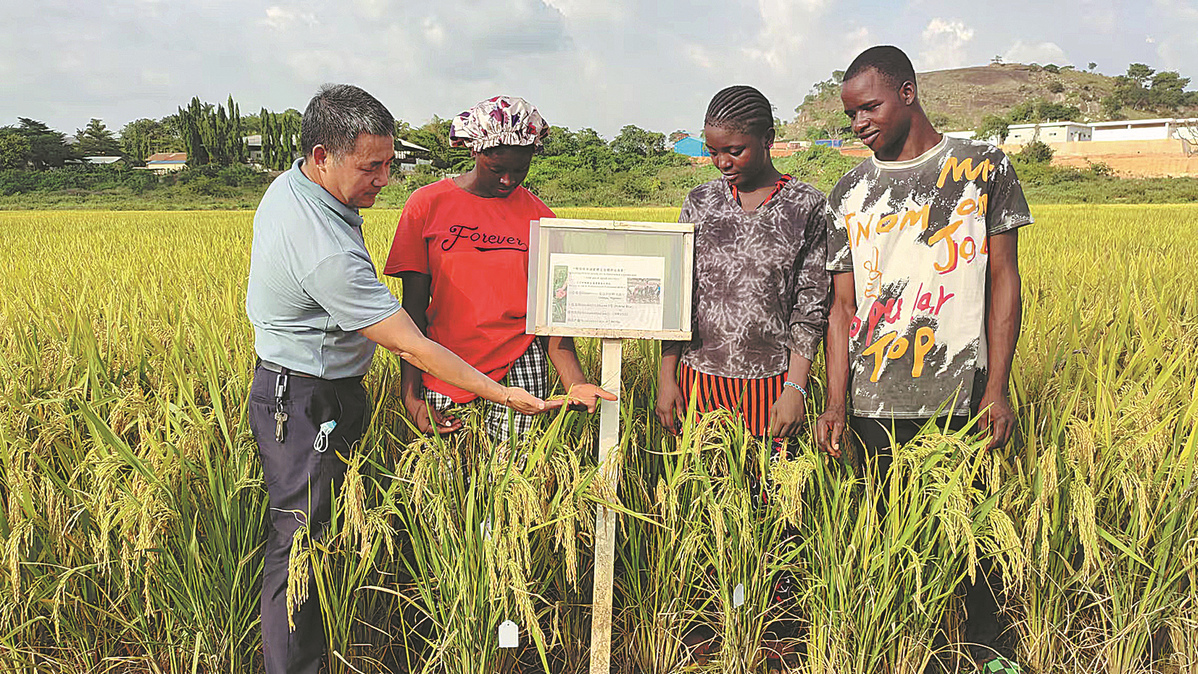
As the world is struggling to recover from the impacts of the COVID-19 pandemic, the devastating global repercussions of the conflict in Ukraine, and intensifying effects of the ongoing climate crisis, effective pathways must be found to overcome the multiple challenges facing the world. There have been setbacks on the path toward achieving the 17 Sustainable Development Goals, particularly to eliminating poverty (Goal 1) and realizing zero hunger (Goal 2).
The latest estimates from the World Bank show that, against the projected global rate of extreme poverty before the pandemic, between 75 million and 95 million more people are now living below the global extreme poverty rate ($2.15 per person/day). Furthermore, the UN estimates that the number of people suffering from hunger in 2021 increased by an additional 150 million since the outbreak of the COVID-19 pandemic. Meanwhile, 12 percent of the world's population faced severe food insecurity.
Evidence shows that one of the most efficient and effective strategic actions to approach these issues include empowering rural women, as the efforts and talents of rural women are crucial to countering hunger and poverty. Rural women make up a quarter of the world population and close to half of the world's agricultural workforce, whereas in some developing contexts a large majority of farmers are women. Yet, globally, rural women are paid 25 percent less than men for doing the same work. Also, only 20 percent of landholders are women. Women are also more likely to suffer from poverty, hunger and the health effects of insufficient nutrition. Almost 30 percent of all women around the world suffer from anaemia.
Empowerment of rural women should also be seen as investing in an untapped resource that benefits society. Estimates indicate that if rural women had the same productive endowments as men, including equal access to agricultural assets, education and market opportunities, their yields would increase by 20-30 percent, reducing the number of hungry people in the world by 100-150 million.
Over the past 40 years, China and the UN's International Fund for Agricultural Development have been working closely to enhance the capacity to upgrade agricultural production, and fight poverty and improve food security. Progressively during these decades, an increasing degree of investment has been devoted to socially inclusive approaches that empower women, youth and ethnic minorities. In China, as many as 70 percent of farmers are women, making women smallholders a crucial demographic group.
The current projects implemented in China with the IFAD's support all feature specific aspects for boosting the capacity of local talented entrepreneurs, particularly women. The projects utilize the so-called "Public-Private-Producer Partnerships" model through which small agricultural enterprises and cooperatives receive support to implement innovative new business plans specifically designed to benefit vulnerable smallholder farmers. Through cooperation with key partners, such as the Youcheng Foundation, provincial Women's Federations, and UN Women, rural women are provided training in agricultural entrepreneurship, particularly in the use of digital agriculture. In this way the projects promote innovation, sustainable business models and inclusive approaches, all through the scope of women's empowered leadership.
Take the case of Wu Qiong, a 35-year-old business leader of Qionglin Agricultural Science and Technology Company in Zhenba county, Shaanxi province. Along with four other young local entrepreneurs, she jointly designed and received support for a business plan initiative through the IFAD project called "Sustaining Poverty Reduction through Agribusiness Development in South Shaanxi". Wu, who has a family background in agriculture — her father being a livestock farmer — heard about the initiative and considered the possibilities that such support could bring. She had already started a successful business growing mushrooms in 2018 with a production base in Qingshui, a remote town in the mountainous area surrounding Zhenba. She made efforts to localize as much of the value creation as possible, with the mushroom growing, drying, processing, and packaging all done in the same location with a local workforce, mostly women and persons with disabilities. Her processing facilities became efficient enough to allow her to start providing processing services for other agricultural producers in the area. As such, for her IFAD project business plan submitted in 2020, she opted to invest in the start-up of a joint channel for e-commerce sales of her own and other local producers' products.
China today has the world's largest e-commerce market, with sales transaction for goods reaching over $4 trillion in 2021 according to the Ministry of Commerce. The many well-established sales platforms have been a paradigmatic shift also for farmers and retailers, with small enterprises and cooperatives able to sell to retailers and even directly to consumers across the country.
Today, Wu's start-up sells local specialties produced by several thousand local farmers, with total annual sales reaching 50 million yuan ($6.98 million). The start-up employs 16 full-time and 150 part-time workers, around 95 percent of whom are women. Many of these women were earlier unemployed, or had no independent source of income. In fact, before Wu started her mushroom business, she too was unemployed, which she says made her feel that she lacked a voice in her family and respect in the community. Now, besides achieving her career goals, she has been able to provide e-commerce job opportunities to low-income families, and an efficient sales channel benefiting small local food producers. She gives special consideration to providing a work-life balance for her female employees.
Wu's story exemplifies that if provided with an enabling environment, talented women entrepreneurs can make a significant impact on their communities.
The author is a program analyst, International Fund for Agricultural Development China Office.
The views don't necessarily reflect those of China Daily.





