



Sci-tech progress gathers speed







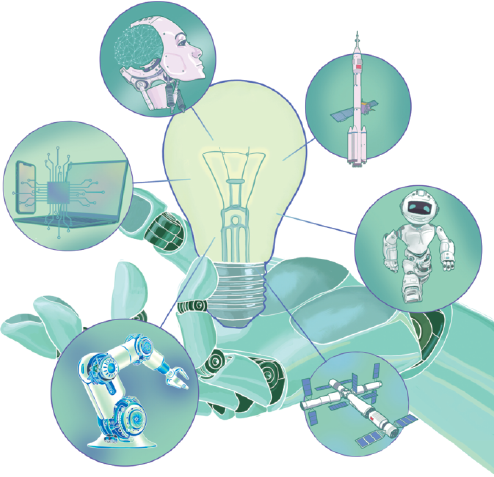
China has embraced the right policies for common growth, both domestically and globally, under the leadership of the Communist Party of China with Xi Jinping at its core. The country has played an unusual role in international relations and global governance as a result of its evolving policies in different fields, including science and technology.
The Belt and Road Initiative proposed by Xi and his call to build a community with a shared future for mankind has aided global development.
China has adopted an innovation-driven development policy and become an important part of the global innovation system. The reform of the science and technology management system was an important task for China during the past decade, with President Xi Jinping proposing many institutional sci-tech reforms. For this, China also has formed national sci-tech advisory and ethics committees.
The just-concluded 20th National Congress of the CPC said the advancement of technology is vital to economic development, and a professional workforce is needed for its development. In the report he submitted to the 20th CPC National Congress, Xi said China must regard science and technology as the primary productive force, and a primary driver of innovation and growth. China will implement the strategy to strengthen science education and promote innovation-driven development.
In the past 10 years, under Xi's leadership, China has left its mark on the surface of the moon as well as the ocean floor. China has made great progress in quantum computing, too, and achieved many other scientific and technological breakthroughs.
From converting deserts into oases in the northern part of the country to using quantum information, China has shown it has the capability to revolutionize technology as we know it.
For instance, China has opened its FAST(Five-hundred-meter Aperture Spherical Telescope) to the rest of the world for observational purposes to better understand the universe.
China is also the first country to create starch from carbon dioxide. It has made de novo domestication of wild allotetraploid rice, which is a major breakthrough in the field of agriculture and can increase crop production.
All these scientific and technological achievements are the result of the promotion of the scientific culture. Science and technology play a crucial part in socio-economic development. In this sense, the popularization of science can help the public more easily acquire scientific knowledge.
But when did China start its scientific culture construction?
The National Science Conference in 1978 sparked a "spring of science" in China, giving a shot in the arm of science popularization. Since then, the popularization of science has become increasingly significant in China's national development policy. Over the past decade, China has been vigorously promoting the popularization of science and taken measures to increase people's scientific knowledge.
China has made remarkable advances in popularizing science among the public since 1978. Former leader Deng Xiaoping said that "science and technology represent a force of production" and underlined the need for "huge efforts to disseminate science" during the National Science Conference in 1978.
Science popularization entered a stage of comprehensive development under the Chinese government's leadership during the second period, that is, from 1994 to 2001. The third period of popularization of science, from 2002 to 2015, saw a drastic increase in not only public support but also funds, personnel, infrastructure, and resources for the popularization of science.
The fourth stage, from 2016 to the present, has seen a thorough strategic upgrading and expansion of science popularization. And the implementation of the National Scheme for Scientific Literacy has increased people's scientific knowledge.
Different organizations, including universities, research institutions, science and technology museums, grassroots groups, and the media, along with government departments, have helped boost the popularization of science. As a matter of fact, a matrix of public platforms has been formed as a result of the government's efforts and different sectors' involvement.
The promotion of civic scientific literacy has become an important mission of China's science popularization workforce. The Chinese people's scientific knowledge has been increasing thanks to the government's efforts to further promote science popularization under the National Scheme for Scientific Literacy framework. For instance, the number of scientifically literate people rose from 1.44 percent in 2001 to 10.56 percent in 2020, which has created an environment conducive to innovation in the sci-tech field.
But there is still a lack of academic interest in a systematic analysis of the history of science popularization and other connected subjects like scientific culture, open science, and scientific ethics. To correct the situation, insights from other fields such as psychology, education, management science, and communications technology may be included in the standard theoretical framework of science popularization.
There is a need to promote the popularization of science and theories related to it. Developing societies face many hurdles due to technological backwardness. To overcome such hurdles the process of separating "transcendental" knowledge and information from that which is mundane, shallow, fleeting, or useless must be made easier through the popularization of science and technology.
This brief analysis of the growing popularization of science in China during the past four decades demonstrates the importance of government backing for such important endeavors. Under the leadership of Xi, China has introduced new service models and platforms of civic scientific literacy through digitalization, to enhance the public's scientific knowledge.
The popularization of science ought to touch on issues such as the Sustainable Development Goals, biodiversity conservation and the green development. These are areas that need immediate attention in order to realize the 2030 Agenda for Sustainable Development. It is feasible to design programs that can be sustainable over time and even included in university curriculums to engage youngsters to popularize science and scientific education. Efforts to improve the popularization of science can be directed in at least three directions: the general public, children and young adults, and politicians and entrepreneurs.
Also, initiatives to make scientific and technological knowledge accessible and familiar to the general public should be complemented by educational reforms that support the role of science teaching in primary and secondary schools as well as a significant expansion of hands-on experimental activities. After all, science is an experimental endeavor.
The author is president of the Andean Road Countries for Science and Technology (ARCST) and deputy secretary of the South-South Biodiversity Science Project (SSBSP) of the China Biodiversity Conservation and Green Development Foundation (CBCGDF). The views don't necessarily reflect those of China Daily.
If you have a specific expertise, or would like to share your thought about our stories, then send us your writings at opinion@chinadaily.com.cn, and comment@chinadaily.com.cn.





