Key role for HK in beefing up GBA's creative potential







BRIAN YEUNG has been driving the global creative economy in the past 15 years, topping the world in the trading of creative goods and services, according to a report by the United Nations Conference on Trade and Development in 2019. Such an accomplishment should be credited largely to the nation's major economic development initiative — the Guangdong-Hong Kong-Macao Greater Bay Area — that has contributed greatly to stimulating the Chinese mainland's creative industries.
As an integral part of the 11-city Greater Bay Area, the Hong Kong Special Administrative Region has shown it can pull its own weight in developing its creative economy. Data from the Census and Statistics Department show that the value-added of Hong Kong's cultural and creative industries reached HK$115.6 billion ($15 billion) in 2020, involving 6.2 percent of the city's labor force. But as China sets out to develop a Cultured Bay Area in the GBA under the 14th Five-Year Plan (2021-25), what role can the SAR play in helping to drive the region's creative economy forward?
The strong fundamentals and expertise Hong Kong has in certain creative sectors can complement its counterparts in the Greater Bay Area in various ways. According to ArtTactic— an art market research firm — Hong Kong is home to a sophisticated art market, with its global art market share only behind that of New York and surpassing London's in 2020. This makes the SAR the world's second-largest contemporary art market. Hong Kong's film and design industries have traditionally led the growth in the local art sector, with past film productions earning the city the accolade of "Hollywood of the East", and the number of its design firms having soared 161 percent in two decades.
But creative industry players in other GBA cities could also yield similar successes should they leverage their connections with Hong Kong through expertise exchange. Collaboration between Hong Kong and its GBA counterparts in the cultural and creative sectors is backed by various policy incentives. For example, the Qianhai Shenzhen-Hong Kong Modern Service Industry Cooperation Zone offers subsidies reaching 3 million yuan ($416,800) for Qianhai filmmakers who work with Hong Kong in film production.
With more policy incentives supporting partnerships among GBA cities, creative industry players would soon have the opportunity to work with and learn from Hong Kong's creative experts who helped build the city's strong foundation in certain creative businesses.
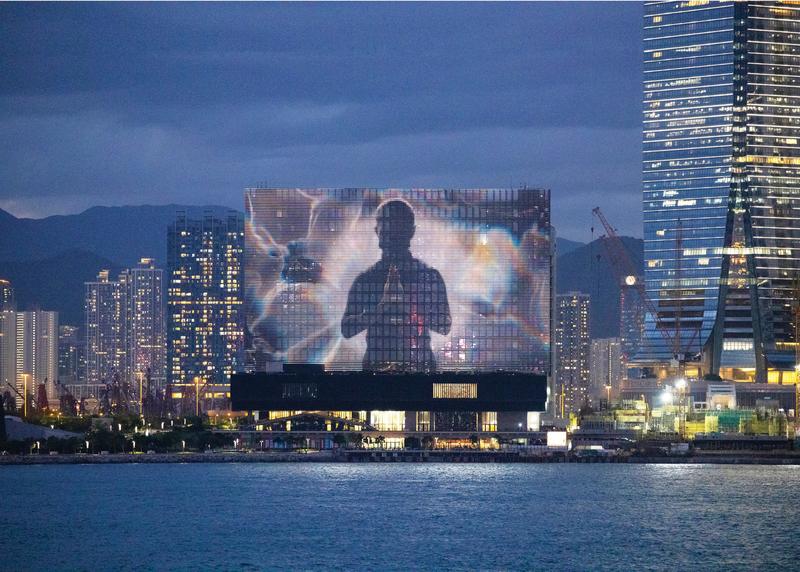
On the other hand, with world-class infrastructure in arts and culture, Hong Kong is capable of showcasing Chinese cultural soft power to the world. The SAR has established close connections with local and global art professionals by hosting major international art events, such as Art Basel that has been regularly held in the city. The West Kowloon Cultural District, with 17 museums and performing arts venues, has also become a major arts and culture hub, showcasing local and international art projects ranging from contemporary to traditional productions. The M+ Museum, in particular, has attracted more than 1.1 million local visitors in less than a year and is seen as being on a par with the Tate Modern in London.
According to ArtTactic, Chinese contemporary art has attracted international interest in recent years. Creative industries in the GBA, perhaps, only need the right channel to showcase their potential. Needless to say, should the other cities in the GBA actively collaborate with Hong Kong in promoting more intensive art and cultural exchanges than before the COVID-19 pandemic, the artworks and productions in China's new powerhouse of innovation and creativity could take center stage and compete in the international art market.
Given its seamless connectivity with other GBA cities and the world, Hong Kong is in an ideal position to be the cultural bridge between China and the world, spreading cultural tourism from Hong Kong to the rest of the GBA cities. A trip from Hong Kong to some of the GBA cities in Guangdong province, like Foshan, Huizhou, Zhongshan, Jiangmen and Zhaoqing, would take no more than two hours, while other smaller towns and satellite cities are within an hour's reach, thanks to the well-developed cross-border transportation networks and facilities between the SAR and the mainland. Hong Kong International Airport hosts more than 120 international airlines and connects the city with more than 220 global destinations, with flights reaching half of the world's population within five hours.
This makes Hong Kong an excellent starting point for a complete cultural experience in the GBA. Taking advantage of the transportation facilities and infrastructure, tourists could easily enjoy authentic martial arts performances in Foshan, savor traditional Cantonese cuisine in Guangzhou and travel to UNESCO world heritage sites in the GBA for a taste of Chinese culture. This would stimulate cultural tourism in the region and make the investments the central government has made in creative and cultural industries worthwhile.
The GBA is now fully equipped to foster stronger ties and closer collaboration among its 11 cities in economic and cultural development. Under the 14th Five-Year Plan (2021-25), Hong Kong will play a key role as an international art and cultural hub, bridging China and the world. Given Hong Kong's strong fundamentals in creative industries, including art and culture, local creative industry players should take full advantage of the policy incentives to strengthen the synergism of the GBA's creative industries and help unleash their multibillion-dollar business potential.
The author is a co-founder of Brianstorm Content & Brandstorm Communications, a consultancy specializing in education, philanthropy, art and culture.
The views do not necessarily reflect those of China Daily.



- China's Xizang sees steady tourism growth in 2025
- First-of-its-kind pearl auction held utilizing Hainan FTP
- Agarwood exhibition steeps Shanghai museum in fragrance
- The Fujian Coast Guard conducts regular law enforcement patrol in the waters near Jinmen
- IP protection for new fields to improve
- Draft rules define premade dishes in consumer interest