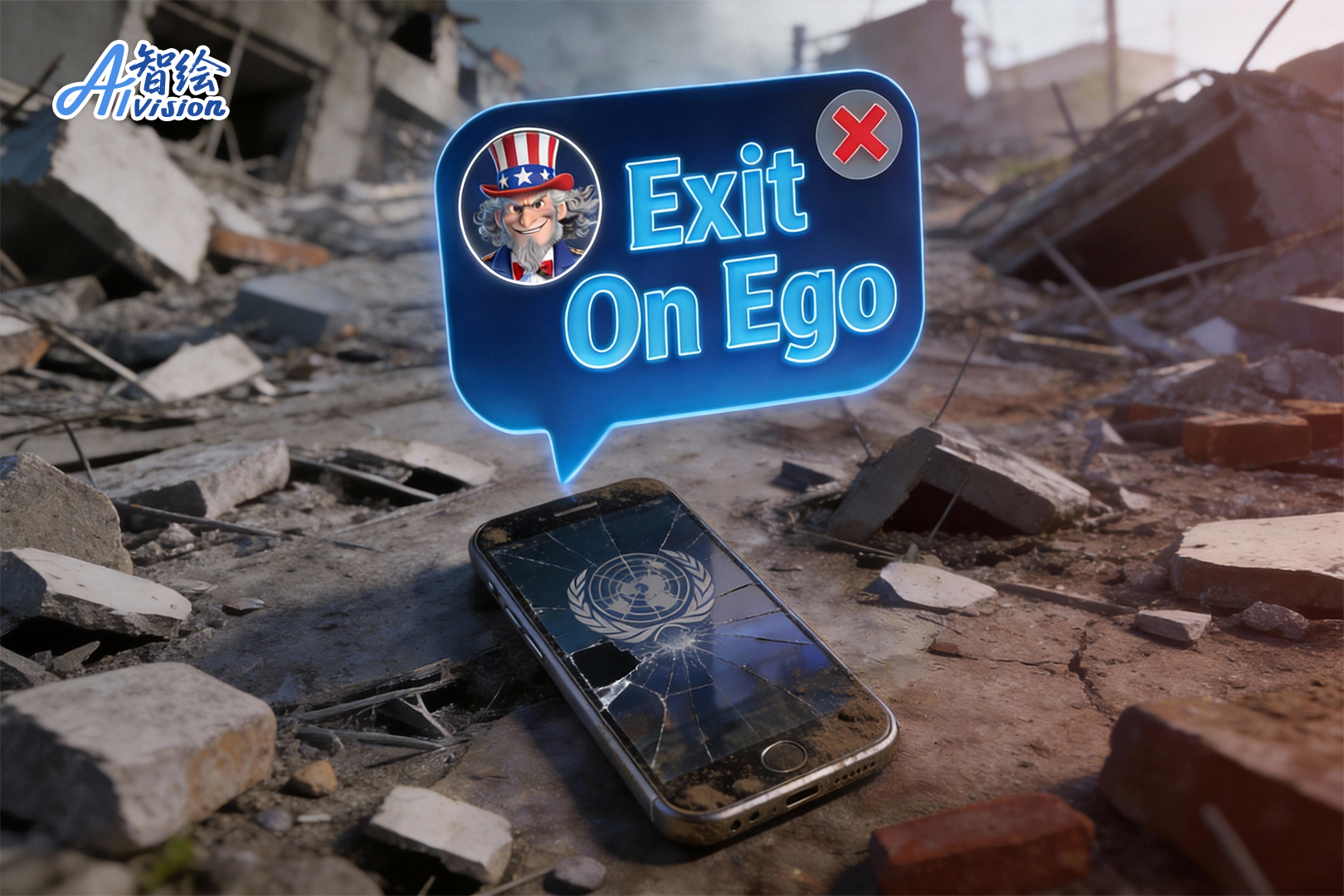
Dangerous regression








Strategic wisdom and farsighted vision are necessary to defuse and manage the tensions between China and the US
With the shift in the United States' policy toward China and the continuation of the Russia-Ukraine conflict, the world is undergoing major changes in relations between major powers and witnessing profound changes. These new changes in the international landscape manifest themselves in four aspects.
First, in the post-Cold War era, will the world see the process of globalization be disrupted and turn back to confrontations between major countries? The relations between major countries are defined by both conflict and cooperation. But the question is: whether conflict or cooperation is more prominent? After the collapse of the Soviet Union, Sino-US cooperation kept growing closer, a sign that the essence of the relations between major countries in the era of globalization had begun to move away from the so-called great power confrontation.
Today, however, confrontation — the defining feature of major-country relations in the past — is returning. As the US escalates its geopolitical competition with China on multiple fronts, including technology, trade, economy, and the media, major-country relations are returning to strategic confrontation. The world is seemingly facing a Cold War again.
Second, will the world see a new wave of bloc confrontation among major countries? After the end of World War II, the global political system was characterized by the geopolitical divide between two blocs formed around the two superpowers and full-scale ideological confrontation. As a new Cold War is looming large, will there be a resurgence of geopolitical confrontation and a divide between the East and the West? Today, world politics has come to an anxious moment when the confrontation between major powers may lead to a new confrontation between two camps.
Third, interdependence can decrease security competition between countries, and closer political and social communication and exchanges can alleviate the struggle between major countries. In the post-Cold War era, China and the United States are interconnected to an unprecedented degree.
Despite the deep and broad interdependence between the two countries, the US — under the Donald Trump and the Joe Biden administrations — has been seeking to contain China. By defining China as a "strategic competitor", the US has once again put its hegemony before economic and social cooperation, dragging the world back to the era of political realism, which marks an end to the traditional theory of neoliberalism.
Fourth, ideological confrontation between major countries has been revived. Ideologies are chosen by countries according to their own political values, which represent the political and social systems chosen by a country's people. In the era of globalization, the increasingly frequent and closer exchanges among peoples across the world have facilitated communication between different ideas and values, which has brought the understanding of other peoples' ways of production and life to an unprecedented high level.
But since the Biden administration took office, it has played up the competition between "democracies" represented by the US-led Western countries and the so-called "authoritarian nations "as represented by China and Russia, which is in essence bloc confrontation.
Fifty years ago, former US president Richard Nixon visited China to break the hostility and estrangement between the two nations. Over the following half a century, China has become more and more open and has integrated itself with the world. It is also a period that has witnessed the shift of global power, exponential growth in global wealth and the accumulating momentum of the digital revolution.
The qualitative change in Sino-US ties will be the heaviest external pressure and create the biggest challenges to China's rise in the decades to come. With the two nations locked in an escalating war of words in diplomacy and public opinion, it is impossible for the bilateral ties to go back to the good old days.
How can we prevent the Sino-US relations from slipping into the "Thucydides Trap"? In the five centuries since the age of geographical discovery, there were at least 16 historical instances of an emerging power rivaling a ruling power, among which over 80 percent ended in war, and over 90 percent of emerging powers failed to displace existing great powers. That is because power competition — the underlying logic ruling international relations — is often irreconcilable. Thus, the US' shift in its China policy poses an unprecedented challenge for the latter on its path to national rejuvenation.
The history of international relations has proved that what fuels competition between major countries is not only power competition, but also domestic political extremism. The political and social divisions in the US add fuel to the fire of the US' confrontational stance toward China, which we should resolutely fight back against. Meanwhile, we should also be aware of the rising nationalism at home amid a complex and changing international landscape.
As a result of the domestic political infighting, US politicians across the political spectrum have reached a consensus on being tough on China, portraying China as the US' "biggest threat" to divert attention from its domestic turmoil and woes. Meanwhile, they hype up the "China threat "theory to boost political and social cohesiveness at home. The Biden administration has promised to pursue a foreign policy that will help the middle class by pushing for re-industrialization and re-investment in the high-tech sector in the US.
Today, major-country relations are undergoing profound changes, and the world is once again at a critical juncture. Since the US has designated China as its biggest strategic competitor, Chinese policymakers and scholars should comprehensively evaluate the strategic risks entailed in the Sino-US competition, and seek solutions through in-depth analysis to steer the country's endeavor for national rejuvenation on the right course.
The author is executive dean of the School of International Relations at Nanjing University. The author contributed this article to China Watch, a think tank powered by China Daily.
Contact the editor at editor@chinawatch.cn