BRI a great benefit to all involved







As the Belt and Road Initiative approaches its 10th anniversary next year, we are reminded that the prosperity and peace we currently enjoy are hard-earned.
Against the backdrop of Western nationalist sentiments, China took a bold step a decade ago to shift the global economic center toward Europe, Asia, the Middle East and Africa-something the United States refuses to endorse.
Seventy-one countries, accounting for one-third of the world's GDP and two-thirds of global population, are committed to this massive project.
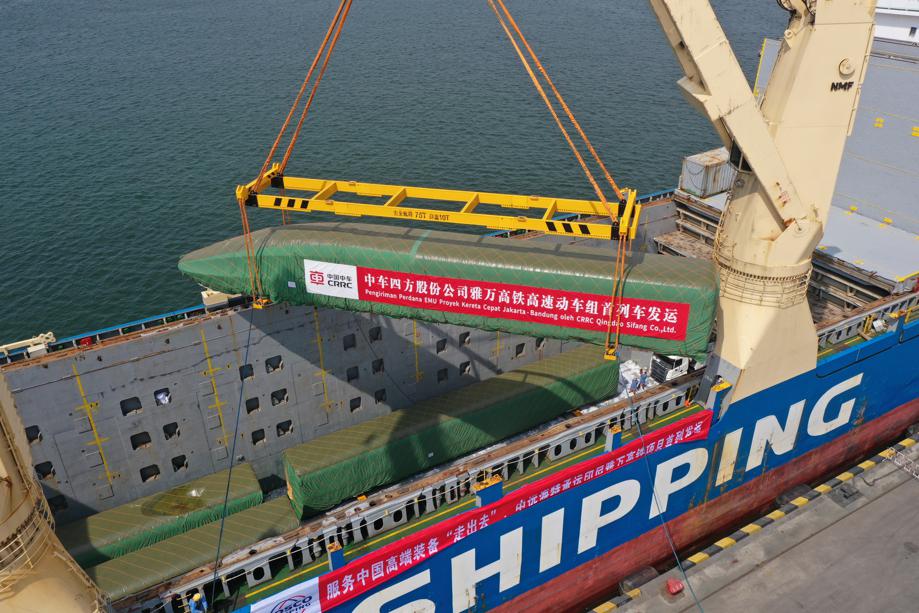
The Silk Road Economic Belt is an amalgam of six land-based, cross-regional trade routes that aim to create a cohesive economic area. The Maritime Silk Road also brings vast benefits to participating countries, with the sea route's shift in the logistics chains of the shipping sector proving to be most consequential. Multiple shipping routes connecting European ports with Asian ones now enjoy transportation times that are one-third shorter, which has resulted in significant cost savings.
In retrospect, the BRI was a prescient move that yielded abundant economic benefits across the region. Numerous studies have proved that the BRI created income benefits by promoting interconnections. This was catalyzed in particular by boosting long-overdue infrastructure investment in Southeast Asia.
A report from the World Pensions Council suggests that Asia alone may need up to $900 billion of infrastructure investments per year to address the infrastructure gap in developing countries.
With the construction of new railways, power grids and real estate, the local people in each participating country appear set to benefit from a span of new development. That is mainly to boost connectivity in the region.
A report from the Organization for Economic Cooperation and Development also suggested that countries that have participated in the BRI created greater income dividends than they would have otherwise. Improving connectivity has also yielded benefits for non-BRI participants, as countries participating in the initiative have found trade partnerships easier to establish.
Washington views the BRI suspiciously as a plot by Beijing to tussle with it for global influence. Such a parochial perspective is staggering to the world, not least because the US is well-regarded as a dominant force in promoting globalization and drafting rules on the global stage.
The leaders of a few Western countries have drawn on rogue propaganda to smear the BRI as "debt-trap diplomacy" in order to vilify China.
But even academic researchers in the US have disputed such claims.
Deborah Brautigam, a professor of international economics at Johns Hopkins University, and Meg Rithmire, an associate professor at Harvard Business School, dismissed allegations of "debt-trap diplomacy" by writing in The Atlantic in February last year that Chinese banks "are willing to restructure the terms of existing loans and have never actually seized an asset from any country".
Most countries participating in the BRI realize the benefits of trade by cutting red tape and standardizing regional trade rules. There is little doubt that improving trade bolsters economies and raises people's living standards. The formation of the Association of Southeast Asian Nations and the Regional Comprehensive Economic Partnership agreement are cases in point.
Over the past decade, US politicians have instigated trade wars and sanctioned countries on a whim. This sets the US further apart from the rest of the world just when global cooperation is direly needed.
China proposed the BRI in 2013 to bring the world closer together. Facilitating trade across countries remains highly relevant today, if not more so after the US has balked at globalization. If history is a guide, we need not reinvent the wheel-global trade links must once again be forged, not dismantled.
The author is a member of the New People's Party in the Hong Kong Special Administrative Region. The views do not necessarily reflect those of China Daily.