



Local solutions help address food crisis







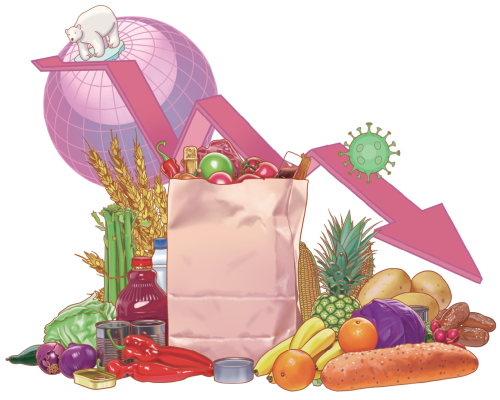
French environmentalist and biologist Rene DuBos asked us to "think globally, act locally", but when it comes to hunger in the world that is not always the best approach. Most hunger problems today have local rather than global origins. Acting locally remains important, but we must learn to think locally as well.
Some global institutions resist drawing local distinctions. UN Secretary-General António Guterres made headlines in June 2022 when he said that the world was facing "an unprecedented global hunger crisis". He said the number of severely food insecure people around the world had recently doubled to 276 million, and he warned that, "This year's food access issues could become next year's global food shortage. No country will be immune to the social and economic repercussions of such a catastrophe."
This sweeping statement calls for more local nuance, and less emphasis on "global" food shortages. Many of those currently facing severe food insecurity live in countries disrupted primarily by organized violence and armed conflict-including Syria, Yemen, Somalia, Ethiopia, South Sudan, northern Mozambique, the Democratic Republic of the Congo, Myanmar, the landlocked states of the Sahel in Africa, and Afghanistan. And it is the Ukraine-Russia conflict this year that has blocked wheat exports to Egypt and North Africa, Middle East, and cut corn exports for animal feed to China.
The result was higher food prices, which in well-fed countries like Egypt isn't the same thing as actual hunger, and the global price impacts from these trade disruptions proved to be mostly temporary. By July, even before the agreement was reached to unblock Ukraine's Black Sea food exports, wheat and corn prices in the world market had already fallen back to their pre-conflict level. The blockage did temporarily spike the price of imported wheat, but only 25 percent of the world's actual wheat consumption depends on imports.
The violent conflicts that threaten food security are mostly local in reach, but a second factor is genuinely global: the continuing COVID-19 pandemic. When governments responded to the pandemic with mandated economic lockdowns, large numbers of low-income workers were pushed into deeper poverty, threatening their access to food. Pandemic-induced income losses by 2021 had driven 283 million people around the world into acute food insecurity, but the hunger in this case came from sudden losses in income, not shortages of food.
A third cause of the now increasing hunger-climate change-is also global, but it has produced genuine shortages of food only in a few places so far. The hardest-hit regions now are Pakistan, where crop production has been devastated by record monsoon floods, and also the Horn of Africa, where severe drought has persisted for three years.
Rainfall deficits of up to 60 percent and prolonged dry spells have been experienced in large parts of Somalia, as well as southern and eastern Ethiopia, creating an immediate need for humanitarian relief. Extreme heat and drought linked to climate change have also been seen this year in many European countries and China, but because these more prosperous regions can afford adequate social safety net programs, increased hunger has largely been avoided.
What does this more localized review tell us about containing food crises in the future? Reducing armed conflict, especially in regions and states where religious and ethnic differences breed mistrust, is the most urgent task, but primarily a task for local political leaders. Likewise, if future pandemics force governments to implement more economic shutdowns, adequate local income-protection safety nets should be put in place before this drastic step is taken. We know these measures can prevent hunger.
In the United States, when the Congress improvised large income transfers to those losing paychecks during the lockdown, extreme food insecurity was actually reduced in the first year of the pandemic.
Even some food crises driven by climate change can be addressed through local actions. In the African countries currently facing drought, increased investments in crop irrigation can be one local solution. Groundwater reserves in most of Africa remain largely untapped. A 2022 report from the British Geological Society concluded that tapping groundwater at a sustainable rate could allow most African countries to endure drought for more than half a century.
At the same time, in extreme circumstances there is no substitute for global humanitarian relief. The United Nations World Food Programme coordinates this relief by securing about $10 billion a year in voluntary donations from leading governments to deliver food to 115.5 million people in desperate need. In this regard, China, as a country with rapid economic development, should do more to help ease the food shortage.
The writer is an associate professor in Sustainability Science at the Harvard Kennedy School and the author of Resetting the Table: Straight Talk About the Food We Grow and Eat.
The views don't necessarily reflect those of China Daily.
If you have a specific expertise, or would like to share your thought about our stories, then send us your writings at opinion@chinadaily.com.cn, and comment@chinadaily.com.cn.





