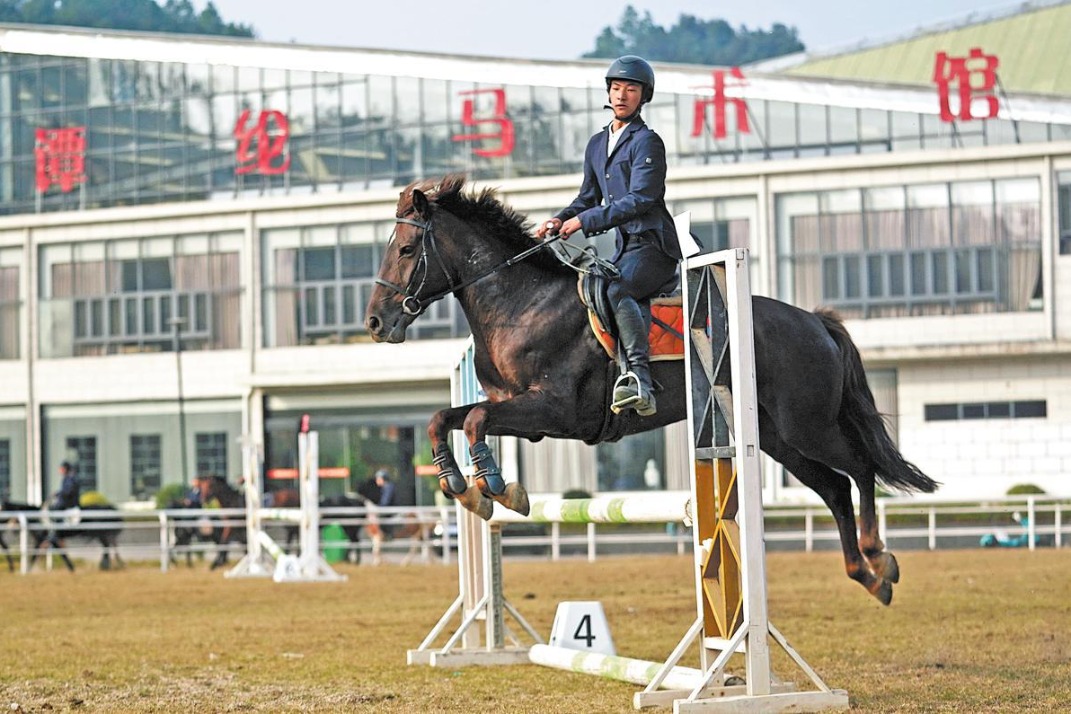
Porcelain sheds light on nation's history and culture







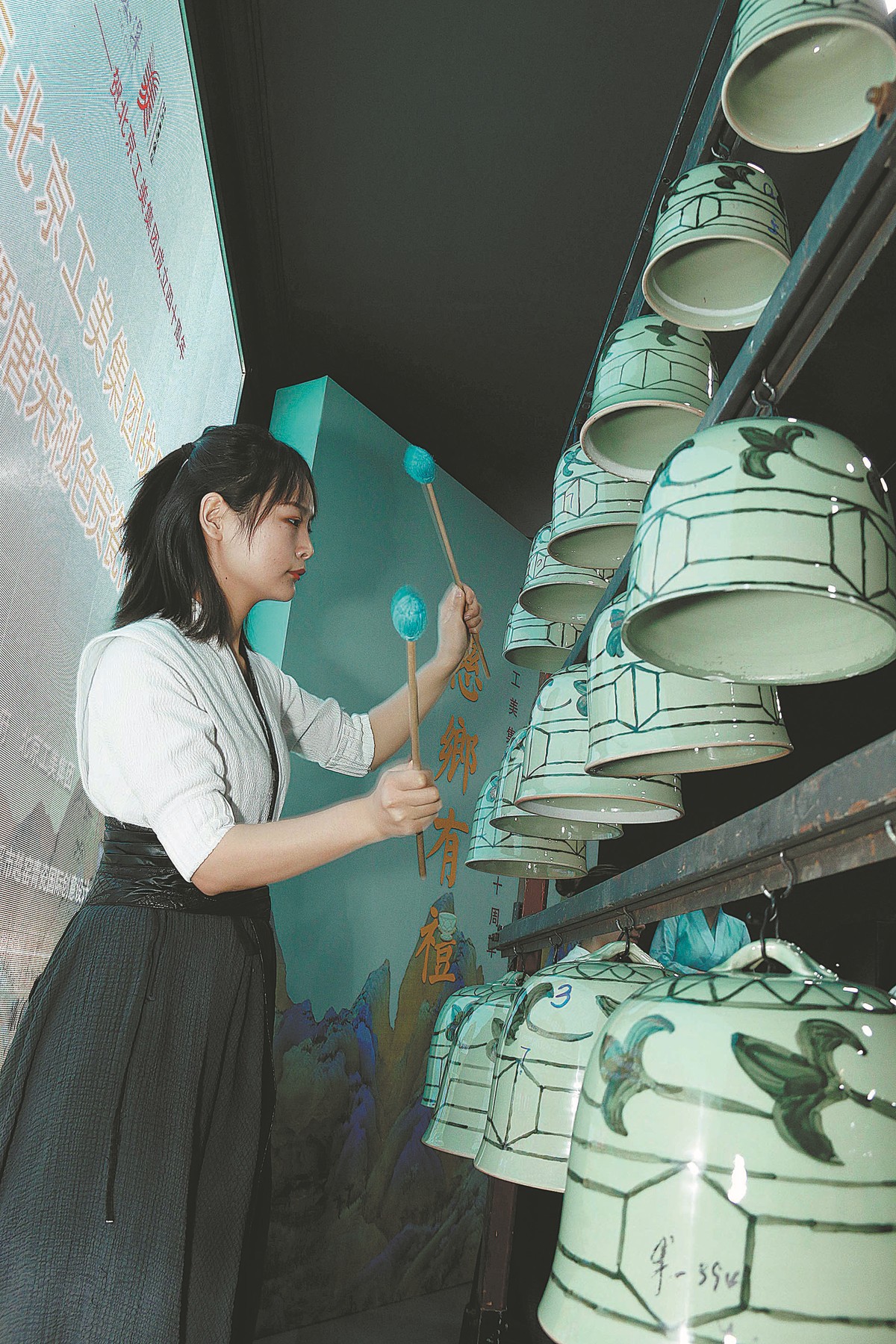
Unearthed items provide vital clues to life in ancient times
Porcelain, one of ancient China's oldest and greatest inventions, has played a significant role in the country's long history.
The word "porcelain" was probably first used by the celebrated traveler Marco Polo when he brought it from China to Europe in the 14th century and called it porcellana-the Italian term for cowry shell, which porcelain resembles.
The fact that porcelain is also popularly known as "china" or "fine china" in English speaks of the common recognition of its origins and identification with China.
By the late Paleolithic Age, Chinese people had already made pottery. Fragments unearthed from the Xianrendong Cave, or Cave of the Immortals, in Jiangxi province are believed to be the world's earliest pottery, dating back about 20,000 years.
Some 18,000 years later, with technological advancements, such as the use of raw materials, the molding process and firing techniques, the world's first high-fire ceramics, commonly referred to as "primitive porcelain" or "protoporcelain", emerged during the Shang Dynasty (c. 16th century-11th century BC).
Jiang Yu, director of the Department of Ceramics at the Zhejiang Provincial Museum, said these early protoporcelain items shared some basic attributes and properties with porcelain, including their hardness, glaze and low permeability, but they were not yet sufficiently refined to be recognized as porcelain.
"Compared with pottery, porcelain is made from a special type of clay," Jiang said. "The two are different in terms of raw materials, glaze and firing temperature. Porcelain is much tougher than pottery, as it has an extra layer of glaze and is more translucent."
In other words, protoporcelain was the stage during which pottery transitioned to porcelain. By the late Spring and Autumn Period (770-476 BC) and the early Warring States Period (475-221 BC), large quantities of protoporcelain began to be made in present-day Zhejiang province. These items were more affordable and more readily available than the bronze pieces of the day, which were preferred by most people.
The ruling class also liked protoporcelain. In 2004, some 500 musical instruments dating to the Warring States Period were unearthed from ancient tombs in Hongshan, Wuxi city, Jiangsu, including fou-percussion instruments whose existence was confirmed for the first time.
In 2007 and 2008, in Deqing county, Zhejiang, archaeologists unearthed seven kiln sites and excavated several metric tons of ritual vessels and musical instruments made of protoporcelain.
The discoveries included ding (cauldrons on tripods), zun (wine jars), bianzhong (sets of bells), goudiao (chime bells) and many other items documented in ancient records. The excavations and discoveries led experts to believe the items found in the Hongshan tombs had also been produced in Deqing.
Jiang said the discoveries show that northern areas of Zhejiang might have been a production base for high-quality protoporcelain, and that by this time, production techniques had advanced significantly.
However, it wasn't until the Eastern Han Dynasty (25-220) that porcelain in its modern form appeared. While pottery and protoporcelain were known to have been made in many places in China, porcelain, unsurprisingly, was first developed in Zhejiang.
In the 1970s, archaeologists excavated ceramic shards in Shangyu, Zhejiang, the quality of which was considerably better than protoporcelain. In the early 2000s, more items were dug up. These pieces have a gray or greenish ceramic glaze, and this type of porcelain is now popularly known as celadon, which dominated ceramics in China for a long period, thanks to its jade-like features.
Chen Wanli (1892-1969), a leading porcelain expert at the Palace Museum, once declared, "Half of China's history of ceramics lies in Zhejiang," pointing to the province's prominent position in the history and development of porcelain.
Production of porcelain-in particular celadon-developed further in Zhejiang and surrounding areas after the Eastern Han Dynasty.
According to Porcelain: The Story of China, written by Chen Kelun, a ceramics researcher from the Shanghai Museum, some of the most renowned porcelain kilns began to make their mark during the Tang Dynasty (618-907). One of them was the Yue Kiln, now known as the Yue Kiln Sites, a cluster of archaeological locations at Shanglin Lake, Cixi, Zhejiang.
Emerging in the Eastern Han Dynasty, the Yue Kiln reached its peak in the Tang Dynasty before declining in the Song Dynasty (960-1279).
These lines from a poem by the Tang poet Lu Guimeng describe the spectacular sight of porcelain being made at the Yue Kiln:
When the Yue Kiln opens in late autumn, the verdant celadon covers a thousand mountain peaks
This poem, Mise Ware (mise translates as "secret color"), is also the earliest known reference to the finest type of Yue celadon, Chen writes in his book.
In addition to the Yue Kiln, the Longquan Kiln in Longquan city, Zhejiang, emerged in the Five Dynasties and Ten Kingdoms period (907-960). It blossomed in the Northern Song Dynasty (960-1127), and from the Southern Song Dynasty (1127-1279) to the mid-Ming Dynasty (1368-1644), it was China's largest porcelain production center.