



Smart planning helps Hong Kong compete for talent







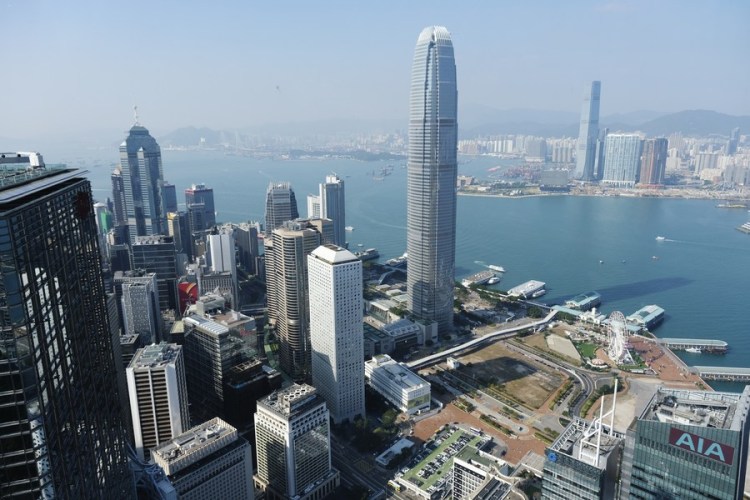
Cities around the world are competing for talent, including Hong Kong. Chief Executive John Lee Ka-chiu said Hong Kong needs to secure high-quality talent, especially in the IT and medical sectors, as well as other high-end industries by being more proactive in scouting for talent from overseas and the Chinese mainland, and he stressed that the government valued local talent. However, if the income and prospects are not competitive enough especially with the sky-high cost of accommodation, how can we attract local and overseas high-quality talent to work in these industries?
To top DSE achievers, studying medicine, to become a doctor, is the dominating choice in Hong Kong for professions, as the starting salary is a few times higher than that of an average university graduate.
However, in the Chinese mainland, the favorite majors of top scorers in the National College Entrance Examination (NCEE or Gaokao) are very different. According to a website specializing in university ranking within China, in the past 10 years from 2007 to 2016, there were a total of 837 students achieving top marks, and studying medicine is not among the top 10 choices.
Majoring in business administration is within the most favored of the top Gaokao achievers, with 236 students or 28% choosing the subject field. 200 students chose economics which ranked second. There were 47 top students majoring in electronic information, ranking it third. Law, being one of the popular majors in Hong Kong, ranked sixth among the mainland students, with mathematics and biological sciences coming in at seventh place, and computer science and technology ranking ninth. Medicine is ranked thirteenth with only 12 top candidates in 10 years.
Although the HKSAR government has invested more than HK$100 billion (88.5 billion yuan) in the past few years, Hong Kong's innovation and technology industry only accounted for 1% of gross domestic product (GDP) in 2020, while financial services, trading and logistics accounted for 20% respectively.
To attract local high flyers to study subjects related to IT, medicine (being a researcher instead of a practitioner) or high-end industries, the SAR government needs to drive drastic changes in order to strengthen the ecosystem, and make Hong Kong a live-able city full of quality job opportunities.
One expedient way of doing so is to encourage tech giants from the Chinese mainland and overseas to move their headquarters to Hong Kong. This would help to create a favorable business environment for technology companies and startups, while also providing new employment opportunities for local and overseas talent.
The US city Austin provides a useful model. It has solidified its standing as a tech hub after successfully attracting software giant Oracle to relocate its headquarters from California. The city is now home to secondary offices of many of the largest tech companies, including Apple, Google, Amazon, Meta and SpaceX. Shanghai and Boston have also introduced major enterprises and research institutes to create an environment conducive to the development of local startups and industries.
But at the moment, Hong Kong is not ready as being a dynamic tech hub requires not only manpower but also other support, such as sufficient land for development.
The Northern Metropolis can serve as our turning point through the integration with Shenzhen. With the Chinese mainland's heavy investment in IT, and ample digital workforce in the Greater Bay Area (GBA), and Shenzhen's strength in the digital economy which contributed more than 30% of the city's GDP last year, we are in a position to perfect the industrial chain and regularize the implementation of scientific research. The integration can also unleash the potential of GBA, while Hong Kong's financial and professional services can have a much bigger room for development.
To ensure optimization of the strategic importance of the Northern Metropolis, smart planning is essential.
On one hand, the area must support diversified industrial development. For the IT sector, there will be the San Tin Technopole, with the Nanshan and Shenzhen IT zones close by. This triangle of tech hubs will facilitate the growth of a cross-regional ecosystem. In addition, the logistics industry, currently scattered across the New Territories, can be consolidated and modernized through improved town planning.
On the other hand, the SAR government expects that the area will provide more than 900,000 residential units, accommodating about 2.5 million people, one third of the current population. This helps stabilize, if not lower, property prices. By applying the transit-oriented development (TOD) model of an integration of mixed land use as well as transportation, residents will be able to commute more easily to and around the area. At the same time, we can also strike a better balance between sustainability and development.
To manage such a complex and mega project, we need a powerful tool to ensure higher coordination efficiency both externally and internally, more effective management of information flow and greater transparency to predict and reduce the risk of the project. As initiated by the Smart Living Promotion Group of the Legislative Council, using advanced technology like Geospatial Information System (GIS) can also help to integrate, consolidate and analyze spatial data for empowerment of informed decision making. What's more, building a one-stop data platform called Common Geospatial Information System Platform (CGISP) for all stakeholders of the project will be the best possible solution. Large-scale infrastructure projects in Hong Kong and overseas, such as the newly opened Crossrail or the Elizabeth line in the UK are practical examples of how CGISP can facilitate planning, construction, monitoring and maintenance.
Through strategic development and adoption of advanced technologies, Hong Kong is paving the way towards a world-class smart city, characterized by a strong pool of talent and a robust economy. We will face many new challenges and that's why CGISP will be such a good tool as it promotes information sharing and communications, thereby enabling collaboration. By the same token, the new establishment of the Policy Research Centre for Innovation and Technology (PReCIT) by the Hong Kong Polytechnic University could serve a premier think tank for innovation and technology related policies. The university-level cross-disciplinary research centre aims to bring experts together like the event in August with the theme on "Planning, Land and Housing for Innovation and Technology Talents" which covers a wide range of important topics, including how to transform Hong Kong into an international talent hub, how to strike a balance between economy and environmental protection, and more. All of these are crucial to our development as a smart city. Through facilitating collaboration and exchanging views from various disciplines which guide its research effort, PReCIT can address key societal issues. Together, we can build a more live-able city in Hong Kong.
Dr Winnie Tang is founder & honorary president of Smart City Consortium. Prof. Christopher Chao is vice president (Research and Innovation) and director of Policy Research Centre for Innovation and Technology, The Hong Kong Polytechnic University.
The opinions expressed here are those of the writer and do not necessarily represent the views of China Daily and China Daily website.
If you have a specific expertise, or would like to share your thought about our stories, then send us your writings at opinion@chinadaily.com.cn, and comment@chinadaily.com.cn.





