



A professional food-lover dedicated to healthy, plant-based foods in China







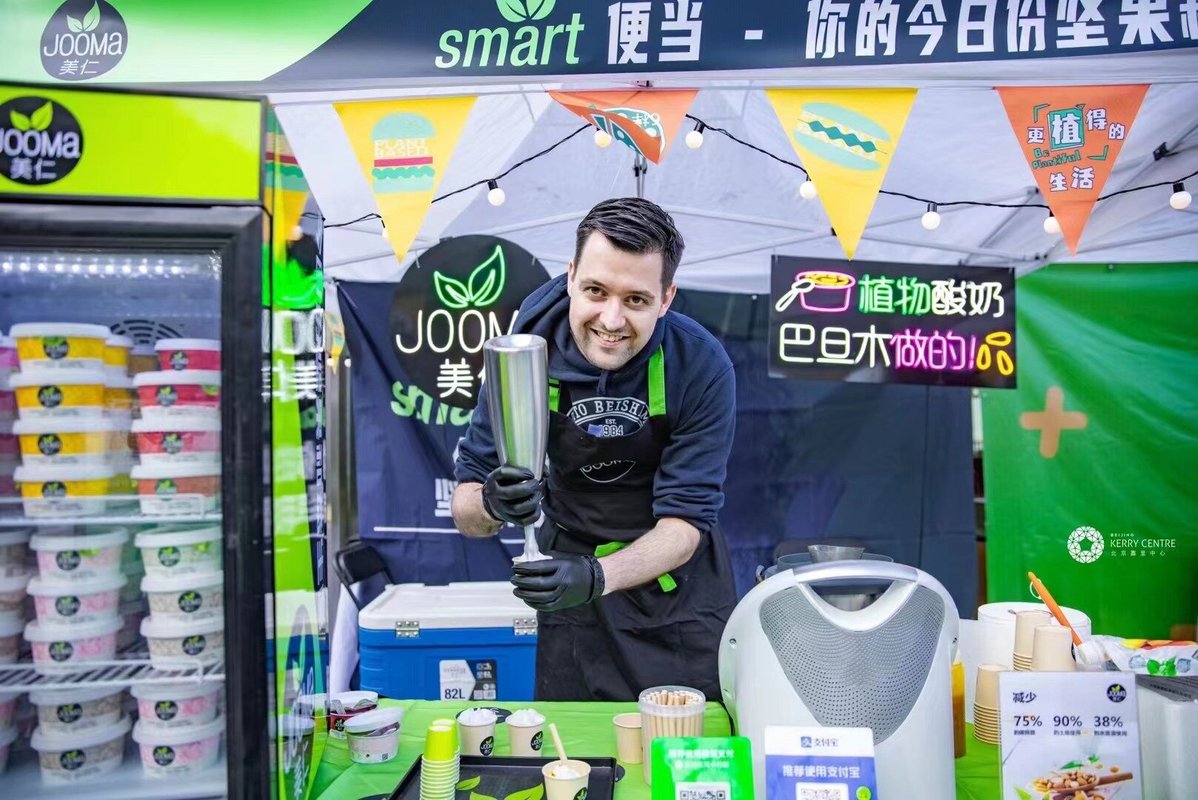
"While being a chef in several Michelin star-rated restaurants about 13 years ago, of course I knew about some delicious, traditional Chinese dishes, but not even thought about ever living in China. China was always far-east, and therefore far to reach." – says Kamil Gajewski, who works in Tianjin as Head of Business Development for an up-and-coming plant-based food company called JOOMA (美仁). Having developed a great passion for good food at an early age, it is certainly no coincidence that he now works for a food company that is particularly concerned with healthy, sustainable, and innovative nutrition.
Now I can say, that my understanding of Chinese cuisine was wrong, because with pleasure I experience what real Chinese food is, what the real Chinese food culture stands for and how Chinese people really think about food.
While in Western countries people call themselves foodies, emphasising that food is an important part of their lifestyle, the Chinese pursue this passion without even the need of finding a wording for it. I appreciate this attitude of the population very much.
When I first arrived in China, I was absolutely amazed by the food. Everywhere I looked, there were new and incredible dishes to try. I was quickly taught what a Beijing duck should really taste like, and how important the way to eat it is.
When ordering a Beijing duck in Germany, I would receive a big portion of rice with fried duck meat, similar to a German Schnitzel – Europeans are missing out totally, that a Beijing duck here in China is not fried, but roasted, not cutted in slices of 1 cm, but in fine slices of millimeters, that it does not go with rice, but wrapped in a nice, light and thin pancake with cucumber, porree and other spices.
Also, when it comes to desserts, China has hidden secrets of excellent dishes. I am impressed how delicate rice balls with Black Sesame stuffing (Tangyuan 湯圓) taste, or how Shuang pi nai (雙皮奶) is done.
I got to try these dishes for the first time in a very special, very tiny restaurant in Tianjin. It was an eye-opening moment, as the owner cooks for her own guests, and she came out of the kitchen quite astonished, asking me: how did you find my restaurant? You are the first foreigner ever in this restaurant, please have a seat. Warmly welcomed, I ate up and down the menu, one dish better than the other!
I quickly realized that the Chinese food here was going to be a big part of my expat experience. If you dive into the Chinese food industry, you will quickly understand, what an amazing and delicious world it is, that you'll never want to leave!
Therefore, apart from all the delicious, cooked food, I also frequently benchmark the food products in the supermarkets. The diversity and rotation of new products is impressive. Food and healthy eating, with many plant-based products, have a history in China, and the country with such a strong awareness and population is the largest food market in the world, to which I want to contribute.
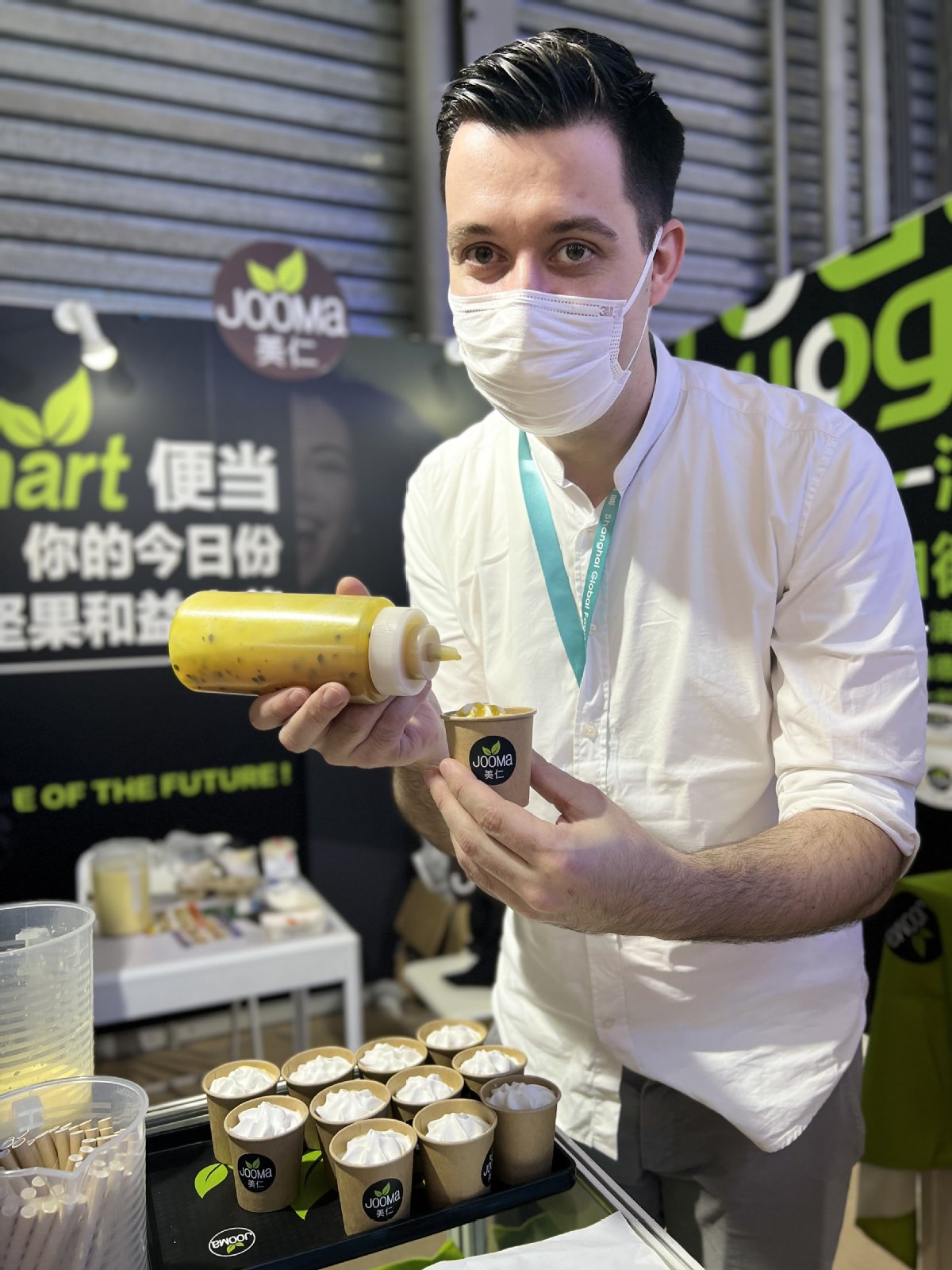
I arrived in China in July 2019, with the mission for bringing good, innovative protein 2.0, to China. In Western countries, plant-based products are widely represented and there is a plenitude of brands that dominate the market. In China, however, the market of plant-based food is on the edge of skyrocketing and have high potential for the future.
At all times, I have had an analytical sense of humanity and my observation is that Chinese consumers are still very loyal to conventional diets, but the majority are also increasingly focusing on healthier eating. To someone who has not been exposed to the benefits of plant proteins before, it is still hard to explain the multiple reasons to buy. However, with good use and high product value, every product may find its own fan base and shape the future of food in China.
The founders and shareholders of the company, I am working for, have a strong vision of standing out by our products' quality and value! This allows to have full focus 100% on technology and quality and still have the time to explain what Protein 2.0 is all about: why is it good for a healthy body? How does it help look and feel better? Why is it sustainable? Questions which need to be answered with substance but also understandably.
While health-effects of fermentation and nuts like almonds are widely understood, it takes more time to explain why plant-based proteins are, a lot more sustainable than animal based. Domestic consumers have not yet established a deep cultural identity on the issue of carbon emissions and animal rights, therefore sustainability in China is still not top-of-the mind. However, we are more often reminded by incidents in nature that sustainability is the next big thing.
Just think about the recent heat waves in southern China, followed by electricity shortages due to the low water levels in the rivers, the thunderstorms in Wuhan or the flood in Zhengzhou in 2021, this topic is getting more and more awareness also here. These incidents are occuring today on a more frequent level than ever before, due to global warming!
Plant-based inherently is more sustainable than the counter products. In all three categories: carbon emissions, land usage and water usage, plant-based products have the advantage. It is very rewarding to know that the products you develop, and produce are not only immediately healthy, but also contribute, in the long term through a more liveable environment.
Today, according to some research, 89% of all Chinese agree to switch to healthier diets, especially millennials and Gen-Z are getting appetite for plant-based nutrition and interest in brands like Oatly, Starfield, Plantag or JOOMA美仁.
There still is a lot of education needed to grasp the awareness for plant-based food, but the interest in health and sustainability are the first touchpoints for customers choosing to involve our products in their nutrition. For companies in the segment, it is therefore essential to assess how to play the cards in terms of health and sustainability. I am myself a flexitarian, which means that I eat meat and I eat plant based as a balanced combination. Over time, I decided to significantly reduce my meat and dairy consumption and try to convince others to follow this path.
The social media in China are key to promote health and sustainability as beneficial topics, but they are also highly flooded by other content, which makes it a huge challenge to reach the consumers' cognition. Therefore, it takes a good mix of digital marketing, offline events, and community building.
I highly appreciate that groups like Vegans of Beijing (VoB) promote this movement, with not all the members necessarily being strictly vegan.
From my perspective, China is a paradigm for good food and nutrition, and I believe that it will expand its position further in future, as China with more diversity can drive the innovation in the market and lead to be a strong economy.
I have observed that Chinese products, technologies, and services in different industries have been improving in quality for years and are therefore increasingly appreciated overseas. What was once "made in Germany" may soon be replaced by proudly "made in China".
Kamil Gajewski is head of Business Development at JOOMA (美仁). He has served more than 13 years in different senior roles in the Food & Beverage industry in Europe.
Yuan Liao(Cecilia)contributed to the story.
The opinions expressed here are those of the writer and do not necessarily represent the views of China Daily and China Daily website.
If you have a specific expertise, or would like to share your thought about our stories, then send us your writings at opinion@chinadaily.com.cn, and comment@chinadaily.com.cn.





