



Unmasked: The face of the real debt trap maker







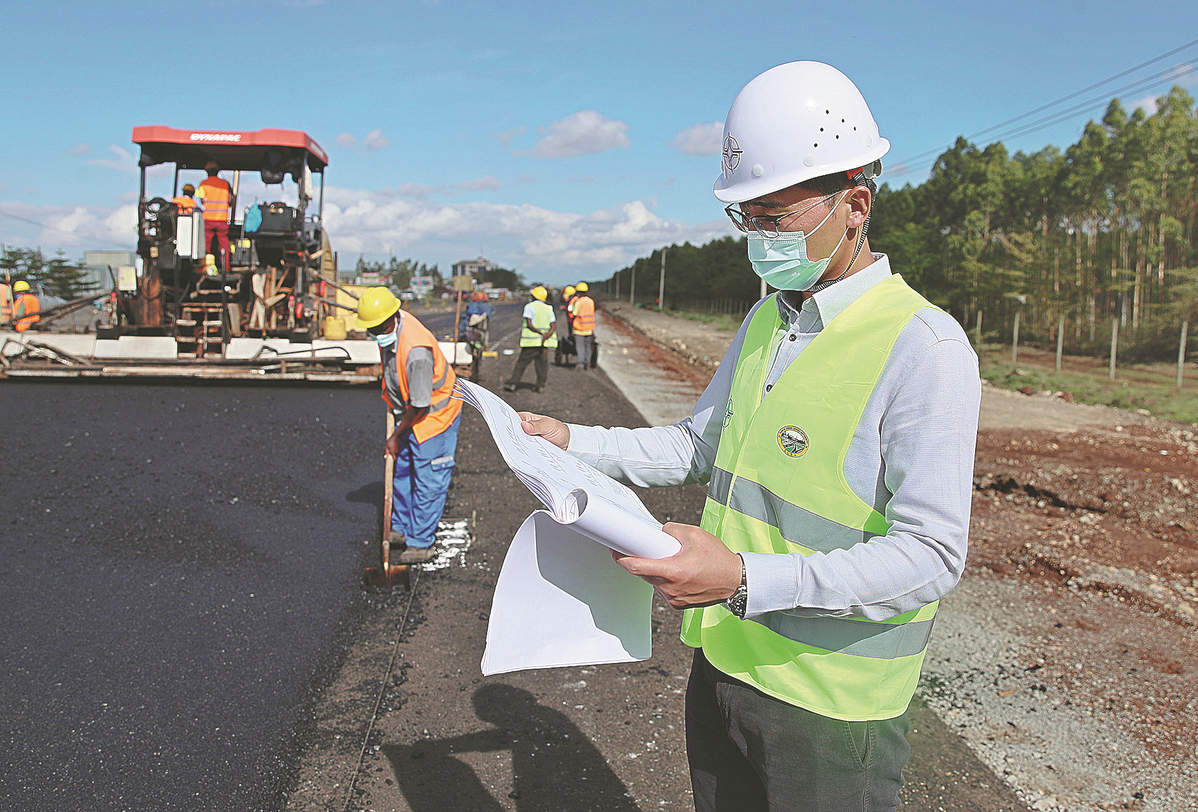
According to preliminary figures, between 2000 and 2020 China helped African countries build more than 13,000 kilometers of roads and railways and more than 80 large-scale power facilities, funded more than 130 medical facilities, 45 sports venues and more than 170 schools, and trained more than 160,000 professionals across various fields in Africa.
The Nairobi Expressway project built by Chinese companies in Kenya through a public-private partnership has created more than 6,000 local jobs and benefited more than 200 subcontractors and several hundred local suppliers. The Kenyan government speaks highly of the project, commending it as an important manifestation of mutually beneficial collaboration between Kenya and China, the report said.
China also attaches great importance to the debt sustainability of projects. In 2017 it signed the Guiding Principles on Financing the Development of the Belt and Road with 26 countries taking part in the BRI. In 2019 China unveiled the Debt Sustainability Framework for Participating Countries of the Belt and Road Initiative. The framework, based on the debt situation and the repayment ability of debtor countries, and following the principles of equal-footed consultation, compliance with laws and regulations, openness and transparency, aims to strengthen monitoring and assessment of the economic, social and livelihood benefits of the projects, and channels sovereign loans into areas with high yields, to ensure the long-term returns of the projects. China has also endeavored to reduce the burdens of debtor countries.
Mostak Ahamed Galib, director of cross-cultural communication and the BRI research center at Wuhan University of Technology, said Western countries are making groundless accusations of China creating a debt trap.
There are two main ways for developing countries to obtain international help, he said, one being technical assistance and the other financial assistance. In terms of technical assistance, China is leading in international engineering, procurement and construction contracting projects.
"About seven to eight of the top 10 companies listed by the Engineering News Record, widely considered as the most authoritative academic research and ranking in the field of engineering and construction, over the past 10 years are Chinese companies," he said.
"So it is not surprising that there are more opportunities for Chinese companies when it comes to engineering contracts."
It is also worth noting that when Chinese companies conduct international projects they usually bring in local companies as subcontractors to work with them so the local company can gain experience and technologies to take part in big projects and then be able to gradually undertake big projects themselves, he said.
Financial assistance usually includes grants, soft loans, commercial loans and hybrid loans. Apart from grants, on which interest is not paid, other loans require recipient countries to pay a certain rate of interest and repay the loan within a certain time. However, no matter what kind of loan agreement is signed, it is fully based on mutual negotiation between the lender and the borrower, and there is no possibility of a so-called debt trap and deliberate deception.
To those who accuse China of engaging in colonialism based on debtors being unable to repay loans, Galib said that is also a smear.
"In port construction, for example, if the debtor countries find themselves unable to repay the loan on schedule, the port may be carried out within a certain time in the lease. This is not colonialism but is similar to a commonly seen project contracting model switching from the build and transfer mode to the build, operate and transfer mode."
Those leveling the debt trap allegation deliberately ignore the fact that a lot of China's lending is in the form of grants or soft loans, Galib said.
"China itself is still a developing country, but there is debt relief for other borrowers who cannot repay on time."
The Belt and Road Initiative is not creating debt traps but opportunities for collaboration and development, he said. Countries involved should seize opportunities the BRI provides to improve their infrastructure construction, strive to become industrial and commercial centers in the region, and use the convenience of connectivity to improve their economic and trade levels and people's living standards.
He cited the China-built Padma Multipurpose Bridge in his country, Bangladesh, which opened to the public in June, cutting travel times from parts of the southwest of the country to the capital Dhaka from seven to eight hours to as little as 10 minutes.
The bridge is expected to raise Bangladesh's GDP by more than 1 percent a year, benefiting about 30 million people in 21 southwestern districts of the country, the Centre for Policy Dialogue, a think tank in Dhaka, said.
For Clayton Hazvinei Vhumbunu, a research fellow in International Relations at the University of Pretoria in South Africa, figures are more eloquent than Western talk of debt traps.
He cited a report last month by Debt Justice in the UK based on computations from the World Bank International Debt Statistics Database revealing that just 12 percent of African governments' external debt is owed to Chinese lenders, and 39 percent is owed to multilateral institutions, while 35 percent is owed to private lenders, excluding Chinese private creditors.
The Debt Justice calculations also show that the average interest rate on private sector loans is 5 percent, compared with 2.7 percent on loans from Chinese public and private lenders.
"Progressive discussions on the African development and debt discourse should transcend beyond narrow arguments on debt relief, debt restructuring, debt forgiveness, debt cancellations, debt swaps or debt haircuts," Vhumbunu said. "Rather, the focus and emphasis should be on how African countries can adopt strategic socioeconomic development models that sustainably transform their economies into industrialized, modernized and prosperous countries."
Xinhua contributed to this story.










