



Minimizing heat waves effects on cities







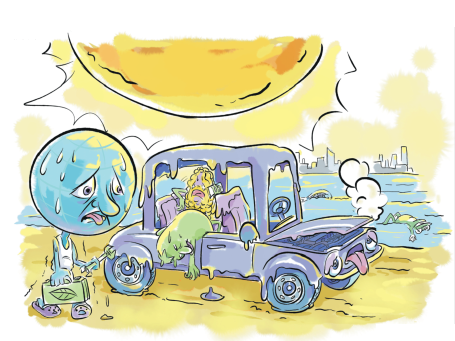
Editor's note: This summer has been one of the hottest on record as global temperatures are rising faster than ever before, threatening lives and livelihoods. We know the consequences of not curbing global warming. But are we doing enough to reverse the trend? Three experts share their views on the issue with China Daily.
Average temperatures around the globe have been rising at an increasing rate since the 1970s. While global warming contributes to extreme weather events, cities are major contributors to climate change. Globally, more than 50 percent of the population lives in urban areas, with cities consuming 78 percent of the world's energy and emitting 75 percent of the greenhouse gases (GHGs).
Cities are also vulnerable to climate change. High temperatures, heavy downpours and extreme weather events are felt more acutely in urban areas. Especially, high temperatures have a more severe effect on cities compared with rural areas.
However, agriculture suffers the most due to climate change, because climate change has been causing frequent droughts and prompting pests, particularly insects, to reproduce at a faster rate. Persistent extreme weather tends to affect agricultural production and the environment, reducing yield and the concentration of protein and essential minerals in most plant species.
Therefore, it is necessary to analyze the problems faced by rural and urban areas, suggest viable ways to deal with extreme weather events, and reduce energy demand and emissions without harming economic development.
One of the major phenomena associated with the dual challenge of climate change and urbanization is the "urban heat island effect", in which high-rise buildings and road surfaces absorb excessive solar rays and trap heat, generating heat waves which are a major concern in the summer. Fortunately, there are ways to reduce urban heat stress.
First, smart city planning and design can help cut GHG emissions. For example, cities should increase the number and quality of green spaces, carefully lay out functional areas, optimize public transportation and promote green architecture, by designing green buildings which minimize the negative impact on the surrounding environment.
Second, cities vulnerable to high temperatures need to establish a mechanism to combat heat waves, and authorities should assess the risk of high temperature-induced disasters in different areas and groups of people, shorten the period for outdoor work, create an emergency heat relief fund, and improve the ability to restore activities.
And third, local meteorological departments need to strengthen their monitoring capability and warn residents of heat waves in advance, while the authorities should introduce contingency plans to help enterprises and the people to deal with high temperatures. And public spaces and facilities such as parks and air raid shelters should be used effectively during extremely hot weather.
How to lower air temperatures through smart urban design and planning is a test for urban authorities' governance system and capacity. So cities should adopt effective measures to save energy and reduce GHG emissions, adjust demographic and economic structures, and promote the transition to low-carbon production in key areas and industries, in a bid to facilitate sustainable development.
In fact, advanced technology and digital enterprises can promote the development of smart cities, and contribute to the construction of intelligent infrastructure.
More important, many cities still need to intensify efforts to reduce coal consumption and increase the use of clean energy to generate electricity, develop green transportation system and green building. There is also a need to develop energy storage technology to improve renewable energy supply, and promote the transition to green energy while ensuring energy supply stability.
The authorities should also take measures to reduce the use of fossil fuels in the urbanization process, thus cutting GHG emissions, and upgrade the supporting facilities and industries to improve their energy efficiency.
While governments need to introduce policies to encourage people to adopt a low-carbon lifestyle to save energy, reduce emissions and better protect the environment, local officials should streamline garbage classification and generate energy from waste to reduce fossil fuel use in cities.
Moreover, since crops are severely affected by heat waves and declining availability of water, it is necessary to intensify research and development of drought-resistant crops and reduce the use of water in agriculture, in a bid to ensure stable yield, and find new ways to save water.
And disaster-relief mechanisms should be established to minimize the effects of heat waves on agriculture, and expand the coverage of agricultural insurance to protect farmers against natural disasters.
The author is head of the China Institute for Studies in Energy Policy at Xiamen University. The views don't necessarily reflect those of China Daily.





