Japan's decision to release toxic water poisonous







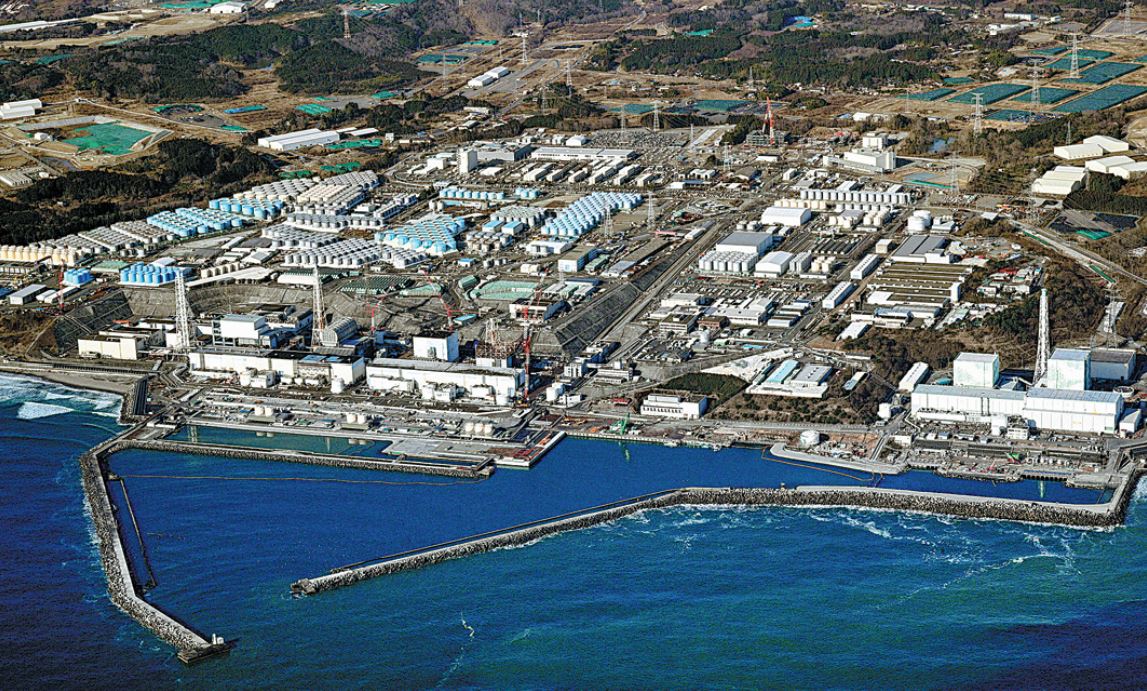
Japan's Nuclear Regulation Authority has formally approved the Tokyo Electric Power Company's plan to pipe contaminated water from the Fukushima nuclear power station into the ocean after reportedly soliciting public opinion for a month.
Friday's poisonous decision, taken after what they called scientific evaluation and public discussion, while defying long-time protests from neighboring countries and environmental organizations, will greatly damage the marine environment as well as the health of people in the whole region.
After a tsunami triggered by a massive earthquake destroyed the Fukushima Daiichi nuclear power plant in March 2011, TEPCO began discharging the highly radioactive water into the sea. However, following pressure from the public, it began building tanks to store the contaminated water instead of discharging it into the sea. But these storage tanks can hold only 1.37 million cubic meters of water, and will be full around the summer of 2022.
On April 13, 2021, the Japanese government and TEPCO announced that over 1 million tons of irradiated water from the site would be "discharged into the sea", after treatment, starting around spring 2023. The NRA preliminarily cleared the plan in May.
The Japanese government said last year that the Fukushima water would be "repurified" to meet regulatory standards for certain nuclides, but those limits are for operational nuclear power plants, not for the deliberate release of contaminated water from a nuclear disaster. It is possible that Japan's action will set the trend for other countries to discharge radioactive waste in manners that defy set standards.
Even though TEPCO claims the water will have no negative impact on public health, that is something that will become clearer years, or even decades, later, when it might be too late to reverse it or repent.
For one thing, TEPCO's "repurification" experiment has been tried on only a small volume of water. The company needs to verify whether the processing performance can be maintained for a long period of time. Otherwise the accumulation of isotopes in seafloor sediments will be picked up by marine biota.
Although TEPCO claimed that it decided to dump treated nuclear-contaminated water into the ocean because the company would run out of room to store additional water by the middle of 2022, environmental organizations said there is space for additional tanks on land adjacent to the Fukushima campus. Such storage would allow the radioactive isotopes to naturally decay while buying time to develop new treatment techniques.
Without exhausting all safe means of disposal, disclosing all relevant information, and consulting with all the stakeholders, including neighboring countries, and going ahead with the plan to discharge toxic water into the sea, TEPCO and the Japanese government are evading responsibility.
As all seas are interconnected, not just Japan's immediate neighbors such as China and the Republic of Korea, but even North America and Europe cannot escape possible harm from radioactive discharge.
Everyone should stand up against this decision that could prove to be a major disaster.
Japan's decision seriously threatens marine life as well as that of human beings, and is a gross violation of international rules. Releasing toxic water into the ocean cannot be treated as Japan's internal affair; it is of global concern, requiring suggestions from many other players.
Therefore, it's high time the world stopped Japan from carrying out this disastrous plan.
The author is a writer with China Daily