Amid the ruins of an ancient capital, nature holds sway







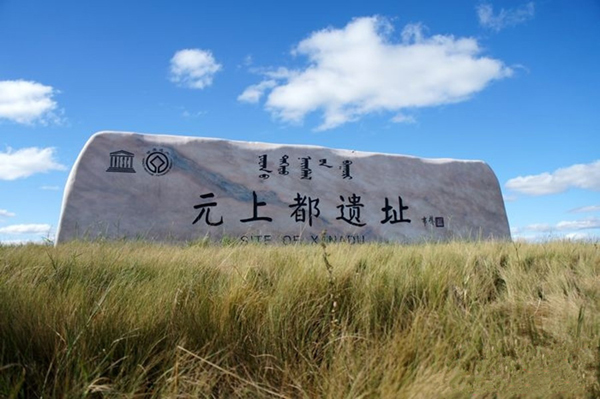
About 350 kilometers north of Beijing lies the UNESCO World Heritage Site of Xanadu.
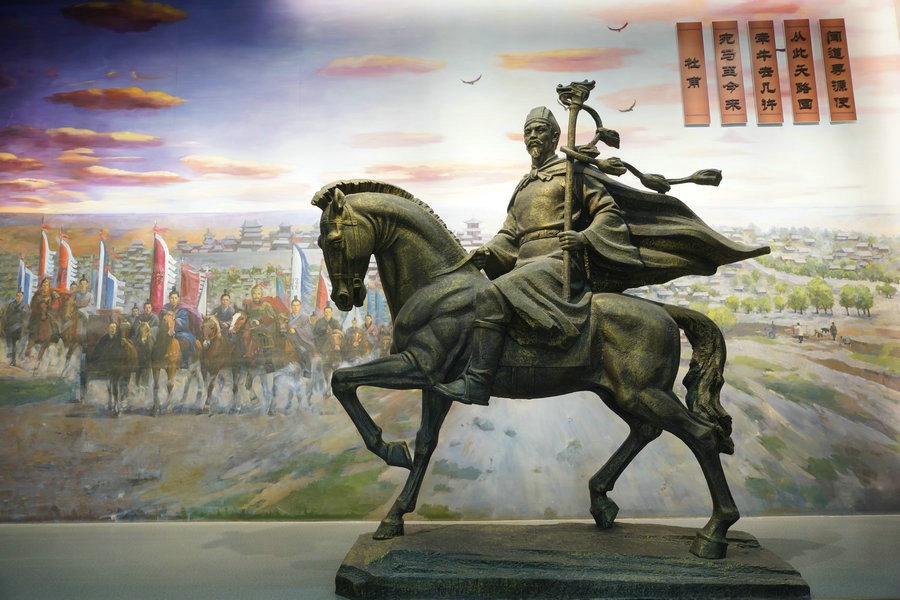
The site is also known as the ruins of Yuan Shangdu, the northern capital of the Mongol Empire ruled by Kublai Khan. The grandson of legendary conqueror Genghis used Xanadu as the summer base for the Yuan Dynasty (1271-1368), a place where he escaped the stifling heat of Beijing and presided over one of the world's largest empires.

English poet Samuel Taylor Coleridge immortalized Xanadu in his opium-induced work Kubla Khan, with visions of a "stately pleasure-dome":
"With walls and towers were girdled round;
And there were gardens bright with sinuous rills,
Where blossomed many an incense-bearing tree;
And here were forests ancient as the hills,
Enfolding sunny spots of greenery."
When I visited Xanadu a few years ago in the early hours of a summer morning, I realized a good dose of imagination was still needed to fully appreciate the ancient capital.
Wire fences bordered a wide, square plain. The main entrance was unassuming, save for staff offices and quarters designed like traditional Mongolian ger tents.
Wooden boardwalks took visitors to various spots accompanied by explanatory signs. There seemed to be no evidence of any imposing building befitting an imperial capital.
As I approached the center of the site, I could make out earthen mounds and some similar remnants of walls.
Xanadu is in North China's Inner Mongolia autonomous region, on the south-eastern edge of the Mongolian plateau. A United Nations report on the ruins, which received the heritage status in 2012, states that in 1256, Kublai Khan's Chinese adviser Liu Bingzhong designed the city according to feng shui principles, with hills to the north and a river to the south.
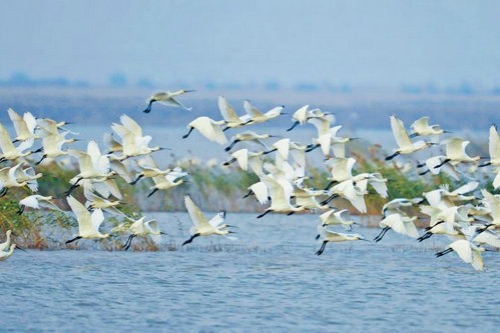
Xanadu is situated idyllically amid the Xar Tala globeflower prairie and Xandii Gool wetlands on the upper reaches of the Luanhe River.
True to their nomadic roots, Xanadu's Mongol masters took full advantage of the pristine setting to ride horses and hunt during its cool summer months.
But the capital soon grew to reflect its importance. Neighborhoods stretching for over 2 km sprung up near the city's outer walls, with archaeological remains of government offices, warehouses, large courtyards, shophouses and barracks, shedding light on its many urban functions.
Outside a split mound, which had served as the city's southern Mingde Gate, lay an "imperial path "which the Mongol emperors and their officials used to access the city. Taverns and inns seemed to have set up shop on the side. Yuan poems describe how "Banners of wine shops swayed under low eaves. One cup of wine brewed with water from the Luanhe River... the price does not concern those who dismount to drink it".
The northern end of the palace city contained one of Xanadu's largest remains, identified as the Muqing Pavilion, where its rulers held impressive banquets.
Kublai Khan himself probably feasted on the Mongols' favorite mutton dishes and fermented mare's milk in the opulent interiors of this pavilion, even as he tasted the best that his global empire had to offer. He would have surveyed his capital from Muqing, and the spot still offered a regal vista of Xanadu's ruins.
Toward the end of the 14th century, ethnic Han rebels reclaimed the Middle Kingdom from the "barbarian" Mongols. They razed Xanadu to the ground in 1369, abandoning it to the wild as the Ming Dynasty (1368-1644) took over.
As I stood on the boardwalk, a crisp morning breeze brought a light summer rain on the grasslands and streams. Birdsong filled the air. It was too early in the day for other visitors. No artificial sounds could be heard, and the ruins dotting the plain slowly blurred as the drizzle turned into a downpour.
Xanadu still seemed like a magical place. This time, the elements were returning it to its lush, green glory.
The powerful reminder of nature's hold over the human condition and civilization had made me want to stay for just a little bit longer.
Faced with the prospect of another sweltering summer in Beijing, those soothing moments of natural splendor will continue to linger in my mind.