


When LA's wounds left a nation scarred







High unemployment
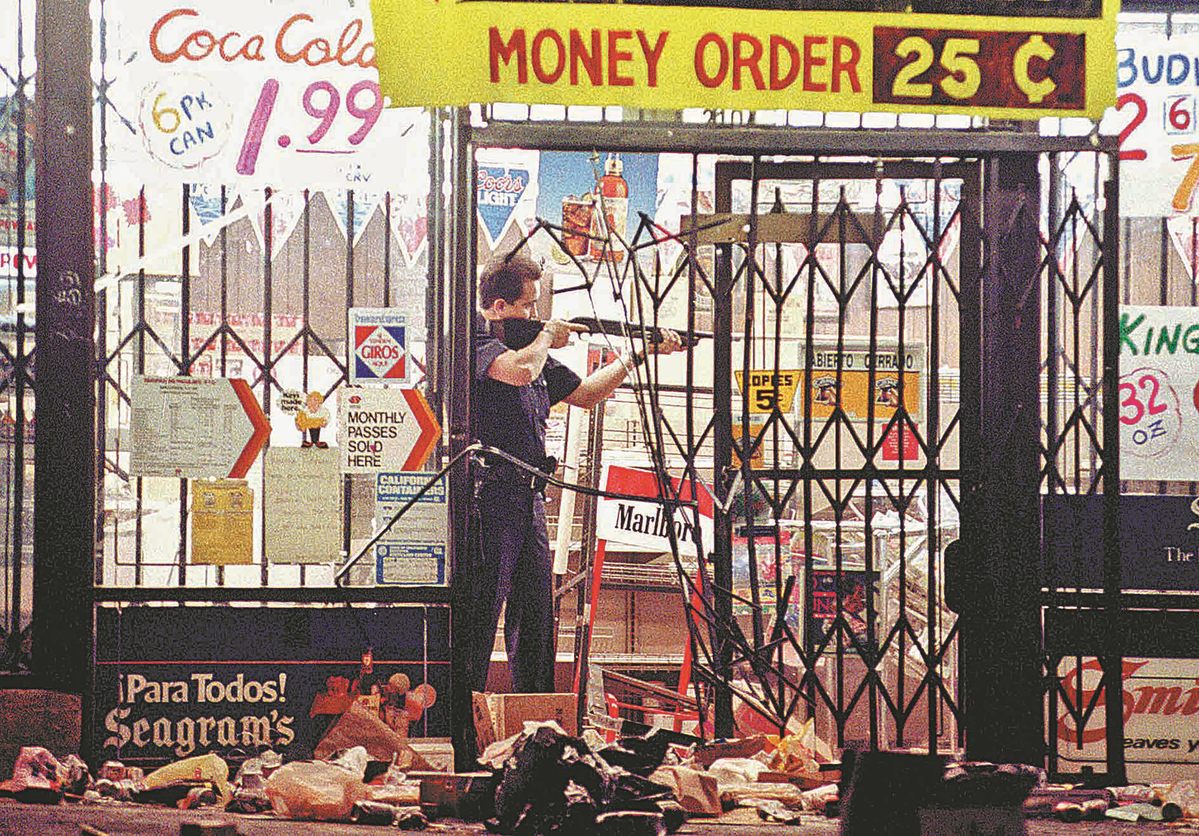
Brenda Stevenson, an Oxford University history professor, told China Daily that swathes of the neighborhood were plagued by high unemployment. Residents also had trouble getting affordable housing and adequate education and health resources. That, along with the high incarceration rate of African Americans and Hispanics, contributed to the unrest, she said.
The socioeconomic injustice that existed in 1992 is still present today, she said. In addition, the homeless population, made up mostly of brown and black people, has grown tremendously. The underlying racial disparities were further exposed during COVID-19, when ethnic minorities had limited access to treatment and testing, she said.
"There are so many things that are going on today that are both similar to and in some cases worse than it was in 1992," Stevenson said.
Between 1960 and 2016, in metrics such as income, housing, transportation and education, residents in South LA still lagged far behind others in Los Angeles County, according to a study by researchers from UCLA called "South LA since the Sixties". In 2016, a full-time employee in South LA made an average of 60 cents for every dollar earned by a county resident.
Many vacant lots where the riots occurred remain undeveloped. Large store chains don't want to come to the area for fear of another civil unrest, Fields said. "Fighting for our rights still doesn't necessarily get us what we need in our community," she said.
Although racial relations between minority groups have improved, Los Angeles remains a segregated city.
"Here in LA, you have one ethnicity living in Santa Monica on the West Side; you have another living in the Wilshire area; you have another living in South LA; you have another living in East LA," Fields said.
Los Angeles is a sprawling and car-driven city. Unlike other large cities such as New York or Chicago, where people usually take public transportation, residents here get into their cars and arrive at their destinations without encountering anyone else, Lawson said.
"We are so segregated that you can literally live your life not interacting with people of another ethnicity if you don't want to," Fields said.
A lot of the people in these ethnic communities speak only their native tongue, she said. The isolation between the ethnic groups resulted in language and cultural barriers, which contributed to the tensions and probably led to the misunderstanding between Harlins and the Korean grocer, Fields said.
"I think in the immediacy of the moment that different ethnicities may have felt that we were fighting against each other, but I think over time, what we've learned to understand is we are just all fighting to be treated fairly," Fields said.
Both the Korean and the black communities have realized that they have more similarities than differences.
About half of the damage from the riots was sustained by Korean businesses. Many store owners felt that they had been abandoned by law enforcement when police protection didn't show up.
Connie Chung Joe, chief executive of Asian Americans Advancing Justice-LA, was in high school during the riots. She recalled hearing about friends' parents and her own relatives going to rooftops with guns to protect their businesses from potential looters.
"For Korean Americans in LA, it's one of those moments we never forget, much like 9/11 was for all Americans," she told China Daily.
Joe noted that two racial movements, Stop Asian Hate and Black Lives Matter, have been pushed to the forefront during the pandemic. She urged members of ethnic groups to reach across racial lines to establish solidarity.
"I think what needs to be done to address racial disparities is to really think about how communities of color must work together to fight racial oppression instead of allowing ourselves to be pitted against one another for scraps of attention and resources," Joe said.
More work needs to be done to resolve "long-term racial tensions", she said, noting the belief that anti-Asian hate crimes in recent years have been committed by African Americans is "factually incorrect".
Marsha Mitchell, communications director at Community Coalition, a South LA-based organization working to enhance the area's conditions, echoed that comment.
"There is a current narrative trying to pit black and AAPI communities against each other. But the attacks and targeting of AAPI people are squarely rooted in white supremacy, which is embedded in American racism," she told China Daily.
Fair treatment demanded
Mitchell suggested strengthening coalitions "that demand just policing, laws and policies that benefit both communities".
Many interviewed for this article preferred to use the word uprising, instead of riots. It was "a demanding of equal and fair treatment", Fields pointed out.
Smith-Pollard said "rioting or looting" is a strategy that gets attention but isn't sustainable.
"We also understand why people do it because a riot is the voice of the unheard," she said.
Compared with 30 years ago, ethnic groups are engaging each other more, there is also more accountability because of activism and technological advances, but activists and experts said more is needed to overturn "a system of racism".
"Until you've lived it, and walk in the shoes of racism, until you've been followed around in a store when you are just trying to shop; until you try to return an item of clothing into a store and they accuse you of stealing it; until you stood at a counter, and have someone white just walk in front of you like you are invisible, which happens day after day after day with me. Until you've lived that life, you don't really understand how it makes your heart feel," Fields said.





