US an empire of coercion







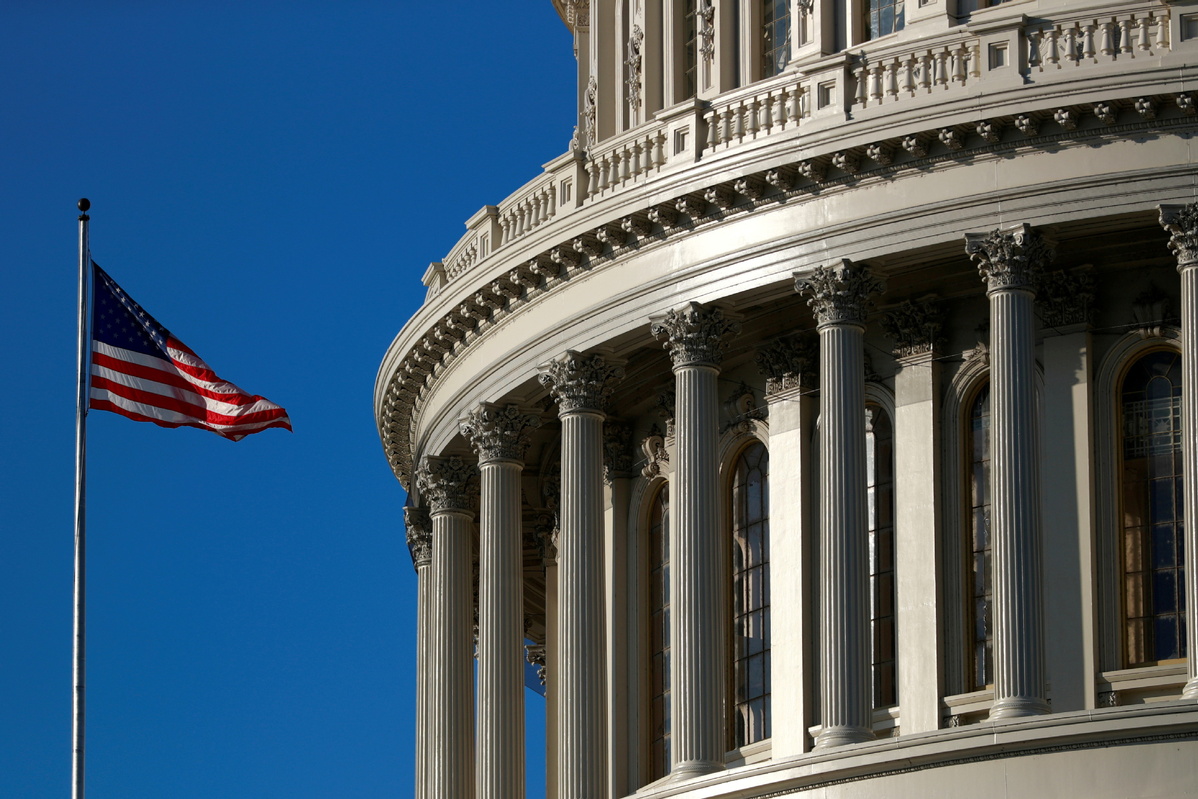
From Rome to Great Britain, every empire has assimilated the conquered with language, institutions and ideas, often by coercion, so that the conquered would be easier to rule over, and the empire's power and interest are maximized.
Similar is the tale of the United States of America. When the US found European gunboats blockading Venezuela's port in 1902, it couldn't sit idly by anymore, so it decided to exercise "international police power" in the Western Hemisphere and intervene in other country's internal affairs (Roosevelt Corollary 1904).
US policing whole world
Hegemony is not easy to manage. So for those who were too stubborn to accept its rule — Cuba, Iran, Syria, the Democratic People's Republic of Korea, Venezuela, and most recently, Russia — the US has resorted to harsh coercion including economic sanctions, diplomatic isolation, or more directly, missiles, drones and marines. The tools of coercion may have varied, but Washington's goal has been consistent — inducing a major change in the target's political system so as to wipe out its strategic, diplomatic and economic ambitions. In this way, problems are solved once and for all and the "American Empire" is cemented.
In the past seven decades, the US has fought major wars in Korea, Vietnam, Iraq and Afghanistan. Unhappy with the price and outcome of military options, sanction has become Washington's favorite tool of coercion. During former US president Barack Obama's first term, the US sanctioned on average 500 entities every year. During previous president Donald Trump's term, that number doubled.
Incumbent President Joe Biden has inherited this coercive diplomacy faithfully, and sanctioned Myanmar, Nicaragua and Russia during his first months in office.
Two months into the Russia-Ukraine conflict, the US has imposed more than 800 sanctions on Russia. Sanctions have officially become Washington's go-to option apart from military actions, and the Americans seem to be confident that they can coerce a major country into submission with the US' hegemonic power in the global economy and financial system.
It is even more remarkable that the Americans are using coercion to reinforce coercion. The US has made it clear that those who follow its sanctions are loyal friends, and those that attempt to judge the situation based on its merits are not "standing on the right side of history" and will be greeted with "severe consequences".
The actual efficacy of US coercion is a topic of debate, but its damage effects have been keenly felt by ordinary people in those countries targeted by the US. For instance, US embargo has cost Cuba roughly $130 billion (about one and a half times Cuba's annual GDP) in economic value over the past six decades, and studies have shown that the embargo "contributes to increasing health threats and the decline of some health indicators". As for US sanctions on Iran, they have led to a 42 percent annual inflation there, and more than one-third of Iranians are living below "the basic minimum of subsistence".
Despite the human and economic tolls, the term coercion wasn't considered negative in the US' dictionary. For a while, it was proudly branded as "an alternative to war", as we read about the Cuban missile crisis of 1962 in the many pages of study by Alexander George, who was among the first to put "coercive diplomacy" into theocratic framework in the early 1990s.
Until China came along.
From the Trump administration to the Biden administration, Washington's politicians have been using the term "coercion" to describe those moves by China that they don't like. China downgrading its diplomatic ties with Lithuania: coercion. China arresting Canadian spies: coercion. China protesting against the deployment of US high-tech weapons in the Republic of Korea: coercion.
Apparently, "coercion" has become a convenient word for US propaganda. The more China is associated with negative terms, the easier it is to garner support for the US' hostile China policy.
A truly independent and responsible observer would examine the nature of a state's actions, instead of going by just how they have been labeled.
There are essential differences between how the American and Chinese people do things. For one thing, Beijing's actions are defensive and proportional while the US' are offensive and coercive. Beijing downgraded its diplomatic relations with Lithuania in 2021, because the latter violated the one-China principle by allowing Taiwan to open a de facto embassy in Vilnius. Beijing's move was labeled by Washington and its allies as an act of "coercion".
Yet no matter how individual politicians try to present it, the meaning of the one-China principle is self-evident, and it has been written into UN resolutions, and the declarations between China and other countries while establishing diplomatic ties. In response to a violation of a legally-binding international agreement and in an effort to defend its territorial integrity, China's decision to downgrade diplomatic relations with Lithuania is highly proportional and legitimate.
Sanctions US' powerful weapon to coerce others
In 2018, the US recalled its top diplomats from the Dominican Republic, El Salvador and Panama, and threatened to downgrade its diplomatic relations with those countries. Guess what? It also had something to do with Taiwan. Washington was angry that the three Central American countries had decided to establish diplomatic ties with Beijing, thereby cutting off their "official" relations with Taiwan. Which country those Central American countries choose to befriend is within the scope of their sovereignty and has nothing to do with the US.
Besides, establishing diplomatic ties with the only legitimate government of China endorsed by the UN and the overwhelming majority of countries should not be a move that calls for interference by the "big boss".
Yet Washington was so desperate to change the behavior of the three Central American countries that it even issued a threat to cut off assistance to them. Reducing development aid in retaliation to a sovereign decision — this has been a classic demonstration of asymmetrical reaction or, to use a simpler term, bullying.
Also, China takes actions within the confines of international agreement and institutions, while the US applies its domestic laws selectively all around the world regardless of legality.
Moreover, Australia has been crying out "Chinese coercion", because some in Canberra felt that the drop in its exports to China has something to do with its political statements regarding the tracing of COVID-19 origins and China's human rights. Here, the validity of such imagination is not to be examined, but how China did what it did is all on paper.
For Australian barley, wine sugar and other products, China conducted anti-dumping investigations and took actions according to World Trade Organization rules. Australia reacted by also utilizing WTO tools. Any party can take their grievances to an impartial arbitrator governed by international agreement. Isn't that the essence of how we run this anarchic world in a modern way?
But if a country somehow crosses the US, the consequences would be dire and there is no place to appeal except in US courts. The overwhelming majority of US sanctions have been authorized by domestic laws, which means US Congress has more sway in running global affairs than the UN, an institution with collective mandates of 193 sovereign states.
Every year since 1992, the UN General Assembly has voted overwhelmingly to pass a resolution demanding the US lift its illegal embargo on Cuba. Yet the embargo is yet to be fully lifted. This is a classic demonstration of the US' arbitrary enforcement of law or, in plain terms, bossiness.
I will leave it to the readers to decide which country uses coercion? And which is a bully?
The author is Beijing-based international observer.
The views don't necessarily reflect those of China Daily.
If you have a specific expertise, or would like to share your thought about our stories, then send us your writings at opinion@chinadaily.com.cn, and comment@chinadaily.com.cn.