



Global monetary system more unfit than ever







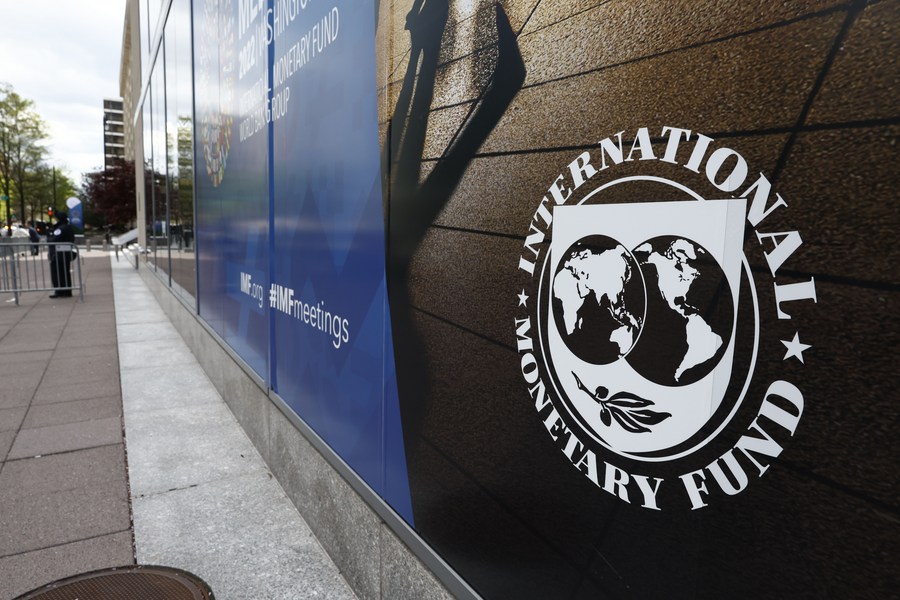
After the 2008 global financial crisis, the world seemed ready to undertake meaningful reform of the international monetary system. But the promised structural changes never happened. And the recent spring meetings of the International Monetary Fund and the World Bank indicated that the current bout of global economic upheaval will similarly fail to spur transformation.
When the 2008 crisis rocked the global financial system, policymakers took radical action to stabilize it. Beyond government bailouts of distressed banks in the United States, the epicenter of the crisis, liquidity was expanded substantially through large-scale quantitative easing and foreign currency swaps by central banks. And the international monetary system's legitimacy was bolstered by the expansion of decision-making from the G7 to the G20.
The obvious next step was regulatory reform, aimed at preventing future crises. To this end, more power was delegated to the Financial Stability Board, an international body focused on identifying and promoting strong regulatory, supervisory and other financial sector policies. The FSB pushed, for example, for higher capital and liquidity requirements for banks and limits on total leverage ratios.
But critical reforms-such as the FSB's attempts to expand oversight to cover non-bank financial intermediaries-were thwarted by pushback from the financial community. Similarly, in the US, the tougher regulatory regime put in place after the crisis was subsequently weakened.
Meanwhile, the massive monetary expansion that had propped up the global economy generated new risks, with prolonged ultra-low interest rates encouraging short-term speculation and fueling asset bubbles, without increasing long-term productivity. According to the McKinsey Global Institute, total assets tripled from 2000 to 2020, with the value of global financial assets and liabilities now twice as large as that of real assets. At the same time, the financial sector and ownership wealth became far more concentrated.
Now, a new set of shocks-from the COVID-19 pandemic, rising inflation and interest rates, and the Ukraine-Russia conflict-are threatening to generate further upheaval. According to the Intergovernmental Group of Twenty-Four on International Monetary Affairs and Development, the most pressing challenges include debt distress among emerging-market and developing economies, vaccine equity, the surge in inflation, and growing risks to financial stability.
Efforts to address such urgent challenges are largely piecemeal. For example, last August, the IMF approved a general allocation of special drawing rights (SDRs, the IMF's reserve asset) equivalent to $650 billion. This expanded the IMF's resources substantially, but the demands for funding have increased exponentially. As IMF Managing Director Kristalina Georgieva admitted at the recent meetings, 60 percent of countries, including at least 20 in Sub-Saharan Africa, have debt burdens exceeding 50 percent of their respective GDPs and are facing or near debt distress.
With the Ukraine-Russia conflict generating severe increases in energy and food prices, which are hitting emerging-market and developing economies particularly hard, the situation is set to deteriorate further. Already, Argentina, Egypt, Lebanon and Sri Lanka are in urgent aid talks with the IMF. As for Ukraine, the IMF has provided $1.4 billion in emergency funding, but the country needs at least $5 billion per month to maintain a functioning economy, and that does not even begin to cover post-war reconstruction.
More fundamentally, "urgent" and "important" are not the same thing. And there are some crucial structural-reform questions that the IMF and its most powerful stakeholders have not even begun to answer. Perhaps the most fundamental is whether the current US dollar-based system designed at the end of World War II can continue to provide global public goods.
That system has certainly worked well to foster globalization, trade, financialization and overall growth during the largely peaceful post-World War II period, including the tense Cold War era. But it was not designed to deal with the complex challenges posed by climate change, pandemics, rapid technological innovation, rising inequality, long-term demographic changes and escalating geopolitical conflicts. It certainly was not intended to operate within a multipolar world order.
The world was promised a neutral international monetary system secured by a stable reserve currency issued by a global hegemon. But, with the US dollar being weaponized through sanctions, it has become all too clear that the current system is far from neutral.
Moreover, the US is no longer the global hegemon. The world order now seems destined to split into two blocs, each with their own security structures, supply chains, technologies and financial systems. In any case, as Bernard Snoy et d'Oppuers points out in a forthcoming book, when any national currency functions as a global currency, at least six types of instability ensue: environmental, economic, social, financial, political and ideological.
Building a more stable international monetary system demands a shift to a truly global currency. The SDR is the most obvious candidate, backed by the Palais-Royal Initiative in 2011. But the US, which holds the most sway at the IMF, would not agree to turn the IMF into a quasi-central bank with the power to issue a supernational currency that would erode Washington's "exorbitant privilege".
Even if no national currency is likely to replace the US dollar any time soon, there are two other avenues for reducing the dollar's dominance as a means of payment and store of value: digital currencies and the creation and expansion of non-dollar-based payment systems (replacing Fedwire, Society for Worldwide Interbank Financial Telecommunication, Euroclear, and the like).
The existing international monetary system is unsustainable. We can either reform it now or wait for a catastrophic crisis-an emerging market and developing economies' debt crisis on the scale of the Latin American and Asian financial crises in the 1980s and 1990s, a global bout of depression like that seen in the 1930s, or war among major powers-to force our hand.
Project Syndicate
Andrew Sheng, a distinguished fellow at the Asia Global Institute at the University of Hong Kong, is a member of the UNEP Advisory Council on Sustainable Finance; and Xiao Geng, chairman of the Hong Kong Institution for International Finance, is a professor at and director of the Institute of Policy and Practice at the Shenzhen Finance Institute at The Chinese University of Hong Kong, Shenzhen.
The views don't necessarily reflect those of China Daily.
If you have a specific expertise, or would like to share your thought about our stories, then send us your writings at opinion@chinadaily.com.cn, and comment@chinadaily.com.cn.





