Text message default setting safer for users







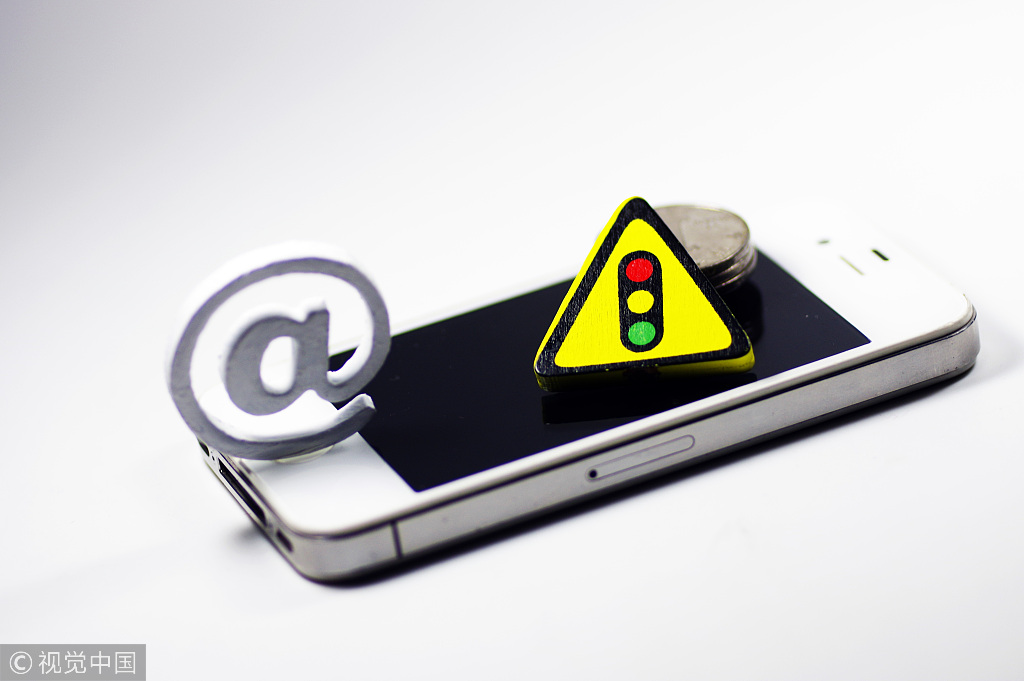
Telecom providers take new measures to mitigate cross-border fraud attempts
Telecom operators in several provinces have disabled the function of receiving text messages or phone calls from overseas by default to prevent cross-border telecom fraud and protect customer safety.
China Mobile Communications Group in Zhejiang province recently informed its customers that it will only turn on international, Hong Kong, Macao and Taiwan telephone answering services on demand.
Customers who want to answer cross-border calls need to send 1219 to its official number 10086 for registration, otherwise, the company will not allow cross-border voice answering functions.
Telecom operators in Zhejiang already shut down the text message receiving function by default in August 2021. Providers in other provinces have also closed text message receiving functions.
Operators from Henan province in May, Jiangxi province in March, Liaoning province in January and Guizhou province in November 2021 turned off customer international, Hong Kong, Macao and Taiwan text messages receiving functions by default.
For customers who want to receive cross-border text messages, they can go to local telecom operators with their identification documents, or send text messages, to turn on the service.
Xiang Ligang, director-general of the Information Consumption Alliance, said overseas fraud groups can push fraud content to a large number of people in China via telephone calls, messages and virtual online voice calls, so the change in the default settings is a good step in preventing telecom fraud.
"The authorities have adopted many methods in the past such as tracking and blocking specific numbers. Technically, these methods cannot be fully effective in prevention, and fraudsters can change numbers or invent more virtual online numbers to commit crimes, so there is no accurate way to block all the fraud numbers," he said.
The current method is not completely blocking overseas phone calls or messages, and people who need such services can apply to recover them. Operators must also inform their customers of the default settings and recovery application methods by text messages, effectively guaranteeing customers' right to know, he said.
"There are still a small number of people with relevant needs, and for most of the people, such measures can help them prevent cross-border fraud at the source. I have seen many internet users complaining online about being harassed by fraudulent calls and text messages from abroad and who've expressed support for the default settings," Xiang said.
About 60 percent of the fraud cases are the result of fake mobile apps, and fraud groups have widely capitalized on using virtual private networks, cloud voice calls, and foreign telecom operators to commit fraud, Liu Zhongyi, head of the criminal investigation bureau of the Ministry of Public Security, said while sharing the traits of telecom fraud cases in a news conference in April.
Fraud groups are transnational and well-organized. The leaders and networks often hide abroad and lure inexperienced young people to engage in fraud activities using high salaries as bait. Through overseas messaging platforms, the group leader directs domestic personnel to engage in various crimes involving things such as mobile app development, promotion, money transferring and laundering, Liu said.
Over the past year, 394,000 cases of telecom network fraud were detected, and 634,000 criminal suspects were captured, up 28.5 percent and 76.6 percent year-on-year respectively.
The rapidly rising trend of such cases has been curtailed under tough measures, with the number of cases filed by public security organs falling 18.7 percent year-on-year over the past year, according to the ministry.






- Former Inner Mongolia Party chief under investigation
- Octogenarian honored in Chongqing for five decades of relic preservation
- Yunnan's white plum blossoms create a cozy counter to the seasonal chill
- Sichuan prefecture launches lifetime scenic spot passes to attract tourists
- Authorities warn against abuse of consumer complaint system
- Chinese scientists develop breakthrough ABF crystal, strengthening global lead in VUV technology