



Mountainous base helped revive efforts to spread CPC's ideology







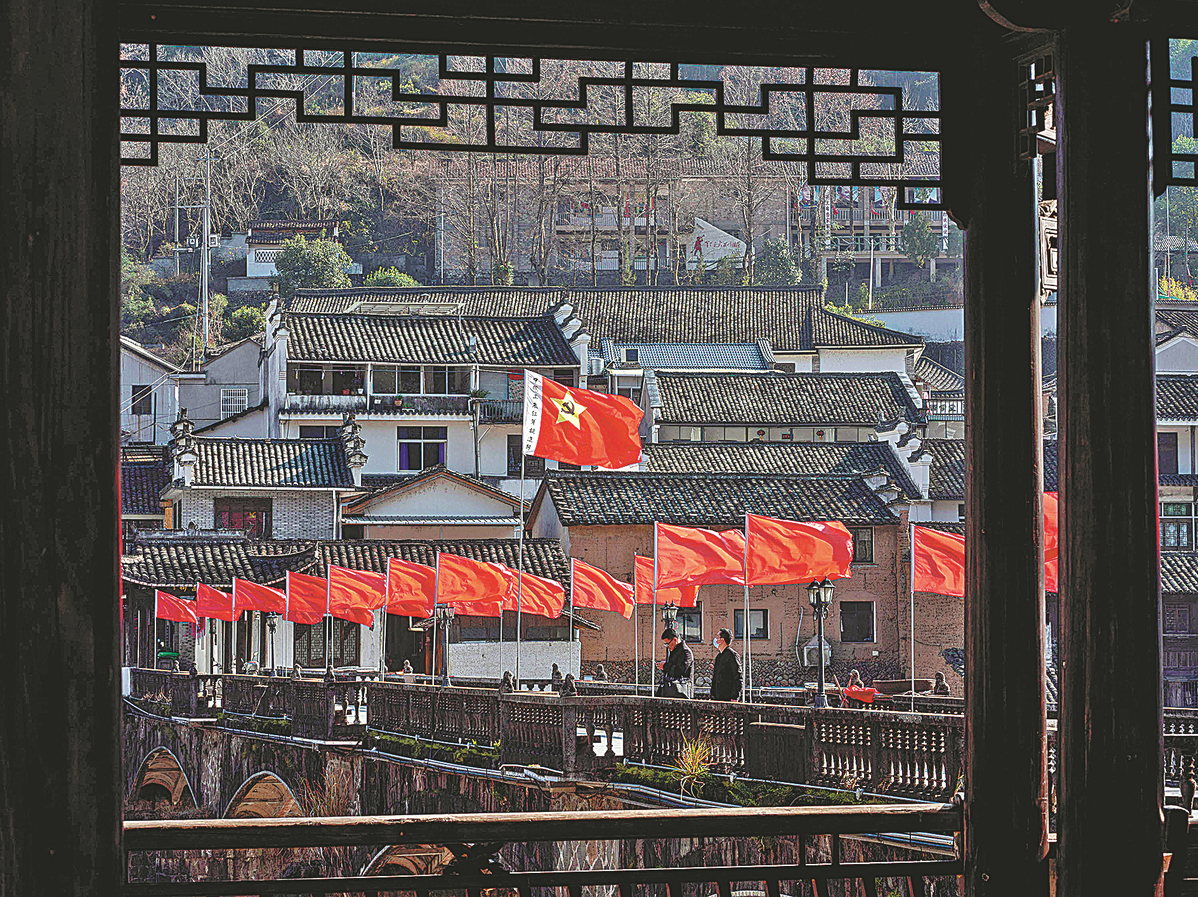
Centered on mountains in the outlying rural counties of present-day Lishui city in Zhejiang province, the Southwest Zhejiang Revolutionary Base was largely a guerrilla warfare area controlled by the military forces of the Communist Party of China in the 1930s. Although it was short-lived, the base played a special role in CPC history as it was created and thrived at a time when Party-led revolutionary efforts were stalling.
The CPC had been developing its forces in the area since its establishment in the 1920s, and led multiple worker and farmer uprisings toward the end of that decade. The uprisings, however, remained mostly limited in scope. The Party reorganized some farmer militias in 1930 and established a formal army, but its work was soon suppressed by Kuomintang (Nationalist Party) troops.
CPC-led war efforts came to a critical juncture in the early 1930s as the strategy of conquering major cities led to severe casualties and yielded few results. A number of revolutionary bases were lost, and the Central Revolutionary Base, which was under heavy attack, faced the threat of being wiped out.
On Aug 1, 1934, a CPC-led Red Army corps was sent north from the Central Revolutionary Base to draw away KMT troops and alleviate pressure. The corps entered southwestern Zhejiang on Aug 26 and deployed soldiers to spread CPC ideology to farmers and establish a revolutionary base as the main body continued north.
Most of the soldiers in the corps were killed or injured during subsequent battles. By January 1935, about 800 soldiers who had been surrounded by KMT forces as they ventured north, managed to break free and under a directive from the CPC leaders, returned to Zhejiang as a division led by Su Yu (1907-84), who would become the People's Liberation Army's chief of staff.
By then, the Central Red Army had begun the Long March (1934-36) and incurred heavy losses fighting the KMT, placing CPC-led revolutionary efforts in great peril. Fighters who remained in southern China, including those in southwestern Zhejiang, began what was later known as the Three Years of Guerrilla War.
In April 1935, after defeating local mercenary forces in southwestern Zhejiang, CPC forces were able to win the support of local clan elders and the Green Gang, an influential group of farmers. The Party went on to establish a revolutionary base, which thrived for several months.
In June, an area-wide CPC committee was established in Songyang, Zhejiang, and local Soviet governments were set up. Various policies were adopted to help famine-stricken farmers and redistribute land, which won local support, and helped raise funds and recruit more soldiers. By September, the guerrilla base covered five counties spanning some 100 kilometers, according to the Southwest Zhejiang Revolutionary Base Memorial.
The KMT gathered troops, and on Sept 19, began to encircle and suppress CPC forces at the base. Realizing they were being overwhelmed, leaders transferred most of the base's troops to eastern and southern Zhejiang. It was overrun at the end of October, and those who remained to fight were either killed or forced to go underground.
Under Su, troops attempted to rebuild some of the CPC's organizational network in mid-1936, but KMT forces returned by the end of the year, and ensuing warfare disrupted efforts. As the War of Resistance Against Japanese Aggression (1931-45) broke out in 1937, the CPC and KMT reached a truce and agreed to unite against the invaders. The remaining guerrilla forces in southern China were reorganized as the New Fourth Army.
Under a local agreement, Su gathered the army and marched to southern Anhui province to join in the fight against the Japanese.
CPC forces in Zhejiang later took part in local battles against the Japanese, who bombarded the area from 1937 to 1945. They also helped protect the CPC's network from KMT forces who broke the truce. The network eventually played a role in ensuring the PLA's victories in the area during the War of Liberation (1946-49).


- Cherry blossom festival in Yongfu town celebrates agricultural innovation and cultural exchange
- China's first domestically built cruise ship welcomes its 1 millionth guest
- The Devil Still Dances: High Vigilance against Japanese Militarism's Infiltration in Sports and Culture Fields
- 189 historical artifacts of Japanese invasion donated to museum in NE China
- Death toll rises to 8 in North China factory explosion
- Over 140m train tickets sold for Spring Festival travel rush












