



12,000 seed varieties return to Earth after space trip







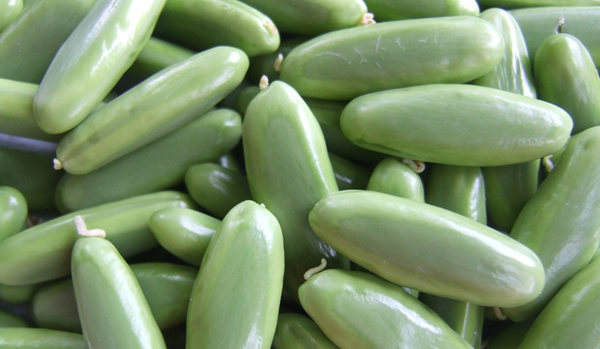
About 12,000 seeds carried by the Shenzhou XIII manned spaceship have returned to Earth after being bred in space, and will be cultivated into greater varieties to supplement new germ plasm resources and ensure national food security, experts said.
The "passengers" during the six-month space trip included seeds of medicinal herbs from Yunnan province, rice, edible mushrooms and forage.
Provided by different organizations such as China Agricultural University and the Space Breeding Industry Innovation Alliance, the seeds will be used for different purposes, focusing on basic research or breeding, according to Yang Hongshan, an expert at the Chinese Academy of Agricultural Sciences.
Yang, from the academy's Lanzhou Institute of Husbandry and Pharmaceutical Sciences, said the institute sent 158 grams of forage seeds into space on the Shenzhou XIII spaceship. The 21 pieces included seeds of oat, alfalfa, red clover and other varieties.
The seeds on board the spaceship were carefully chosen to ensure they can be normally cultivated after returning to Earth.
"According to our breeding goals, we carefully selected the seed varieties that are expected to be superior, rich in protein and can resist poor environmental conditions," Yang said.
Through space breeding, plant seeds are exposed to cosmic radiation and microgravity, which leads to genetic mutations and can create superior crop varieties.
The trip in space is a crucial step of space breeding, followed by breeding experiments on Earth.
"The periods for space-bred seeds to grow on farmland and cultivated into new varieties are different. It takes more than 10 years to breed a new alfalfa variety. The cycle for the annual planting of oat will be two to three years shorter," he said.
The alfalfa varieties carried by Shenzhou XIII will go through field experiments this or next year, he added.
Wang Tao, a professor from China Agricultural University, told Science Daily that space breeders are working to select excellent varieties that can boost the seed industry.
Alfalfa varieties that have high yields and protein, and can survive diverse environmental conditions are important to the country's animal husbandry and food security. China needs 6 million metric tons of alfalfa to feed livestock every year and currently one-third is imported.
"Cooperating with aerospace projects and carrying alfalfa seeds to space greatly accelerates its breeding process," Wang said.
Space breeding can provide breeding materials and germ plasm resources that are innovative, safe and have their own independent intellectual property rights, obtaining great new varieties in a relatively short time, Wang added.
Liu Luxiang, deputy director of the academy's Institute of Crop Sciences and an expert in space breeding, said China's research in space breeding intends to meet the market demand.
"The scientific research aims to promote the country's agricultural development, safeguard national food security and meet the needs of farmers," Liu said, adding that space breeding provides rich seed resources.
Since China started the space breeding of crop seeds in 1987, it has cultivated about 260 new plant varieties including rice, soybean and vegetables, and planted them on 2.4 million hectares of land. It is estimated that space breeding has generated a direct economic benefit worth 200 billion yuan ($29.8 billion) for the country.





