



Shaanxi-Gansu-Ningxia area key in war against Japanese aggression







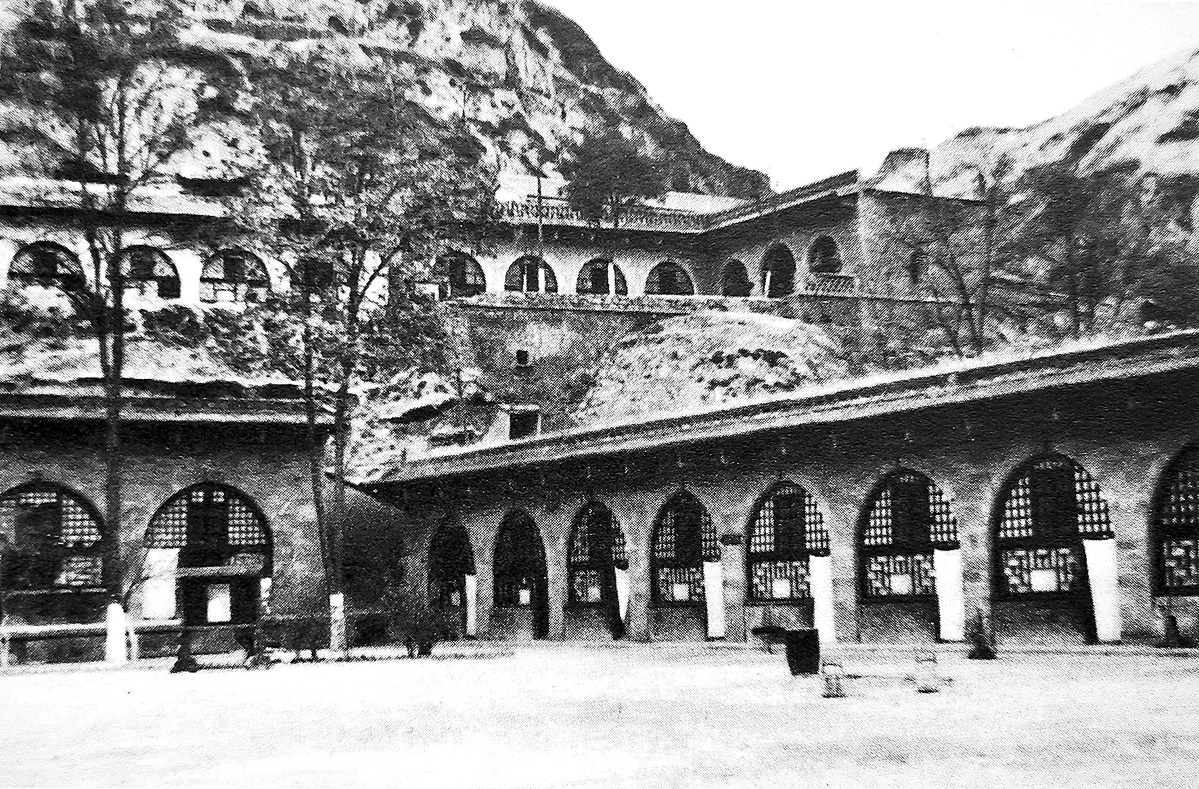
The Shaanxi-Gansu-Ningxia revolutionary area, located in northwestern China, is one of the most significant areas in the history of the Communist Party of China.
The area housed the CPC's core organs for more than a decade-from 1935, when the Central Red Army arrived from the Long March, to 1948, when CPC leaders headed for North China to command the War of Liberation (1946-49).
The revolutionary history in the area began in the early 1930s, when a CPC-led guerrilla force brought in local farmers and reorganized itself as a formal Red Army force in December 1932.
A committee was formed in Zhaojin town, Shaanxi province, in April 1933 to lead the revolutionary cause at the junction of Shaanxi and Gansu provinces, the first such committee in northwestern China.
Although it suffered setbacks due to poor strategy and attacks from troops with the Kuomintang, or the Chinese Nationalist Party, the base managed to bounce back with guerrilla warfare victories.
A provincial-level Soviet government covering the junction area was established in November 1934, headed by Xi Zhongxun (1913-2002), President Xi Jinping's father.
About the same time, CPC-led guerrilla squads in northern Shaanxi, or Shaanbei, also established county-level Soviet governments, with a provincial government proclaimed in January 1935.
The Shaanxi-Gansu junction and Shaanbei areas worked together to repel KMT forces, and by June, they had united to form the Shaanxi-Gansu revolutionary base.
It took in the 25th Red Army from the Hubei-Henan-Shaanxi revolutionary base in September 1935.
To the south of the area, the Central Red Army, which had been led by Mao Zedong (1893-1976) since the Zunyi Conference in January 1935, was toiling through mountains and marshes in western Sichuan and southern Gansu during the Long March (1934-36).
After learning from the newspapers about the presence of the Shaanxi-Gansu base and its recent cooperation with the 25th Red Army, the CPC leaders agreed to march toward them to expand the revolutionary area and fight intensified Japanese aggression from there. They arrived in Wuqi, an outlying county in present-day Yan'an in Shaanxi in mid-October. A meeting on Oct 22 proclaimed the conclusion of the Central Red Army's Long March.
Together with original military forces from the Shaanxi-Gansu base, the Central Red Army launched eastern and western expeditions in February 1936, expanding the base to then-Ningxia province. In October, the Second and Fourth Front Red Armies joined forces with the Central Red Army, concluding their Long March.
By July 1937, when the War of Resistance Against Japanese Aggression (1931-45) fully broke out, the triprovincial revolutionary area had about 130,000 square kilometers of land and 2 million people.
As the KMT agreed to unite with the CPC to fight the Japanese together, the area was reorganized as a special area of the Republic of China in March 1937. The Red Army, reorganized as the Eighth Route Army, left the base in August to head for the front lines in the war effort.
Meanwhile, the base, with Yan'an as the center since 1937, adopted a series of political, agriculture, industrial and business policies to boost its development and support the war against the Japanese.
After the victory against the Japanese, the War of Liberation broke out and KMT forces launched offensives against the base. CPC leaders exited Yan'an in March 1947, but they remained in Shaanbei and zigzagged through the area while commanding battles.
In April 1948, the CPC regained control of Yan'an.
The leaders, including Mao, left Shaanbei and crossed the Yellow River in March 1948, ending the CPC core leaders' time in Shaanbei. They arrived in Xibaipo, Hebei province, in mid-May 1948, where they directed decisive victories during the war.


- Cherry blossom festival in Yongfu town celebrates agricultural innovation and cultural exchange
- China's first domestically built cruise ship welcomes its 1 millionth guest
- The Devil Still Dances: High Vigilance against Japanese Militarism's Infiltration in Sports and Culture Fields
- 189 historical artifacts of Japanese invasion donated to museum in NE China
- Death toll rises to 8 in North China factory explosion
- Over 140m train tickets sold for Spring Festival travel rush












