



Tackling the pandemic of inequality







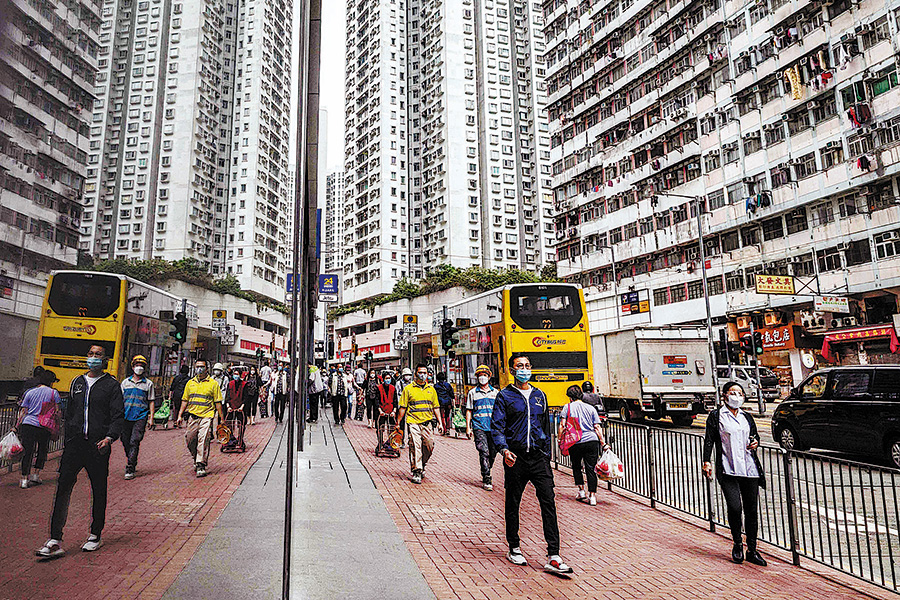
After two years of human devastation, the world is learning to live with COVID-19 while trying to balance the protection of public health and livelihoods.
For countries in Asia and the Pacific, this is challenging not only because national coffers are heavily strained by record public spending to mitigate pandemic suffering, but also due to deeper structural economic issues.
COVID-19 has exposed a pandemic of inequality in a region which has not only the world's most dynamic economies but also half of the global poor. A region where nearly half of the total income goes to just 10 percent of people while the poorest 10 percent get just 0.2 percent.
This failure to grow together meant that the pandemic worsened the circumstances of those left behind. Estimates suggest that more than 820 million informal workers and over 70 million children in low-income households have been denied access to adequate income and education since the outbreak. Even more worryingly, this will leave long-term scars on economic productivity and learning, harming the future earning potential of those already marginalized.
Amid continuing uncertainty over when the pandemic will finally be behind us, the one certainty for the region's policymakers is that the benefits of recovery and progress must reach everyone.
The prospects of the regional economy are riddled with downside risks related to the pandemic and emerging challenges in the external policy environment, according to the 2022 Economic and Social Survey for Asia and the Pacific released today by ESCAP. The cumulative output loss for the region's developing economies between 2020 and 2022 is estimated to be nearly $2 trillion. Prolonged pandemic disruptions will further exacerbate the uneven recovery.
COVID-19 has created a generational opportunity to build a more equitable and sustainable world. As emphasized by the United Nations secretary-general, this transformation process must be anchored on a New Social Contract with equal opportunities for all.
Countries can pursue a three-pronged policy agenda for laying the foundations of an inclusive stakeholder economy in Asia and the Pacific.
The immediate priority is avoiding fiscal cuts so that the development gains of the past decades are not irreversibly lost. Amid fiscal consolidations, developing Asia-Pacific countries must maintain public spending on health care, education and social protection to keep inequalities from deepening and becoming entrenched.
Instead of cuts, "smart" fiscal policies can improve the overall efficiency and impact of public spending and the scope of revenue collection. Public expenditures should be tilted towards primary health care, universalizing basic education and making tertiary education more inclusive while increasing and eventually extending social protection coverage for informal workers. Concurrently, new sources of revenue should be explored, for instance, by bringing digital economy under the tax net. Digital technologies can improve the delivery of health care and social protection services.
Given the fiscal constraints, as the second policy pillar, central banking can move beyond its traditional roles and share the onus of promoting economic inclusiveness, not least because high and persistent levels of inequality can reduce monetary policy effectiveness. Only half of central banks in the region have financial access, financial literacy or consumer protection among their objectives and strategies. This is a missed opportunity.
Conservative reserve allocation strategies deter central banks from deploying part of the region's $9.1 trillion official reserves towards social-oriented financial instruments. Amendments in central bank laws and investment strategies can make this possible. An appropriately designed central bank digital currency, supported by an enabling digital infrastructure and financial literacy, can enhance financial inclusion among other benefits. Central banks should also promote the use of social impact and sustainability-linked bonds for social purposes.
The third policy pillar addresses the root cause of inequality. Economic structure determines inequality dynamics and the path to "growing with equity". Thus, policymakers must focus on pre-distributive rather than redistributive policies. Developing countries can learn from the experiences of advanced economies in the region to proactively guide, shape and manage the structural transformation process for inclusive development.
The digital-robotic-AI revolution is increasingly influencing economic transformation with great uncertainties for inclusiveness. To prepare for this, public support is needed to develop labour-intensive technologies, inclusive access to quality education, reskilling, strengthening labour negotiation capacities and social protection floors, among others.
Although COVID-19 is a major setback to the 2030 Agenda for Sustainable Development, it is also a chance to accelerate investments in people and the planet, and to speed up regional progress toward achieving the Sustainable Development Goals.
This is an opportunity that we cannot waste.
The author is under-secretary-general of the United Nations and executive secretary of the Economic and Social Commission for Asia and the Pacific (ESCAP).
The views don't necessarily represent those of China Daily.
If you have a specific expertise, or would like to share your thought about our stories, then send us your writings at opinion@chinadaily.com.cn, and comment@chinadaily.com.cn.





