BRI stands for peace, development







Two recent events consolidated the idea that economic development and cooperation are the main drivers of China's foreign policy. Despite the political and military provocations by Western powers, especially the United States, China has been asserting that any problems between or among countries can be addressed by adhering to international law based on the UN Charter and by building economic and cultural bridges across borders.
These concepts were highlighted by the "Resolution of the Central Committee of the Communist Party of China on the Major Achievements and Historical Experience of the Party over the Past Century" issued by the Sixth Plenary Session of the 19th CPC Central Committee in November and the Eighth Ministerial Conference of the Forum on China-Africa Cooperation held in Dakar, Senegal, on Nov 29-30.
Using development to maintain peace
The historic resolution highlights the principle of using economic development and cooperation as a means to maintain peace and normal relations with other nations. It also says China's own development is a contribution to global peace as it contributes to the development of other countries.
Although it warns that "the world has entered a period of turbulence and transformation", it suggests as a solution the establishment of a global governance mechanism based on the UN Charter. As the resolution states: "We must work to develop a new type of international relations, promote the building of a human community with a shared future, champion the shared human values of peace, development, fairness, justice, democracy, and freedom, and steer the tide of human progress."
The resolution stresses that China has "strengthened solidarity and cooperation with other developing countries with a commitment to upholding the greater good in the pursuit of shared interests and following the principles of sincerity, pragmatism, affinity, and good faith, and put in place collective cooperation mechanisms that cover all other developing countries".
One of the reasons why China and other countries, such as Russia, have been insisting that the UN Charter is sacrosanct is that the global governance mechanism has been eroded due to unilateral actions taken by the US based on its "rules-based order" and "responsibility to protect". Not to mention that US actions have caused massive human sufferings in Afghanistan, Iraq, Libya, Syria and Yemen.
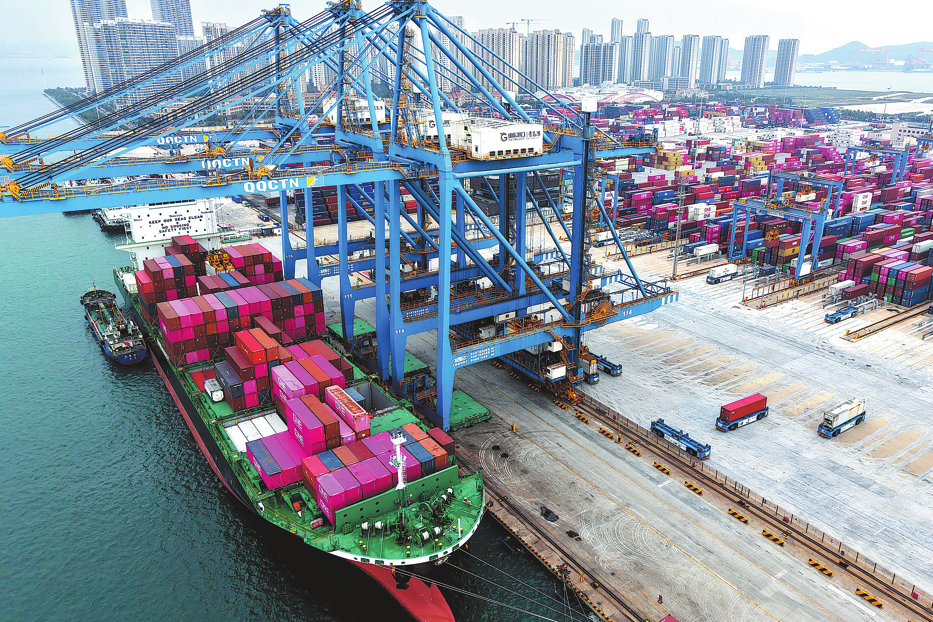
The resolution also emphasizes that the China-proposed Belt and Road Initiative is an "initiative for peace". Asserting that "China has promoted high-quality development" of the Belt and Road Initiative, it says, "We have advanced a large number of cooperation projects with significant implications for fueling economic development and improving people's lives in countries along the BRI routes and worked to build the BRI into an initiative of peace, prosperity, openness, green development, and innovation that brings different civilizations closer, and a widely welcomed public good and platform for international cooperation in today's world."
China-Africa cooperation a best example
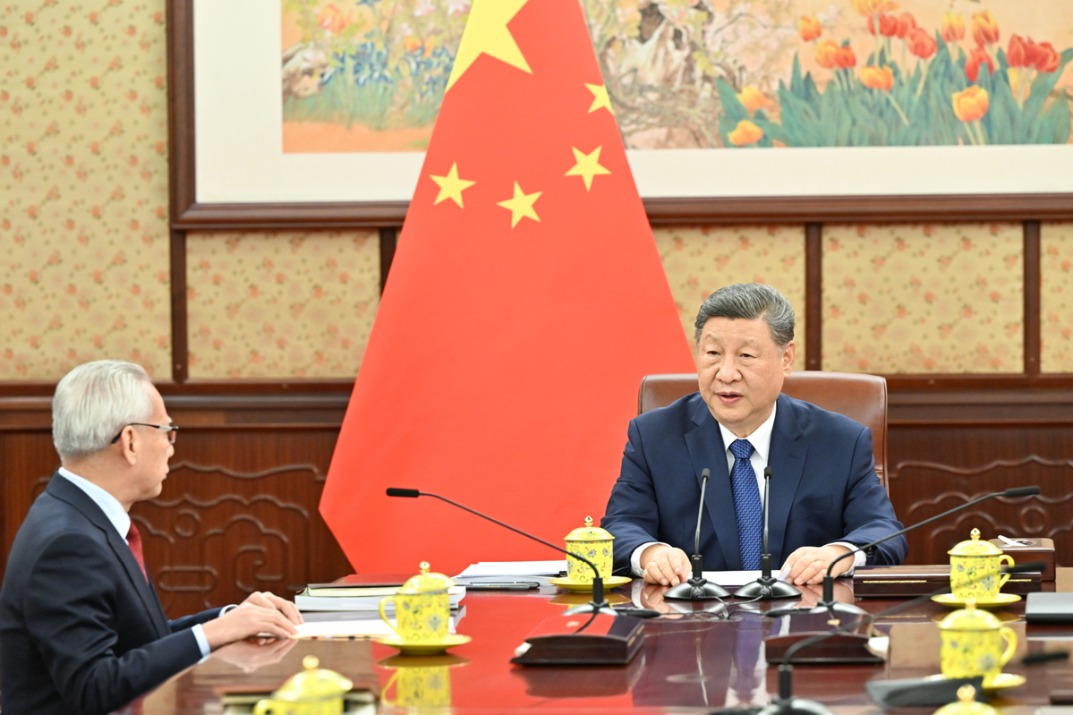
The best example of this is China's cooperation with African countries. Delivering his keynote address, via video link, at the Eighth Ministerial Conference of FOCAC, President Xi Jinping reminded African leaders that 2021 marked the 50th anniversary of the restoration of the People's Republic of China's seat at the United Nations and that the African countries had played a key role in it.
Focusing on the economic aspect of China-Africa relations, Xi said: "At the UN General Assembly this year, I put forward the Global Development Initiative, which dovetails with the African Union's Agenda 2063 and the UN's 2030 Agenda for Sustainable Development. We welcome the active support and participation by African countries."
President Xi presented a nine-point program to be implemented by China according to the "China-Africa Cooperation Vision 2035" which the two sides had previously agreed upon. All but the ninth point is on economic cooperation and development.
The first is related to medical programs, including inoculating at least 60 percent of the African population with COVID-19 vaccines by 2022, building joint production capacity for the vaccines in several African countries and providing training for medical personnel.
The second is on poverty alleviation and agricultural development, including 10 poverty-reduction and agricultural projects, sending 500 Chinese agricultural experts to Africa, and setting up China-Africa joint centers for modern agro-technology exchange, demonstration and training in China.
The third is a trade promotion program, under which China will open "green lanes" for African agricultural exports to help increase African countries' exports. That includes providing $10 billion of trade finance for helping boost African exports, and building a pioneering zone in China for in-depth China-Africa trade and economic cooperation and a China-Africa industrial park for Belt and Road cooperation.
Since the volume of intra-African trade is small compared with Africa's trade with the rest of the world due to the lack of efficient roads, railways and other infrastructure on the continent, China will also undertake 10 connectivity projects in Africa to help expand trade among African countries under the African Continental Free Trade Area program.
The fourth, an investment promotion program, is to encourage Chinese businesses to invest $10 billion in Africa in the next three years, undertaking 10 industrialization and employment promotion projects, and providing credit facilities of $10 billion to African financial institutions. China will also exempt least-developed African countries from the debt incurred in the form of interest-free loans due by the end of 2021, and channel to African countries $10 billion from its share of the International Monetary Fund's new allocation of Special Drawing Rights.
The fifth point is on digital innovation programs and projects, setting up centers for cooperation on satellite remote-sensing application, developing China-Africa joint laboratories, partnering institutes, and promoting scientific and technological innovation cooperation bases.
The sixth deals with "green development programs" including environmental protection and climate action projects for Africa, such as fighting desertification through afforestation, and strengthening the African "Great Green Wall" to prevent the desert in the Sahel from encroaching more land.
The seventh point deals with capacity building by constructing schools in Africa to promote education and vocational skills, inviting 10,000 high-level African professionals to seminars and workshops in China, starting an employment "through train" scheme for African students in China, and encouraging Chinese companies in Africa to create at least 800,000 local jobs.
Cultural cooperation, the eighth point, is aimed at expanding people-to-people exchange programs including encouraging more Chinese tourists to visit Africa, holding African film festivals in China and Chinese film festivals in Africa, and organizing joint forums for youth and women.
Only the 10th point deals with security and military matters, but even that is largely focused on peacekeeping operations, and providing military assistance for fighting terrorism, and Chinese and African peacekeeping troops holding joint exercises.
All these points were elaborated in a white paper, "China and Africa in the New Era: A Partnership of Equals", issued by China's State Council Information Office on the eve of the FOCAC meeting.
An interesting aspect of the document is that it emphasizes China will never cross "five lines". It will not interfere in African countries' internal affairs, not force African countries to choose a certain development path, not impose its will on African countries, not attach any political strings to assistance to Africa, and not pursue selfish political gains through investment and financing cooperation with Africa.
China's diplomacy in stark contrast to the US
This is in stark contrast to the flagrant interference by the US and its allies in the internal affairs of African countries, including their economic policy, foreign policy, and internal social and political dynamics. And when political and economic pressure does not produce results, the US and its allies use their military power to get what they want, as has happened in Libya in 2011-with horrifying consequences for the Libyan people-and many other African nations.
Worse, US officials travel regularly to African countries to warn them against cooperating with China, which is an insult to those countries as it suggests they cannot make their own decisions. In fact, just 10 days before the FOCAC meeting, US Secretary of State Antony Blinken visited Senegal, after traveling to Kenya and Nigeria, and made ludicrous claims about how the US' "Build Back Better World" was superior to the Belt and Road Initiative and denounced China for allegedly violating human rights and enticing countries into a "debt trap" through its development projects.
The reaction from Africa to such baseless accusations was that two more countries-Eritrea and Guinea Bissau-joined the Belt and Road Initiative the same week. This means all but four African countries are now part of the initiative.
It is ironical that the more the West warns African countries against cooperating with China, the more countries and organizations join the Belt and Road Initiative because, unlike Western initiatives, it is result-oriented and people-centered.
Also, despite being a major aid provider, China has always tried to make sure African countries don't become addicted to aid, because aid cannot help them raise their productivity or improve their infrastructure facilities.
Addressing the FOCAC Summit in Johannesburg, South Africa, in 2015, President Xi mentioned the "three bottlenecks of development"-lack of capital, lack of infrastructure, and shortage of skilled labor. If African countries can overcome these bottlenecks, Xi said, they can eliminate poverty, just as China has done.
"It is entirely possible for Africa, as the world's most promising region in terms of development potential, to bring into play its advantages and achieve great success…. The achievement of inclusive and sustainable development in Africa hinges on industrialization, which holds the key to creating jobs, eradicating poverty and improving people's living standards," Xi said. China's efforts in Africa since then have been consistent with this vision.
Despite China's efforts, however, the pace of development in Africa has been slow because China is standing almost alone with African countries in tackling the massive challenges. If the US, the European Union, Japan and other advanced economies had contributed in a similar manner, Africa's fight against poverty, famine and disease would have been greatly enhanced.
It's time the West realized that peace and security come from economic development. This is the vision presented in 1967 by Pope Paul VI, who believed in the encyclical populorum progresso (development of the people), saying "development (is) the new name for peace".
The pope wrote: "When we fight poverty and oppose the unfair conditions of the present, we are not just promoting human well-being; we are also furthering man's spiritual and moral development, and hence we are benefiting the whole human race. For peace is not simply the absence of warfare, based on a precarious balance of power; it is fashioned by efforts directed day after day toward the establishment of the ordered universe willed by God, with a more perfect form of justice among men."
The author is a board member of the Belt and Road Institute in Sweden. The views don't necessarily represent those of China Daily.
If you have a specific expertise, or would like to share your thought about our stories, then send us your writings at opinion@chinadaily.com.cn, and comment@chinadaily.com.cn.