Flexibility key in assessing low-carbon transition







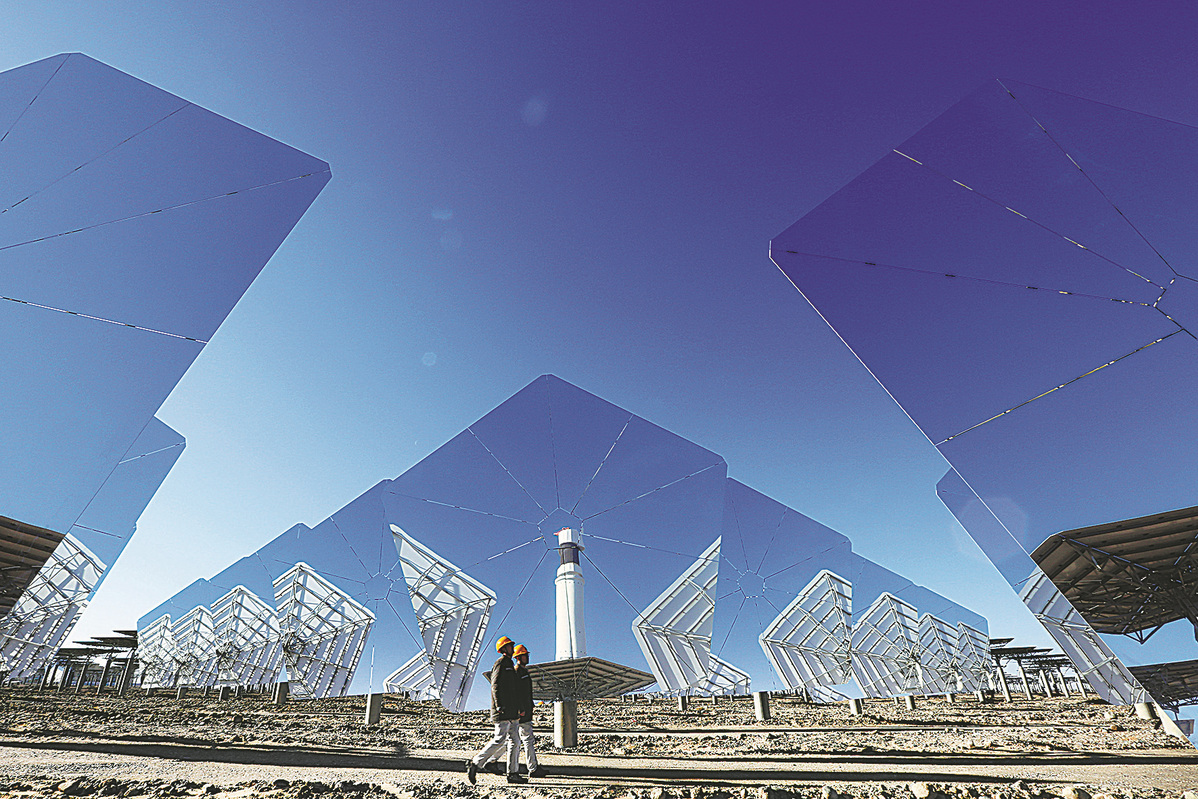
China is on track to reform how it assesses progress in its low-carbon transition, as the country forges ahead with ambitious climate targets, according to this year's Government Work Report.
The decision was made amid uncertainties partly caused by the COVID-19 pandemic and will help ensure the country's energy security, said Wang Yi, a senior national legislator.
Premier Li Keqiang, while delivering the work report at the opening of this year's session of the 13th National People's Congress on Saturday in Beijing, said the central government will exercise "appropriate flexibility" within the framework of the 14th Five-Year Plan (2021-25) when assessing energy intensity, or energy consumption per unit of GDP.
He also emphasized that newly added renewable energy, as well as coal, petroleum and natural gas consumed as raw materials, will be excluded from the total amount of energy consumption, a policy that was previously announced after the annual Central Economic Work Conference late last year.
The government focuses on energy intensity and total energy consumption when assessing progress in promoting low-carbon transition. Aside from general national goals stipulated in the national five-year plans, there are also annual targets, with specific tasks set for each provincial-level region.
Wang, a member of the NPC Standing Committee and the NPC's Environmental Protection and Resources Conservation Committee, said the flexibility that Premier Li noted means that, with no letting up on five-year goals, the annual tasks of national and regional levels may not be as compulsory as they previously were.
The adjustment is being made because of downward economic pressures at home and abroad that were caused by the COVID-19 pandemic and a complicated geopolitical situation, he said. The country's energy security is also a major concern for the change.
The country plans to reduce energy intensity by a total of 13.5 percent from 2021 to 2025. The annual target for last year was around 3 percent.
Amid the complicated economic situation last year, the country managed to decrease the density by about 2.7 percent, Wang said.
It was not easy for the country to achieve that, as many regions had to resort to power rationing to meet their specific targets, and this disturbed some people's daily lives and affected the supply chain during the recovery from COVID-19.
He said the flexibility will help avoid a power crunch and strike a balance between economic growth and the country's energy security.
Premier Li also vowed to shift the government's focus on low-carbon transition assessment to the total amount and intensity of carbon emissions.
China will "improve policy incentives for reducing pollution and carbon emissions and policy constraints on such emissions", Li said.
Wang said the shift is a necessary measure to sustain China's economic growth, with support from renewable energy, and realize its targets of peaking carbon dioxide emissions before 2030 and achieving carbon neutrality before 2060.
The country has yet to see its economic growth decouple from energy consumption. The consumption will continue to increase with the country's economic development, he said, adding that per capita energy consumption in China only stood at about 3.7 metric tons of standard coal in 2021, compared with more than 5 tons in many developed nations.
The shift will result in a win-win scenario for economic growth and carbon emissions control.
Regarding newly added energy, Wang said that as long as such energy types are not fossil fuels, they will not only help address the increase in power demand but also reduce emissions.
Previously, renewable energy was also included in the cap for total energy consumption, and "this makes reforms necessary", he said.
Premier Li has vowed a series of measures to further promote renewable energy development this year.
"We will advance the planning and construction of large-scale wind and photovoltaic power bases with supporting power sources that are adjustable, and boost the capacity of power grids to absorb electricity generated from renewable energy sources," Li said.





- Local farmers combat desertification in Moyu county of Xinjiang
- N China's Hohhot launches winter amusement programs to boost local economy
- Viral app bares 'safety anxiety' among solo dwellers
- Research suggests causes of moon's two different 'faces'
- AI software under lens for facilitating porn talk
- Commercial recoverable spacecraft completes test flight in China