Xinjiang builds its medical expertise, helps neighboring regions in BRI







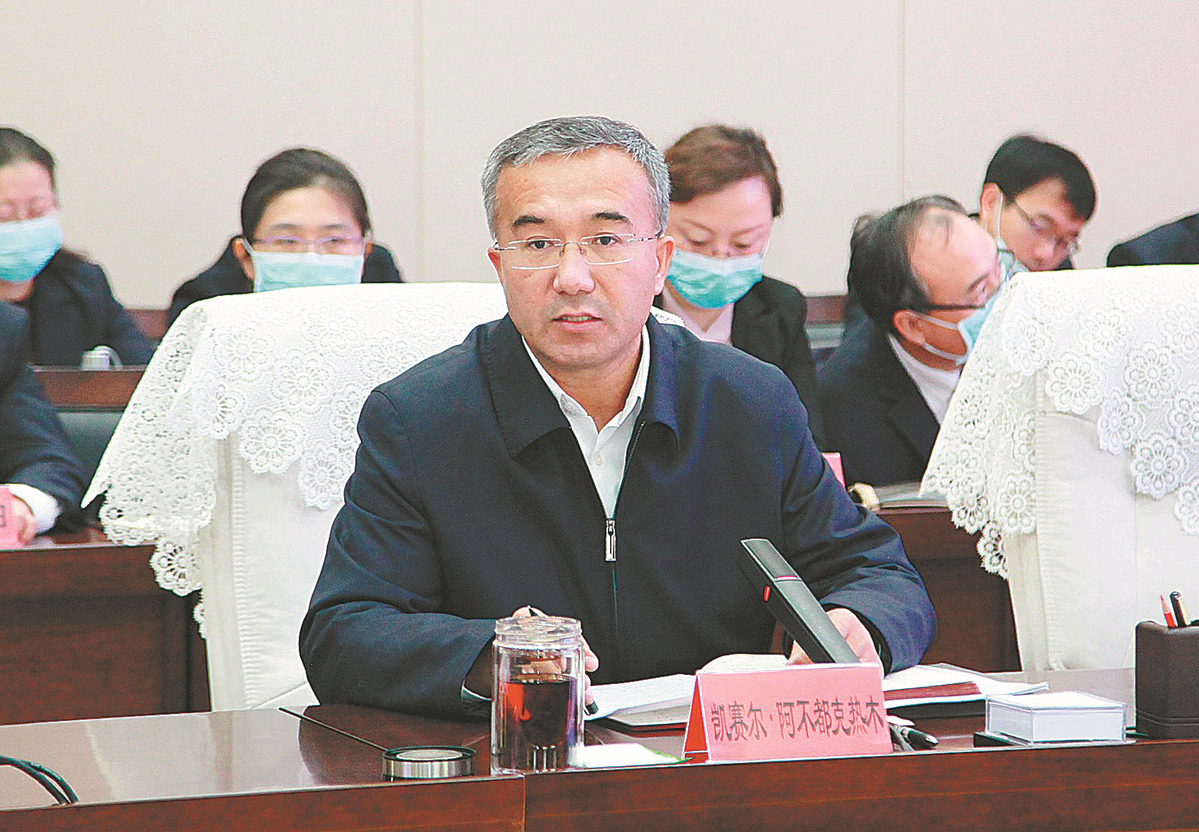
Making sure people at the grassroots level enjoy high-quality medical services has long been Kaiser Abdukerim's pursuit, especially since he became a deputy to the National People's Congress, China's top legislature, in 2018.
A member of the Uygur ethnic group, the 51-year-old from the Xinjiang Uygur autonomous region majored in pharmacology at Xinjiang Medical University and holds a doctorate in medicine. He became president of the university in 2017.
Abdukerim knows that Xinjiang, which covers one-sixth of China and is home to 47 ethnic groups, faces more challenges than other regions in ensuring medical services for its residents, especially those living in remote, undeveloped areas.
He believes that training enough health professionals is important to promote health services, but this takes time. Over the years, he has encouraged the university to train more medical talent to care for rural residents and has urged more students to devote themselves to local medical services after graduation.
"Having access to medical services is what people care about the most," Abdukerim said.
"Responding to their expectations is my responsibility. As an NPC deputy with a medical background, I've actively participated in inspections and surveys to learn the needs of the masses and bring them high-quality medical resources."
About three-quarters of the medical staff at large and medium-sized medical institutions in the region graduated from Xinjiang Medical University, he said.
"We have continuously promoted the integration of hospitals at different levels in certain regions, advocated the use of the internet and smart healthcare, and amplified medical aid. We have also increased the enrollment of medical students who enjoy free tuition and of three-year college doctoral students trained specifically to work in rural areas," he said.
The university also recruits students from different ethnic groups to study majors such as medicine and nursing, and sets up majors specially designed to train doctors to work in hospitals at the grassroots level.
To date, it has established cooperation agreements with 252 hospitals in Xinjiang and has reached agreements on medical aid with several counties to help hospitals improve their diagnosis and treatment capabilities.
"Providing convenient healthcare services to patients has been our goal in the era of digitalization," Abdukerim said. "Specialists now can conduct remote diagnoses online, and doctors at grassroots hospitals can invite experts from our university to help with diagnosis and treatment. So far, hospitals have conducted nearly 70,000 remote diagnoses.
"Now, even in remote and undeveloped areas, access to good healthcare services can be guaranteed," he added.
During the 13th Five-Year Plan (2016-2020) period, the total investment in healthcare in Xinjiang reached 157.78 billion yuan ($25 billion). Last year, the regional government provided 1.81 billion yuan in financial support to the regional medical insurance fund and made payments of 1.81 billion yuan to the regional prevention and control center for the purchase of COVID-19 vaccines.
According to official data, by the end of last year, 20.61 million people in Xinjiang had taken out medical insurance, accounting for over 95 percent of the region's population.
This year, as an NPC deputy, Abdukerim has proposed turning one hospital under Xinjiang Medical University into a high-level medical service demonstration center to fully leverage its medical resources and strengths. He hopes it will provide high-quality medical services to people in Xinjiang, as well as to those in neighboring countries involved in the Belt and Road Initiative.
"I also hope to push forward medical cooperation between our university and institutions in other countries so as to contribute to the initiative," Abdukerim said.
Hospitals affiliated to the university have offered free medical treatment to 100 Afghan children with congenital heart diseases in recent years. They have also helped develop healthcare services and training for professionals from BRI countries.



- Most parts of country were warmer than usual in 2025
- Poverty relief transitions to governance
- 'Micro sports areas' boost students' fitness, fun
- China tips scales toward healthier living trends
- Anti-corruption efforts focus more on work conduct issues
- Deeper reflections on 'cave-dwelling conversation'