



'Gray-hair economy' has huge untapped potential







The central government has been attaching increasing importance to the "gray-hair economy" in recent years by, among other things, encouraging the development of community services including elderly home care, meal delivery and cleaning services. The gray-hair economy refers to the sector that provides products and services for the elderly population.
In November 2021, the central government issued a guideline for developing the gray-hair economy including industries tailored to meet the food, medical and insurance needs of the elderly people.
China has a rapidly rising aging population, with the number of people aged 65 or above increasing at a relatively faster pace after 2018-at an annual average of about 10 million. In fact by the end of 2021, China had more than 200 million people aged 65 or above, accounting for more than 14 percent of the total population.
Since the "baby boomers"-those born between 1962 and 1976-h(huán)ave started entering their 60s this year, the aging population is likely to peak in the next few years. However, China's aging population will grow at an even faster pace. And the country will witness a significant transition in the population structure from 2035.
But despite the rapidly growing aging population posing several challenges, it also has created vital opportunities. First, the development and growth of industries which manufacture products and provide services for the elderly will inject new vitality into the economy. Second, social innovations required to meet the needs of the senior citizens will boost industrial upgrading and productivity. And third, since many retired people have been investing the money they have accumulated in the capital market, they will help build and develop a multi-layered market.
Notably, though, many local governments and enterprises associate the gray-hair economy with only the eldercare industry, and thus limit the scope of their development. Actually, the gray-hair economy's development can be divided into three phases.
In the short term, it should be developed in tandem with the rise in the elderly people's population. The rapidly rising aging population will bring about corresponding changes to the demands related to products and services for the elderly. This new customer base will give enterprises the opportunity to provide new, innovative products and services, because elderly consumers have different requirements in terms of product price, quality and durability as well as services, compared with younger consumers.
For example, older people tend to buy products also for other family members and are more sensitive to price than the younger groups. They also prefer to shop in bricks-and-mortar stores.
According to a 2019 guideline for the development of products for senior citizens, the market for the elderly will be worth more than 5 trillion yuan ($786 billion) in 2025. As such, the government needs to optimize the market environment for enterprises making products for the elderly including clothing, eldercare products and rehabilitation equipment.
In the medium term, the gray-hair economy should develop together with the aging society. China became an aging society in 1999 when the number of people aged 60 or above reached 131 million, accounting for 10 percent of the total population. And the seventh national census published in 2021 put the number of people aged 60 or above at 264 million, which accounted for 18.7 percent of the total population, which may increase to 25 percent in 2035.
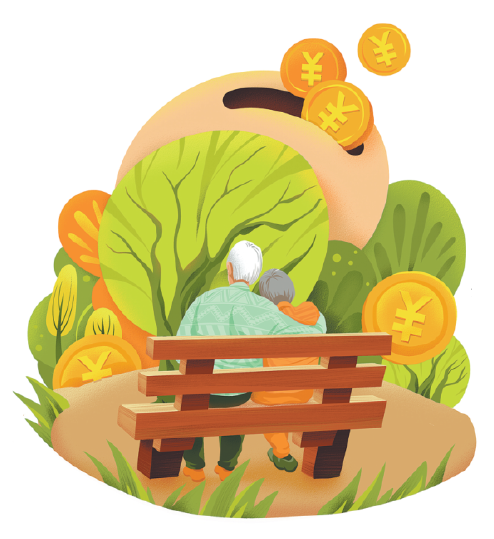
The elderly people have become an important part of society, and new technologies, personnel and products are needed to meet their needs and demands. So efforts should be made to develop an elderly-friendly society to cash in on the opportunities the aging population offers.
Take entrepreneurs born between 1962 and 1982 as an example. Although it would take another 20 years for all of them to cross the threshold of senior citizens, they are wealthier than the previous generations. And crucially, they, along with other elderly people who were in long-term employment, have greater spending power and consumption demand.
According to the China Internet Network Information Center, by the end of June 2021, the number of internet users aged 60 or above in China was 123 million-12.2 percent of the total 1.01 billion users-with about 26 million joining the group since 2020. Which means there remains huge untapped potential to expand the gray-hair economy.
And in the long term, the gray-hair economy should develop in line with the changes in the aging population. An aging society is characterized by basic social changes such as longevity, low fertility and marriage rates, and migration, as well as complicated changes including diplomacy, national security, economic development, social harmony and cultural tradition.
To boost the gray-hair economy, therefore, efforts should be made to sustain development by promoting innovations, balancing demand and supply, adopting new development strategies and transforming business models, with both governments and enterprises taking measures to bolster the gray-hair economy.
The views don't necessarily reflect those of China Daily.





