Revisiting the week that changed the world







'We have been here a week. This was the week that changed the world.'-Richard Nixon
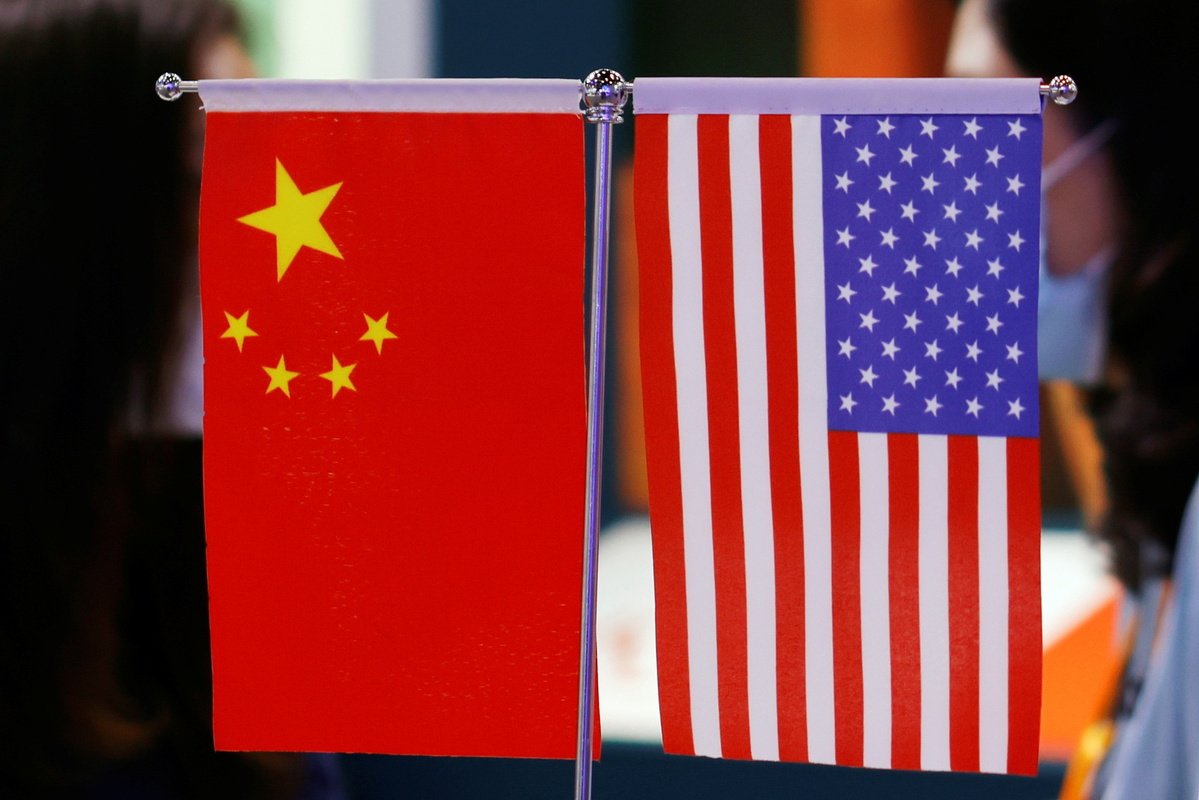
The normalization of US-China relations and the subsequent opening up of China to the world have been two of the most significant events in modern world history, leading to the improvement of nearly every human being's livelihood. The success of the normalization of Sino-US ties is a perfect example of how friendship and mutually beneficial cooperation can lead to peace and prosperity for not just the countries involved, but for the world as a whole.
Fifty years ago, Richard Nixon became the first sitting US president to visit the People's Republic of China since its founding in 1949. The visit helped China realign the global balance of power. The visit was also a visual spectacle for the US president, his entourage, and much of the rest of the world, which closely watched the US leader's travels inside the communist country. A whirlwind tour brought Nixon to several famed historical sites and cultural performances, and face-to-face with many senior Chinese leaders.
"If Mr. Nixon had revealed he was going to the moon he could not have flabbergasted his world audience more," The Washington Post had said in an editorial. "It is very nearly mind blowing."
All the top US journalists were there-from The New York Times reporters to famous network anchormen including Walter Cronkite who had brought along electrically heated socks to ward off the cold of northern China. Nixon's visit allowed the American public to see images of China for the very first time in more than two decades.
The Chinese media devoted unprecedented attention to Nixon's visit. Since few Chinese people owned TV sets at the time, they listened to official radio broadcasts and read newspapers like the People's Daily, which featured front-page stories and photographs of the Nixon summit, to get all the news. The extraordinary publicity given to the visit by the Chinese media was itself newsworthy, and widely featured in American TV and newspaper reports.
Throughout the week, when not meeting with then premier Zhou Enlai and other Chinese officials, Nixon attended cultural and athletic performances and banquets, and toured such architectural and artistic treasures as the Forbidden City (Palace Museum), the Ming Tombs and the Great Wall. "I think that you would have to conclude that this is a great wall," the US president observed, when pressed for comment, "and it had to be built by a great people."
Nixon seemed an unlikely candidate to thaw those icy bilateral relations. During the 1940s and 1950s, he had been a vocal Cold War warrior and had condemned the Democratic Harry Truman's administration for "losing" China to the communists in 1949. That's why his decision to fly to Beijing for an official visit was publicly shocking to some.
The situation changed dramatically by 1972, though. The US was searching for a turning point in the Cold War as the Vietnam War entered its second decade. A visit to China was more than a simple symbolic gesture.
Nixon's visit came after more than two decades of hostility and almost no contact between the two countries. The eight-day visit would open the door for the establishment of diplomatic relations between the world's richest country and the most populous one. It would also reshape the world order, as it was known: shifting the power dynamics of the Cold War.
Nixon was more than happy to develop a functional relationship with a convenient partner that offered a potential counterbalance against Moscow. According to The Diplomat, Nixon's visit was to signal to Russia that his approach to diplomacy was not purely rooted in ideology. "It was this distinctive blend of pragmatism, bluffing brinkmanship, and strategic deception that precipitated his presidency's foreign policy successes."
The "Only Nixon could go to China" adage that followed the visit in both political circles and movie scripts not only preserves the historic visit's importance, it also provides insights for China-US relations today. Perhaps it is true that only Nixon could have broken the ice between the two countries, given his distinctively hawkish and conservative stance against China during his ascent to power.
But the converse equally holds true. Only Chairman Mao Zedong with his consolidated presence as the supreme leader of Chinese politics-could have had the political resolve and wherewithal to initiate relations with the US.
Nixon's visit concluded with the signing of the Shanghai Communique. On Feb 27, 1972, the US "acknowledged" that "all Chinese on either side of the Taiwan Strait maintain there is but one China and that Taiwan is a part of China". The US also reaffirmed "its interest in a peaceful settlement of the Taiwan question by the Chinese themselves".
However, Nixon's visit, despite its immense international ramifications, did not change US-China relations overnight. A tedious negotiating process was needed before formal diplomatic relations were established in 1979.
In August 1974, when Nixon resigned as US president, his successor Gerald Ford sent a personal letter to Chairman Mao pledging to continue on the path to strengthen relations with the People's Republic.
In these times of rapidly escalating hostility, both Beijing and Washington should turn to the Nixon-Mao meeting as a guide for how leaders can leverage their individual strengths and broader geopolitical currents to advance shared interests.
Harley Seyedin is the president of the American Chamber of Commerce in South China and the president of Allelon Group and James Eric (Jay) Black is Schumann endowed professor and chair, Mercer University Department of Journalism and Media Studies.
The views don't necessarily reflect those of China Daily.
If you have a specific expertise, or would like to share your thought about our stories, then send us your writings at opinion@chinadaily.com.cn, and comment@chinadaily.com.cn.