



Ukraine crisis sends shock waves across energy markets







The whole world is holding its breath waiting for the simmering tensions between Russia and Ukraine to defuse. Among other things, the rising tensions between the two countries have rattled the international energy market, as Russia is a huge energy producer and exporter, and a large percentage of Russian oil and gas pass through Ukraine on the way to their European destinations.
As Russian Energy Minister Nikolai Shulginov said, Russia's oil production in 2021 was likely to reach 517 million tons, accounting for 11.7 percent of the global total. Russia also produced 761 billion cubic meters of natural gas last year.
It is clear therefore that the Russian-Ukrainian conflict will deal a heavy blow to the global oil and gas markets. Due to a combination of factors, especially the Russia-Ukraine standoff, global oil and gas prices have risen sharply, with both Brent Crude and Western Texas Intermediate Crude prices topping $90 a barrel.
Accounting for 33 percent of global energy demand, oil is vulnerable to short-term impacts due to geopolitical conflicts.
That's why observers fear that the Russian-Ukrainian conflict could affect oil supplies, pushing up prices. Russia is an important participant in OPEC+(an alliance of crude producing countries which have been making corrections in supply in the oil markets since 2007 in collaboration with the Organization of Petroleum Exporting Countries) and the world's second-largest oil producer, after the United States. In 2021, for example, Russia's average crude oil production was an estimated 10.5 million barrels a day. This should give an idea of the level of impact the Russian-Ukrainian conflict could have on global oil supply.
According to the US Energy Information Administration, the production capacity of the rest of the OPEC+ is expected to be 4.22 million, 4.08 million, 3.75 million and 3.74 million barrels a day in the four quarters of 2022, less than half of Russia's average.
The problem is that if the conflict between Moscow and Kiev further worsens, the West is likely to impose more, severer sanctions on Russia, which will choke the latter's oil exports leading to a shortage of crude in the global markets and consequently a sharp spike in oil prices. Current crude prices are already the highest since 2014, and any further increase will exacerbate the already worrisome global inflation level-a scenario all the parties would want to avoid.
As for natural gas, which meets about 24 percent of the global energy demand, Europe is heavily dependent on Russian natural gas, and Ukraine is an important transport hub for Russian gas destined for Europe. Russia accounts for about 35 percent of Europe's natural gas supply, most of which passes through Ukraine. So if Russia-Ukraine tensions lead to an open conflict, the supply of Russian natural gas to Europe will be seriously affected.
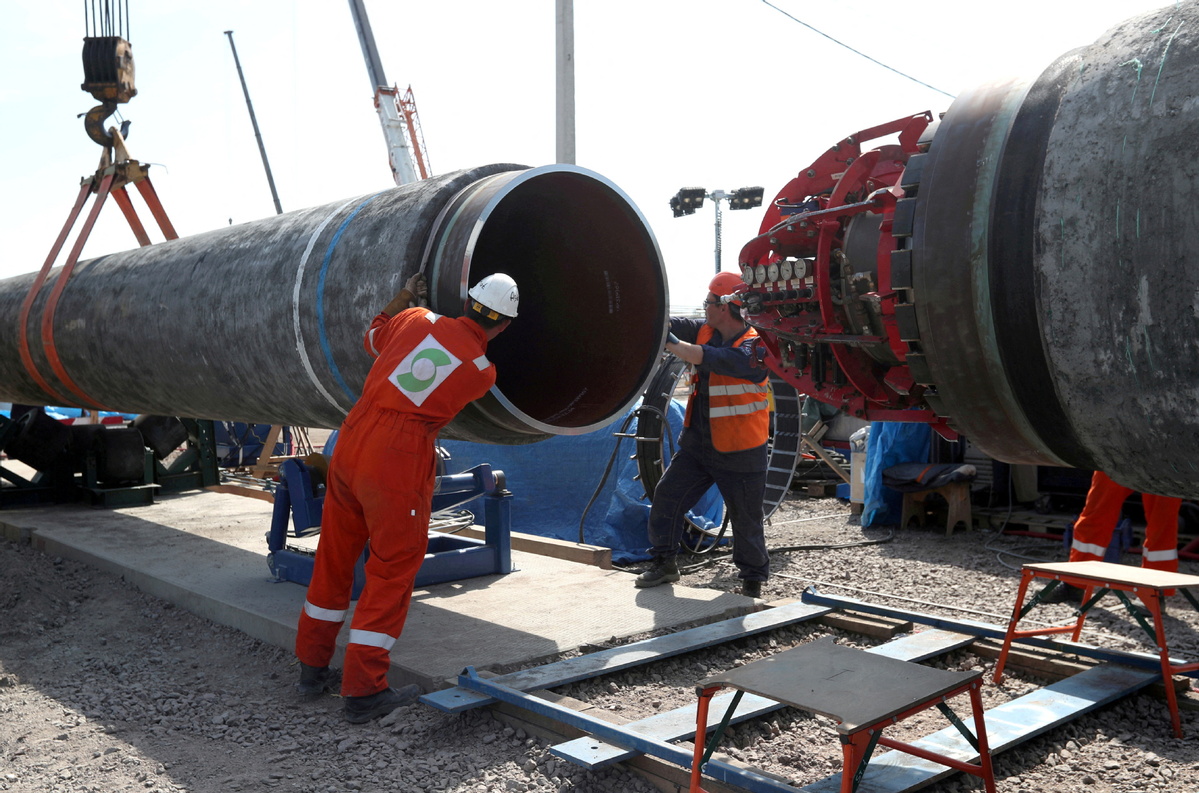
The supply of natural gas from Russia to Germany through the Nord Stream-2 pipeline, which passes through the Baltic Sea bypassing Ukraine, has been halted due to protests by European countries and the US. But if the supply of Russian gas through Ukraine is stopped, Europe will not be able to get a large percentage of its gas requirement. And once the effects of the shortage of natural gas in Europe spill over into the global natural gas market, international gas prices could rise drastically.
The continuous rise in the prices of oil and gas and other commodities in recent months is mainly due to the market's concerns about recent demand and supply conditions. In general, apart from the short-term impacts of geopolitical conflicts, oil and gas prices also depend on supply and demand. Therefore, future oil and gas prices will depend on the impacts of the Russian-Ukrainian conflict that affects both geopolitics and global supply and demand.
Whether or not Russian-Ukrainian tensions would lead to an open conflict also depend on the attitude of the US and the European Union toward oil and gas prices. The recent surge in oil and gas prices has seriously affected the well-being of ordinary citizens in the US and Europe. Stabilizing oil and gas prices, in an effort to ease the severe inflation in the US, has become a top priority of the Joe Biden administration.
Thanks to the administration's concerns about the impact high oil and gas prices will have on the American people, the US will be very careful on imposing more sanctions on Russia. But as long as the Russian-Ukrainian tensions are not defused, oil and gas prices are likely to remain strong. So from energy perspectives, it is in the interest of all parties to defuse the tensions.
As for China, it should pay special attention to the impact of the conflict-induced high oil and gas prices on its economy, because it is highly dependent on oil and gas imports. Russia is China's main oil and gas supplier, and due to the strategic mutual partnership between the two sides, the Russia-Ukraine conflict will have little direct impact on Russia's energy exports to China unless the Western sanctions include restrictions on the international settlement system.
But China is likely to be indirectly affected by the fluctuating and/or rising oil and gas prices because of the Russia-Ukraine standoff. High oil and gas prices will increase China's energy import costs and drive up production costs in different sectors of the economy, slowing down its economic growth. And despite its focus on low-carbon economic development, China needs to take into account energy security, and pay greater attention to strategic oil and natural gas reserves, so as to prevent emergencies.
The author is a researcher at the Tan Kah Kee Innovation Laboratory and head of Xiamen University's China Institute for Studies in Energy Policy.
The views don't necessarily represent those of China Daily.
If you have a specific expertise, or would like to share your thought about our stories, then send us your writings at opinion@chinadaily.com.cn, and comment@chinadaily.com.cn.





