An exhibition that opened on Tuesday in Beijing's Palace Museum, also known as the Forbidden City, unrolls the panorama of millennia-old Chinese civilization.
More than 130 cultural relics of national-treasure level from 30 museums across the country are displayed at the exhibition, which is titled Origins, Developments and Achievements of Chinese Civilization. It will run through May 4 in the Hall of Literary Brilliance (Wenhua Dian) gallery in the former imperial palace.
The artifacts span a wide spectrum of Chinese history, ranging from the Neolithic Age-defined in China as between 10,000 to 4,000 years ago-to the Qing Dynasty (1644-1911).
"Chinese civilization can be seen as a long river," Wang Xudong, director of the Palace Museum, said at the exhibition's opening ceremony. "Different cultures flowed, merged and thus formed a shared community in a dynamic and inclusive manner.
"Through this exhibition, we can see where China comes from and why the civilization can be time-tested," Wang said.
Many of the exhibits, which are among the country's most recognized cultural relics, illustrate the infancy of Chinese civilization.
These items include samples of 3,000-year-old oracle bone inscriptions, which are the earliest-known Chinese written characters; jade cong, the typical ceremonial items of the Liangzhu Culture, which dates back more than 5,000 years; a C-shaped jade dragon from the ancient Hongshan Culture of Northeast China; and painted Neolithic pottery from western Gansu province.
The exhibition also shows how bronze wares have played a key role as an indicator of the remarkable path of civilization.
A vessel known as He Zun from the Western Zhou Dynasty (c.11th century-771 BC) is the oldest known bronze ware whose inscription includes the word zhongguo (China). A bronze wheel offers visitors a glimpse of the mysterious Sanxingdui site in Sichuan province, where important new findings were made last year.
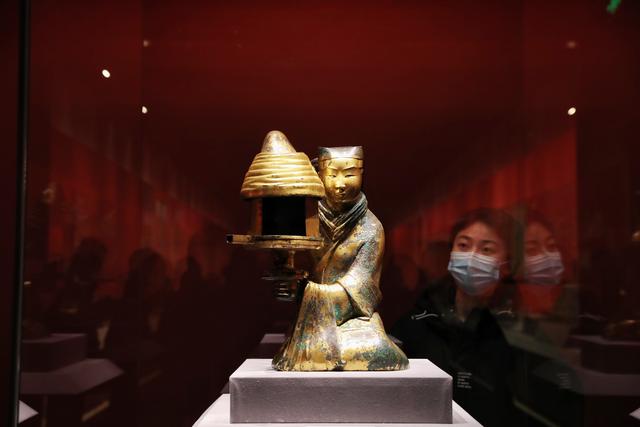
Such famous artifacts as the Changxin Palace Lamp from the Western Han Dynasty (206 BC-AD 24)-a gilt bronze figurine of a maid holding a lantern-and the Chalice of Eternal Stability also showcase state-of-the-art craftsmanship and aesthetics.
The exhibits also show how ancient China communicated with the rest of the world, which is still inspirational today in building a shared future for mankind, he added.
Curators of the exhibition particularly chose various forms of ancient "books" for the display as testimony to the continuous lineage of Chinese literary history.
The highlights include legal documents recorded on wooden slips from the Qin Dynasty (221-206 BC), stone carvings from the 10th century featuring Confucian classics, and Tibetan medical books from the Potala Palace.
Wang said this special design fits the location well, since the Hall of Literary Brilliance was where Qing emperors discussed ancient classics with scholars and reviewed papers from the imperial examination while selecting officials.
Many of the exhibits have become "celebrities" since 2017, due to the acclaimed television show The Nation's Greatest Treasures, which features key relics from museums nationwide. The reality show created cultural enthusiasm among audiences, and an exhibition of the starring relics was planned following the show's success.
Li Qun, director of the National Cultural Heritage Administration, praised this effort to revitalize cultural heritage through creative ideas. He said the display in the Palace Museum lifted the curtain on a series of exhibitions in the country this year highlighting the brilliance of Chinese cultural relics ahead of the 20th National Congress of the Communist Party of China, which is scheduled to open in the second half of the year.
Due to measures to contain COVID-19, 3,000 visitors at most will be admitted each day to the gallery. Reservations are available through the Palace Museum's website.