



Ways to mobilize adequate capital for China's, world's carbon goals







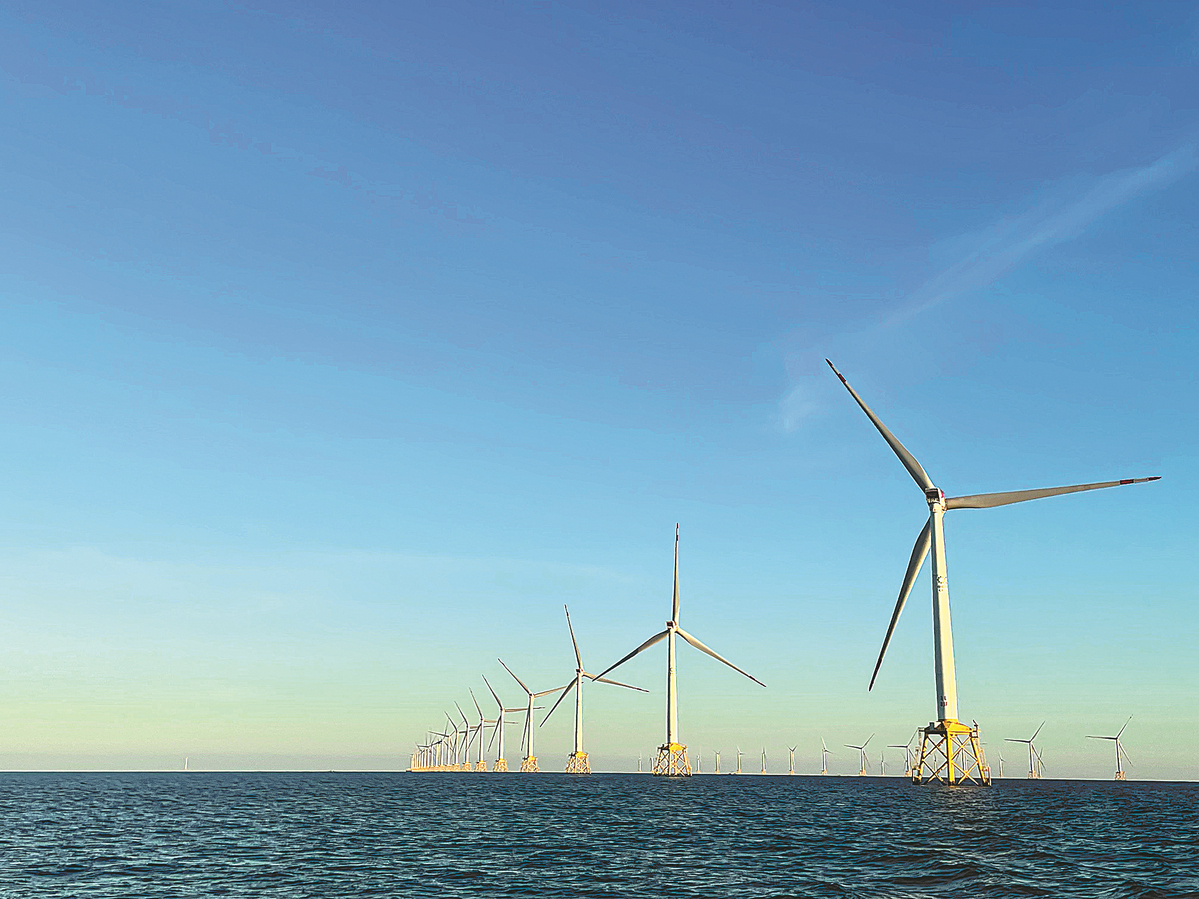
Long before COVID-19 took a grip on our society, the risks presented by a possible pandemic were well known. And yet the world as a whole proved unprepared to deal with the situation. We can learn from this by taking better precautions against other potentially catastrophic risks we already know we face. I'm thinking in particular of climate change.
The Paris Agreement seeks to avert potentially catastrophic and irreversible damage to our ecosystem by limiting the global rise in temperatures to well below 2 C above preindustrial levels. But achieving its objectives won't be easy. In fact, it will require a fundamental transformation of the global economy.
China is making an essential contribution to these efforts with its dual carbon goals. This commitment sees China's carbon emissions peaking by 2030 and the country achieving carbon neutrality by 2060. And this kind of energy transition, both in China and around the world, will require massive amounts of capital.
The scale, pace and geographic range of growth needed in green capital markets to provide the necessary capital are unprecedented. UBS estimates that converting the global energy system alone will require cumulative investment of between $120 trillion and $160 trillion by 2050. This is equivalent in size to the current capitalization of the global stock market.
Sustainable finance is gaining momentum everywhere. Last year, for example, global green and sustainable development-related bond market issuances were up 112 percent year-on-year. And China's green bond issuance is already the second-largest in the world after the US, even though the official statistics only account for half of the total green bonds issued in China. It's clear that significant progress has been made. But I see three prerequisites for sustainable finance to continue growing in the long term.
First of all, financial markets must be further opened to foreign investors and foreign financial institutions, as available capital does not match the investment needs of all countries. For example, around half of the total investment needed to meet the Paris Agreement's climate targets is in Asia. That's more than the combined investment needs of Europe and the US.
China's plans for further financial market opening-up will help pave the way for global banks to make a greater contribution to the country in meeting its investment needs by bringing in both their expertise and international investors. Professional knowledge and global rating systems can, for example, help Chinese firms to improve their ESG ratings and catch up with global peers. At the same time, global banks can give responsible Chinese investors access to sustainable investment opportunities outside of China that are still, to a large degree, out of reach due to current regulatory restrictions.
Second, there's an urgent need for international coordination and the alignment of standards for climate risk-related regulation-in particular climate risk disclosure standards for corporate issuers, financial institutions and financial products. Regulatory fragmentation causes high implementation costs. And we must be vigilant against the risk of turning sustainable finance into a compliance exercise or a significant obstacle to cross-border capital flows, precisely at a time when such flows are so critical.
China is playing an important role in initiatives that improve international coordination and facilitate crucial international capital flows. The IFRS International Sustainability Standards Board (ISSB) announced at COP26 it may set up an office in Beijing. The People's Bank of China, the central bank, is a founding member of the Network for Greening the Financial System. And the G20 Working Group on Sustainable Finance was launched during China's G20 presidency in 2016 and is now co-chaired by the PBOC and the US Treasury.
The third prerequisite is that while financial markets and financial institutions play an important role in the transition as an intermediary between the supply and demand of capital, the main impetus for the real economy to embark on the necessary transition must come from government policies and incentive structures-above all a single and comprehensive price for carbon. In fact, a carbon price is the only way to reach our ambitious climate goals, as a pricing mechanism works far more efficiently than directives, restrictions and subsidies.
Nevertheless, policies and regulations have a role to play in encouraging innovation, as new technologies-some of which are yet to exist-will be crucial in reducing carbon emissions. UBS sees China particularly well-positioned in fields such as renewables equipment makers and operators, energy storage operators, electric vehicle makers, battery makers, grid equipment makers and hydrogen gas providers. And increasing domestic and global investment demand for these technologies represents a significant growth opportunity for China.
The national emissions trading system launched in 2021 is already the largest in the world and covers approximately 40 percent of China's total emissions. China is also a major voluntary carbon project developer. International demand will shift focus increasingly toward nature-based solutions, carbon capture and storage capacity. This creates a significant opportunity for China to develop additional carbon offset projects. The recently introduced carbon emissions reduction facility of the PBOC will further help to fund efforts in achieving stated dual carbon goals.
The road to net zero is long and challenging. And the reduction of carbon emissions is one of the defining challenges of our time. UBS has long been at the forefront of sustainable finance. As the world's largest manager of private wealth, we're ready to enable and facilitate the transformation toward a more sustainable future. So are our clients, as evidenced by the large growth of our ESG investor base and of our range of investment products. If the official sector provides the proper regulations and incentives, then I'm convinced that, together, we can avoid the worst effects of climate change.
The writer is chairman of the UBS board of directors.
The views don't necessarily reflect those of China Daily.




















