



Outer space is not the US' backyard







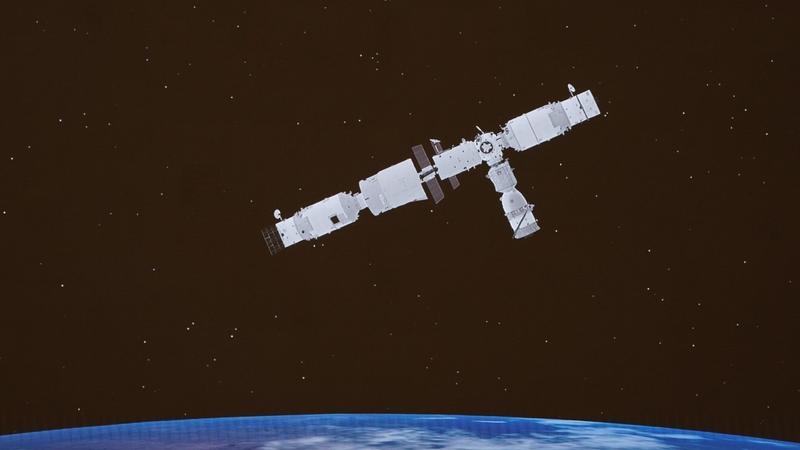
After close encounters between China's international space station and two of the 1,600 Starlink satellites launched by Elon Musk's company SpaceX, Musk responded saying there is enough space around the Earth's orbit to accommodate "tens of billions" of satellites.
However, he said nothing of the high risks of satellite collisions in space. According to a United Kingdom-based research team, 90 percent of close encounters are likely to involve Starlink after it launches its planned 12,000 satellites. Besides, the brightness of the Starlink satellites in the night sky could affect the working of observatories on Earth.
The US administration is not doing any better than the Musk company. In 2014, the United States Air Force launched the first of four satellites of the Geosynchronous Space Situational Awareness Program to monitor other countries' satellites in geosynchronous equatorial orbit.
Satellites in geosynchronous equatorial orbit can stay relatively static in relation to Earth. That makes them ideal to send communication and data to relay satellites, which receive uplink signals and retransmit them, often on different frequencies, to destination locations. The US' GSSAP satellites carry large amounts of fuel and can easily approach other countries' satellites in geosynchronous equatorial orbit to monitor them or do something worse.
According to "Global Counterspace Capabilities: An Open Source Assessment" released by the World Security Foundation in April 2021, the GSSAP satellites have been involved in at least eight close encounters with Chinese and Russian satellites since being launched-once even coming within 10 kilometers. In mid-2020, a GSSAP satellite (USA 271) was just 20 km away from a Chinese satellite, upsetting the latter's normal functioning.
Outer space is open to all, but it seems the US administration and private companies want to treat it as their own backyard. Therefore, it's absurd that US politicians are blaming China for "militarizing space". Space should be used in a peaceful, orderly way.
-SHI HAO, A SPACE RESEARCHER AND SPACE AFFAIRS OBSERVER





