The accumulation of assistance
Collaborating with multilateral organizations could help China improve the quality and effectiveness of its health cooperation with African countries







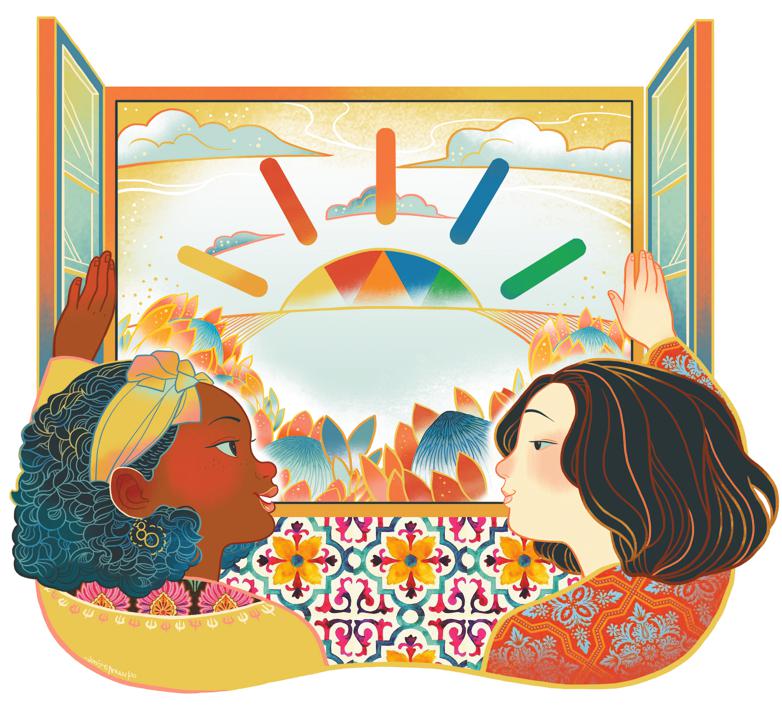
Over the past several decades, China has cooperated with Africa on a wide range of health issues, including strengthening universal health coverage, upgrading health facilities, improving access to pharmaceutical drugs and traditional medicines, promoting human resources development, and enhancing infectious diseases prevention and control. One thing to note, however, has been the limited engagement of multilateral agencies in China-Africa health cooperation. As China expands its health cooperation with the African continent, multilateral organizations have a crucial role to play in innovating the cooperation modalities and improving their effectiveness and sustainability.
China has gradually increased multilateral collaboration with global partners such as the World Health Organization, the World Bank, the International Committee of the Red Cross, the Global Fund to Fight AIDS, Tuberculosis and Malaria and the Bill & Melinda Gates Foundation to address global health challenges. For example, China's rank in terms of providing funds to the WHO has increased from 64th in 2010 to 46th in 2019, and China's voluntary contributions to the organization have steadily increased. China has also increased its contribution to the Global Fund.
However, China's cooperation with the multilateral system is still limited in scope and intensity when compared with other countries, and China's engagement in Africa's health development is primarily bilateral. Data show that from 2007 to 2017, 91.8 percent of development assistance for health from China was disbursed through its government agencies, including the Ministry of Commerce ($3.7 billion, 64.1 percent) and the National Health Commission ($917.1 million, 16.1 percent). Only 8.2 percent was implemented through multilateral agencies including the WHO($236.5 million, 4.1 percent) and the World Bank ($123.1 million, 2.2 percent). In comparison, 71 percent of the health assistance spending of the United Kingdom was through multilateral channels, according to the Institute for Health Metrics and Evaluation data in 2020.
China faces three major gaps in conducting health cooperation with African countries.
First, some projects are not as effective as expected. Some of the Chinese construction projects have not suited the local conditions and not functioned as planned. Second, local engagements or community-based practices have not been sufficient in China's health initiatives. Third, China-Africa health cooperation is still limited in scope. China's health cooperation has been project-based and focuses largely on the construction of hospitals, the provision of medical goods and the sending of medical teams. There is lack of engagement at the system level or a sectoral-wide approach.
Multilateral organizations could play important roles in improving the quality and effectiveness of China-Africa health cooperation. They have established a valuable knowledge base and have expertise in particular areas after decades of practical experiences in assisting Africa's health development. For instance, the ICRC has rich experience in disaster relief and is able to deliver emergency supplies to even regions of where there are armed conflicts. During the COVID-19 pandemic, the ICRC has supported Ethiopia, Mauritania, Mozambique, Niger, and Nigeria with extensive logistics. Regions with poor traffic conditions or even convulsed by conflicts or violence are able to access health facilities on time from the ICRC. The World Bank on its part excels at developing a range of innovative financing tools and could enable different financing options based on the characteristics and duration of a particular project.
Multilateral organizations also have established reputations and wide local networks. Multilateral organizations usually receive wide recognition in Africa due to their long presence, rich experiences and local knowledge, extensive networks, and intensive community engagement. They are quite visible in many health issues in Africa, covering communicable diseases including HIV/AIDS, tuberculosis and malaria, and emergency responses, among other things.
It is crucial for China to increase its engagement with multilateral organizations to improve the effectiveness and sustainability of China-Africa health cooperation.
First, it should establish a global health coordination group at the central level. This group should systematically map the multilateral health organizations and deepen China's understanding of their mandates, approaches and practices; identify the gaps in concepts and practices between China and the different organizations; and formulate an overall policy on engaging multilateral organizations in global health cooperation (with Africa as a key region). Given the wide range of institutions involved in China's global health cooperation, it is recommended that this group should consist of the China International Development Cooperation Agency, the National Healthcare Corporation, the Ministry of Foreign Affairs, the Ministry of Finance and the Ministry of Commerce.
Second, it requires sufficient and relevant capacity and flexibility. This includes the ability to identify the complementarities, comparative advantages and common interests of the parties involved. It also means understanding and appreciating the nuances of the institutional and management requirements of each side, and to be flexible and adjust internal operational rules and practices accordingly.
Third, it is necessary to put the right incentives in place for engaging multilateral organizations. This means incorporating multilateral cooperation projects into performance assessments (especially for think tanks and academics), providing more flexibility for foreign visits and exchanges, and providing sufficient financial support for project administration.
Fourth, it requires collaboratively conducting extensive research and analysis to understand the development needs of the African countries and ensure appropriate, targeted and contextualized health cooperation. While China could possibly share similar challenges and experiences with African countries, and may have relevant know-how and expertise, the key to successful knowledge transfer is to understand the contextual differences.
Fifth, it should acknowledge that multilateral cooperation projects are not linear processes. Sufficient space and time for tests and trials should be built into the early stages of project design. In the meantime, African countries should take a leading role from the inception to prevent conflicts of interest, policies and priorities with China and multilateral organizations.
Lastly, when possible, a pooled fund should be established to guarantee stable, sustained, and predictable commitments from each side, and to formulate project management procedures to improve efficiency and reduce transaction costs.
Zhou Taidong is director of the division of general affairs at the China Center for International Knowledge on Development. Ma Tianyue is an associate researcher with the division. The authors contributed this article to China Watch, a think tank powered by China Daily. The views do not necessarily reflect those of China Daily.
Contact the editor at editor@chinawatch.cn