Why the 'Uygur Forced Labor Prevention Act' is unconstitutional







The so-called Uygur Forced Labor Prevention Act bill passed through the United States House of Representatives on December 8 and is moving to the Senate, which had already passed its own version of a similar bill with a unanimous vote.
According to the bill, "all goods, wares, articles and merchandise mined, produced, or manufactured wholly or in part in the Xinjiang Uygur Autonomous Region of China" will be recognized as having been produced by forced labor and therefore shall not be entitled to entry at any of the ports of the United States.
However, there is an exception: Goods would be allowed in if the Commissioner of US Customs and Border Protection determines that any imported goods are not "produced wholly or in part by convict labor, forced labor or indentured labor under penal sanctions," which should be presented with "clear and convincing evidence." On top of this, the commissioner would have to submit to Congress and the public a report detailing their determination.
The bill makes clear in its statement of policy that it should not only prohibit everything produced in Xinjiang from entering the United States but also "encourage the international community to reduce import of any goods made with forced labor from the People's Republic of China," including through using mechanisms in the United States-Mexico-Canada Agreement and through bilateral diplomatic channels.
What's strange about the bill is that it only quotes US government agencies, US government-affiliated NGOs and US media in its "findings" for the atrocities in claims are taking place in Xinjiang.
It does not include any mention of the fact, for example, that nearly 100 countries supported China's human rights record at the 76th session of the UN General Assembly or that 50 countries co-signed a letter in support of China's position on Xinjiang-related issues. It also does not include any details from fact-finding missions launched by diplomats from many of these countries.
In fact, this bill doesn't even address China's entire position that it has launched a targeted poverty alleviation campaign in Xinjiang, much like it has done all over the country, as part of a de-radicalization program meant to ensure its national security.
Instead, the bill just assumes guilt and requires importers to prove a negative – that they are not using forced labor – which would probably carry an impossibly high burden of proof and also violates core US and international legal principles, namely the presumption of innocence.
This is important because this bill, plus the US government itself, is accusing China of crimes which should, in principle, entitle China to the legal right of innocence until proven guilty under Article 11 of the UN's Universal Declaration of Human Rights and the Fifth Amendment to the Constitution of the United States.
This means that the burden of proof is with the United States to actually prove that these crimes (forced labor) are actually taking place in the first place. While some might be tempted to believe that foreign states are not entitled to the same Fifth Amendment "due process" guarantees as persons, this is would be a mistaken view that has actually been challenged many times before in federal court.
Even if the Chinese government itself does not take this legislation to court if it passes, it is virtually guaranteed that importers will and that a court would strike key parts of this legislation, as has happened before with similar legislation.
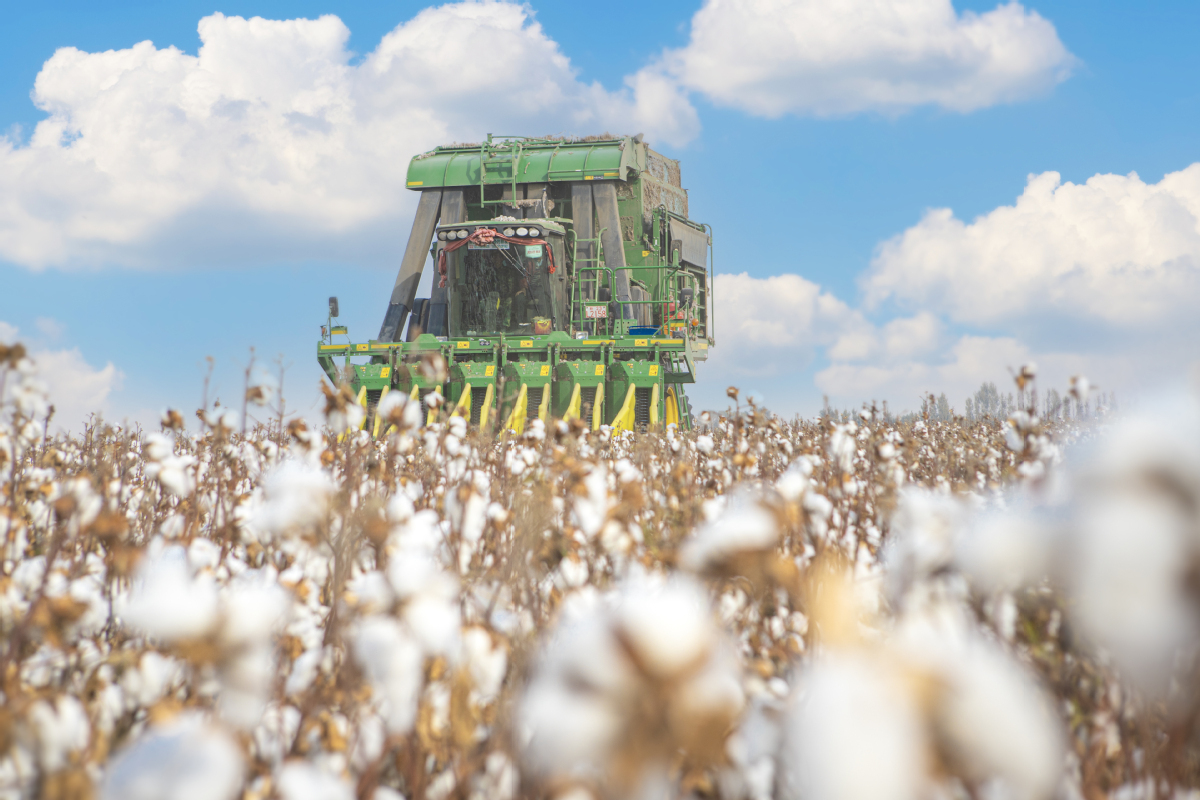
However, if this legislation is somehow implemented, it would be disastrous. It is, first of all, impossible to enforce since global supply chains are so deeply interconnected with Xinjiang, which produces a vast majority of China's cotton and textile products. This means that it has the potential to exacerbate an already worrisome global supply chain issue and hike inflation even more.
Second, it would only hurt the people it is supposedly designed to protect by making Xinjiang, and thus its workers and companies, unable to do business with the rest of the world or, at the minimum, a less attractive partner because of the presumption of guilt placed on it by US customs.
Given the fact that Xinjiang's economic boom has been a major driver of de-radicalization, it's not hard to see why this is probably the actual intended effect of this legislation since US government policy has been continually oriented toward destabilizing China and interfering in its internal affairs.
However, this legislation is so transparently faulty, unconstitutional and burdensome for major US companies that there's almost no way it would survive a challenge in federal court.
Bradley Blankenship is a Prague-based American journalist, columnist and political commentator.
The opinions expressed here are those of the writer and do not represent the views of China Daily and China Daily website.
If you have a specific expertise and would like to contribute to China Daily, please contact us at opinion@chinadaily.com.cn , and comment@chinadaily.com.cn