



Right way to realize carbon goals







The just concluded Central Economic Work Conference highlighted the importance of China's two carbon goals-realizing peak carbon emissions before 2030 and achieving carbon neutrality before 2060-not only for the country but also for the global fight against climate change, one of the world's most prominent global challenges. China, as a country with international responsibility, has long proved to be one that can seize opportunities from challenges. By following a low-carbon development path, China will both be a beneficiary and contributor. For one thing, the double carbon goals fit well with China's inner drive to promote the much-needed shift from quantitative growth to qualitative upgrading; for another, the net-zero carbon strategy aligns with China's aspiration to push forward the building of a community of shared future for mankind and to make unremitting efforts for the creation of a green, inclusive, balanced and sustainable future for the whole of humanity. But, as the Central Economic Work Conference said, China will not attempt to achieve its carbon emissions and carbon neutrality goals "in one battle". Although China is determined to drastically reduce its carbon emissions as it promotes higher-quality economic development, a safe and reliable supply of new energy is a precondition for the country to gradually replace the use of traditional energy.
Since China is one of the biggest carbon emitters, its commitment to achieve carbon neutrality will also greatly reduce global carbon emissions. And since China is also the largest developing country, by committing to achieve the double carbon goals, it has set a very good example to the world that it is feasible to strike the right balance among economic development, social development, and environmental protection, which will in turn lead to profound and all-rounded long-term benefits.
China's commitment will also encourage other countries to follow the path of green development. Many people view China's pledge to realize carbon neutrality as a "game-changer" for the global fight against climate change, which could prompt other countries to take more ambitious climate actions.
There have long been debates on whether a developing country can afford to adopt a balanced, inclusive and green development path. China's low-carbon development model actually offers the world Chinese wisdom and experiences that can facilitate the transition from a brown economy to a green economy.
But to achieve carbon neutrality, China will need to make much more efforts and invest more funds to turn the promise into reality. China's zero-carbon strategy should be accompanied by a holistic approach to fighting climate change, which will use both market and non-market mechanisms and require broad economic and social transformations.
With the passing of the 2015 environmental law and the inclusion of the principle of green economy into such fundamental laws as the Civil Code, China has paved the legal path for building a green economy. With more upcoming legislation efforts to safeguard low-carbon mechanisms, such as drafting a law on the national carbon trading system, a systematic and solid low-carbon-development-enabling legal environment is being built.
In terms of market mechanism, China has established a national carbon trading system, promoting voluntary carbon emissions credit trading among domestic entities. Thanks to the Paris climate accord, China's carbon trading market could be linked with similar markets overseas in the future, which will help promote international cooperation on carbon financing to mitigate the effects of climate change.
China has also introduced a series of green financing policies and tools to strengthen green industry. The authorities have asked banks to align their lending with the "double carbon" goals and urged asset managers to decarbonize their asset portfolios. Specific carbon finance vehicles have also been developed to facilitate the green upgrading of the financial system with the aim of increasing investment in green industries. It is worth mentioning that green principles have not only been adopted in domestic investment decisions but also been applied to China's foreign direct investment projects. In other words, China advocates a green Belt and Road Initiative, as exemplified in China's decision to end financial support for coal-fired power plants overseas.
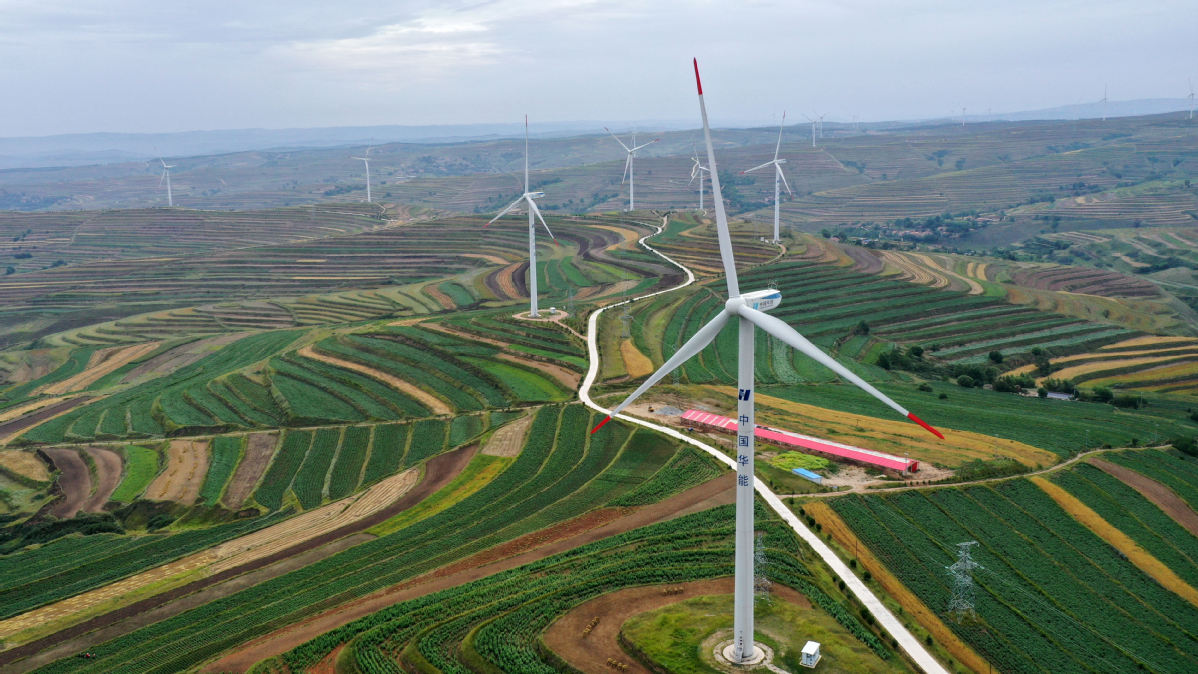
To ensure China realizes the net-zero carbon pledge, urgent reforms must be carried out to optimize the energy structure-and build a low-carbon, clean and efficient energy system by reducing the use of fossil fuels, taking robust renewable energy substitution actions, boosting the development of clean energy such as hydro and solar energy, making energy utilization more efficient, advocating carbon capture technology, and promoting electric vehicle and wind turbine production.
China needs to keep the carbon neutrality target in mind while taking all economic, social and fiscal decisions, and ensure decarbonization efforts are made from the central to local level. In fact, various ministries have issued key policies aimed at strengthening the campaign to achieve carbon neutrality, and quite a few local governments have incorporated emissions reduction targets in their local five-year plans, demonstrating their determination to realize the net-zero carbon target.
Against China's current paradigm of dual circulation, strenuous efforts are also needed to raise the social awareness of adopting a green life and working style. Public education of green production, green consumption and green transportation need to be strengthened and incentivized measures should be taken to encourage people to voluntarily follow a low-carbon lifestyle.
Carbon neutrality could be viewed as both a challenge and an opportunity for China. In fact, the concept fits well with China's goal of building a higher-quality economic development model. And by doing so, China will not only bring about the much-needed green economic and social transformation for the country but also will place itself in the fast lane for global competition in terms of the development of green technology and low-carbon industries.
China's green development path will help it position itself as a leading manufacturer of clean technologies and products, from solar photovoltaic panels to electric cars, and meet the rising global demand for such technologies and products. It will help China to gain a competitive advantage in the future global economy featuring low-carbon, high-tech and information technologies.
China's pledge to realize carbon neutrality before 2060 also means that it will take the least time-compared with other countries-to realize the goal but, at the same time, it will enable China to achieve the right balance between socioeconomic development and environmental protection, which is also in line with the UN 2030 Agenda for Sustainable Development.
In the long run, history will prove that China has chosen the right path to build a prosperous, green and harmonious future.

The views don't necessarily reflect those of China Daily.
The author is an associate research fellow at the Institute of International Law, Chinese Academy of Social Sciences.
If you have a specific expertise, or would like to share your thought about our stories, then send us your writings at opinion@chinadaily.com.cn, and comment@chinadaily.com.cn.





