



Toward a better future -- Xi Jinping and the evolving 143rd WTO member







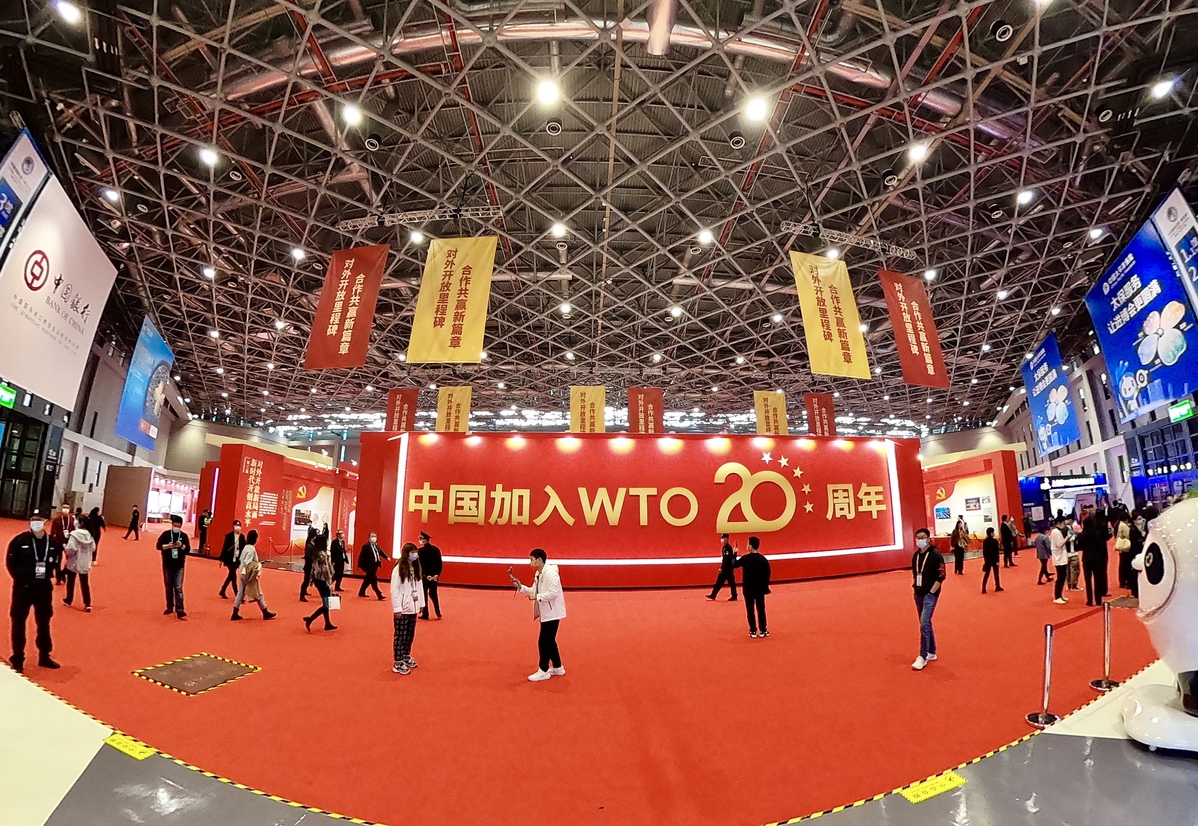
BEIJING -- After rounds of intense and protracted negotiations, the rap of a gavel at the Doha conference of the World Trade Organization (WTO) declared China the 143rd member of the trade body. This iconic moment took place on Nov 10, 2001.
Today, China stands as the largest trader in goods and the second-largest importer worldwide, with the WTO entry having significantly reshaped its economic landscape, and more importantly, having set a milestone of economic globalization.
The past two decades, as President Xi Jinping has concluded, have seen the country make continued efforts in widening its opening-up push, efforts that have elevated China's development to a new stage and injected fresh impetus into the global economy.
Xi, leader of the world's second-largest economy, has stressed that the world must bolster economic globalization and opening up as they are vital to "taking humanity to a better future."
OPENING-UP HALLMARK
The president has on many occasions accentuated China's desire to open the door of its market wider to share opportunities with all nations, and that the country remains a champion for multilateralism.
While the world recovers from a pandemic of unprecedented magnitude and globalization faces protectionist headwinds, Xi has announced China's latest opening-up pledges.
"Opening up is the hallmark of contemporary China," Xi told the world at the fourth China International Import Expo (CIIE) in November. He stressed that China, with its enormous middle-income population, will share market opportunities with the world via measures such as opening more demonstration zones for the creative promotion of import trade and promoting Silk Road e-commerce.
He proclaimed that in the near future, the country will further shorten the negative list for foreign investment, and expand the openness of telecommunication, healthcare and other services.
With the opening-up philosophy engraved into China's path of development, similar measures have been launched intensively throughout this year.
Earlier in September, for instance, the country announced new steps to open up its services sector, which include implementing a negative list for cross-border services trade and exploring the development of national demonstration zones for the innovative development of trade in services, among other measures.
Thanks to its opening-up policy and economic resilience, China has become a stable destination for global investors, even as the COVID-19 pandemic wreaks havoc across the globe. According to a survey released by the European Union Chamber of Commerce in China in June, 75 percent of respondents said they had seen either steady or increased revenue in 2020 compared with the previous year, with consistent profitability.
The resilience of the Chinese market provided "much-needed shelter" for European companies amid the storm of the pandemic last year, the survey noted.
Bullish sentiment can also be found on the US side. Nearly two-thirds of the member companies surveyed said they would increase investment in China this year, according to an earlier survey by the American Chamber of Commerce in China.
SEA CHANGE
In the early years after China's WTO entry, however, market expectations were far from rosy. Some overseas observers were keen on hyping up a coming "China collapse," betting on the new member's economic fragility under the impact of the global trading system and its inability to quickly adapt to international practices.
Terrified by the upcoming fiercer competition from their overseas peers, local industries, automobiles and textiles in particular, were caught in a panic. Foreign competitors were seen as "the coming wolves," a phrase from an eponymous Chinese folk tale warning of an ill omen.
Nevertheless, a brand new era has dawned. After the WTO entry, what ensued were a systemic reform of China's economic governance, massive institutional improvements and greater openness.
The central government, for instance, has reviewed and revised over 2,300 laws and regulations since its WTO entry, and local governments over 190,000 laws and regulations. These revisions involve multiple areas, including trade, investment and intellectual property rights protection.
"China is a firm believer in honoring its words with actions," said President Xi at this year's CIIE, listing facts and figures which demonstrate that China is a a faithful keeper of promises.
One of the most convincing examples is the country's overall tariff rate, which has been cut from 15.3 percent to 7.4 percent, lower than its 9.8 percent accession commitment.
China has built 21 pilot free trade zones, which represent the new high ground for opening up, and has further shortened its negative list for foreign businesses.
The foreign direct investment (FDI) into the Chinese mainland, in actual use, is expected to surpass 1 trillion yuan, or 157.49 billion U.S. dollars, in 2021. The FDI inflow totaled 999.98 billion yuan in 2020, skyrocketing 157.7 percent from the 388 billion yuan registered in 2001, according to the Ministry of Commerce.
Today in China, gone is the WTO phobia, as the passion for opening up still runs high. In the global arena, China has turned out to be a staunch advocator of the WTO reform, pioneering globalization among all the 164 members of the trade body, and championing real multilateralism.
In this regard, President Xi has emphasized that China will firmly safeguard true multilateralism, and the multilateral trading regime with the WTO at its core is the cornerstone of international trade.
"We support the WTO reform in moving in the right direction, and support the inclusive development of the multilateral trading regime, as well as the legitimate rights and interests of the developing members," he added.
Amid rising protectionism worldwide, China has also emerged as a determined force against fence-building, supporting regional mechanisms to play a bigger role in safeguarding free trade and opening up.
After officially applying to join the Comprehensive and Progressive Agreement for Trans-Pacific Partnership in October, China has vowed more efforts to expand market access.
The Regional Comprehensive Economic Partnership (RCEP) agreement, which will take effect on Jan 1, 2022, is the world's largest free trade agreement, covering about 30 percent of the world's population. China, a member of the RCEP, has stated its readiness to further boost economic integration and recovery in the region through mutually beneficial cooperation with ASEAN on many occasions.
The world has seen a China miles apart from what it used to be just 20 years ago, and its stunning growth delivers dividends to all. As the largest trading partner of over 50 nations and regions, the country contributes nearly 30 percent of global economic growth annually. It also houses more than 1 million foreign-invested companies.
Yet for all this change, there are still time-tested values that China will continue to cherish, values that President Xi has made clear for all to see.
"We will not change our resolve to open wider at a high standard; we will not change our determination to share development opportunities with the rest of the world; and we will not change our commitment to an economic globalization that is more open, inclusive, balanced and beneficial for all," he said.


- Investigation uncovers mismanagement of donated artifacts
- Gold mine accident kills 7 in East China
- Defense minister greets foreign military envoys at Chinese New Year event
- Judicial efforts lead to decline in China's pollution cases
- SPP steps up food and drug safety oversight
- Visually impaired student's rail journey goes viral












