



One Uygur family, four generations of growth







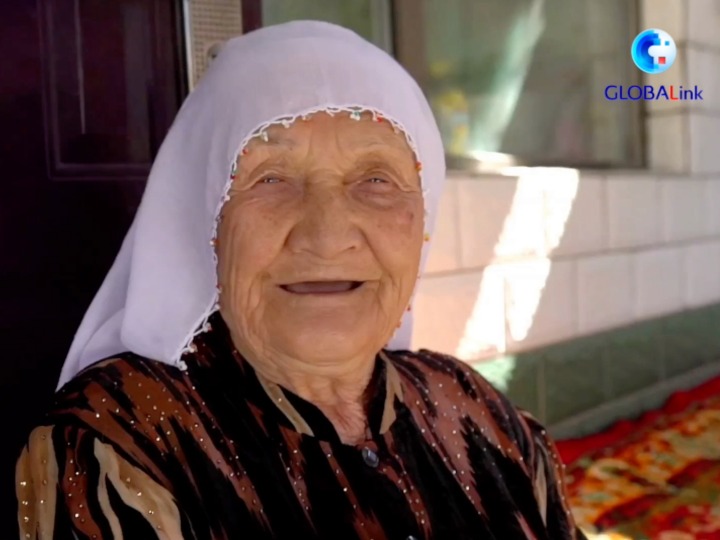
URUMQI -- A sudden early-winter cold wave sent 100-year-old Rebihan Mamat to a hospital 10 minutes' drive from her home in Northwest China's Xinjiang Uygur autonomous region.
Thanks to the timely hospitalization, the Uygur centenarian soon recovered from her cardiovascular problem. Rural healthcare covered 80 percent of her medical bill totaling about 10,000 yuan (about $1,570).
Rebihan Mamat is from a four-generation family in Midong district in the regional capital Urumqi.
With the region's constantly improving well-being package, including healthcare and education, the family has lived a better-than-ever life "as beautiful as flowers," as she described.
FLOURISHING FAMILY TREE
Born into a farmer's family in Xinhe county about 700 km from Urumqi, Rebihan Mamat once suffered from a food shortage.
"All we had was corn flour," the woman recalled, adding that her parents went through a lot of hardships to raise her and her four siblings.
In 1941, she married a farmer in the rural area of Urumqi. Due to the poor medical conditions back then, she lost her first three children when they were very young.
"We had no hospitals for child delivery at that time. My first baby died soon after being born at home," she recalled.
Before the founding of the People's Republic of China on Oct 1, 1949, Xinjiang had only 54 medical institutions with 696 beds, noted a white paper released by the State Council Information Office in September. The infant mortality rate surpassed 400 per 1,000 in 1949, the white paper said.
After the founding of New China, the government made massive efforts to improve medical and health services in urban and rural areas. The level of health protection for people of all ethnic groups, including maternal health, substantially improved.
Rebihan Mamat was then determined to have another child, giving birth to a girl in 1964 at 43 years of age. She adored the girl, Tunisa Sawut, very much.
"My mother spoiled me, saving all the yummy food for me. Even now, she tries to do some housework for me," said Tunisa Sawut, now 57.
Hu Zhichun, a senior official with the health commission of Xinjiang, said Xinjiang has built a grassroots medical and health service network covering urban and rural areas. Basic public health services are provided free of charge, covering virtually the entire life course of residents.
The average life expectancy rose from less than 30 in 1949 to 74.7 in 2019 in the region, she added.
After China's reform and opening-up drive in 1978, Xinjiang's population continued to grow steadily. According to national census data, the region had 13.08 million people in 1982, and the region's population surged to 18.46 million in 2000.
Mirabanguli Wupree, the chief physician of Urumqi Maternal and Child Health Hospital, has witnessed the birth of thousands of babies from different ethnic groups in Urumqi.
She said they now have advanced medical equipment and work procedures to help pregnant women.
"Many critically ill pregnant women are assigned to a green channel, allowing them to get treated before paying," she said.
Tunisa Sawut gave birth to three sons during the period.
Her eldest son, Abdukadir Mamat, sells cars after graduating from a vocational school.
"My grandmother often tells us about her hardships when she was young, with no decent food and clothes. Now, I often drive her to tour around, and she is as happy as a child," said Abdukadir Mamat.
The extended family, including brothers and sisters of Rebihan Mamat, has 65 members now.
According to a family planning guideline released by the region in 1992, Han couples in urban areas can have one child and those in rural areas can have two children; ethnic minority couples can have two children in urban areas and three in rural areas.
As China announced a three-child policy in late May this year, the population in Xinjiang is likely to rise more, Hu said.
GROWING PROSPERITY
From 1978 to 2020, the per capita disposable income of urban residents surged from 319 yuan to 34,838 yuan, and the per capita disposable income of rural residents increased from 119 yuan to 14,056 yuan in Xinjiang. The region has achieved a historic transformation from absolute poverty to a moderately prosperous society in all respects, along with the rest of the country.
Abdukadir Mamat now is a father of three children. His son is in junior high school, and his elder daughter is a second-grader. His little daughter is three years old.
The Uygur population increased by a compound annual growth rate of 1.67 percent during the first two decades of the 21st century. It was much higher than the country's ethnic minority population, which stood at 0.83 percent. In 2020, the Uygur population reached 11.62 million.
Tunisa Sawut's two younger sons are in senior high school and vocational school, respectively.
"My mother never had a chance to go to school. I dropped out during middle school. I hope my kids can pursue a higher diploma," Tunisa Sawut said, adding that her family has benefited a lot from the country's free compulsory education.
Thanks to the region's urbanization, the family moved into a three-story building with gas-powered floor heating. Rebihan Mamat likes growing flowers in her yard. "My life is as beautiful as flowers," she said.
"I like the evening most when my grandchildren and great-grandchildren are home after work and school. Seeing them playing at the cozy home is the happiest thing for me," she added.


- Gold mine accident kills 7 in East China
- Defense minister greets foreign military envoys at Chinese New Year event
- Judicial efforts lead to decline in China's pollution cases
- SPP steps up food and drug safety oversight
- Visually impaired student's rail journey goes viral
- First nighttime high-speed departs from Guangzhou for Wuhan












