



Springboard breeds world-class ecosystem







Hong Kong becomes Asia's biggest biotech investment hub as emerging biotech companies join sector's global revival trend. Kapila Bandara reports from Hong Kong.
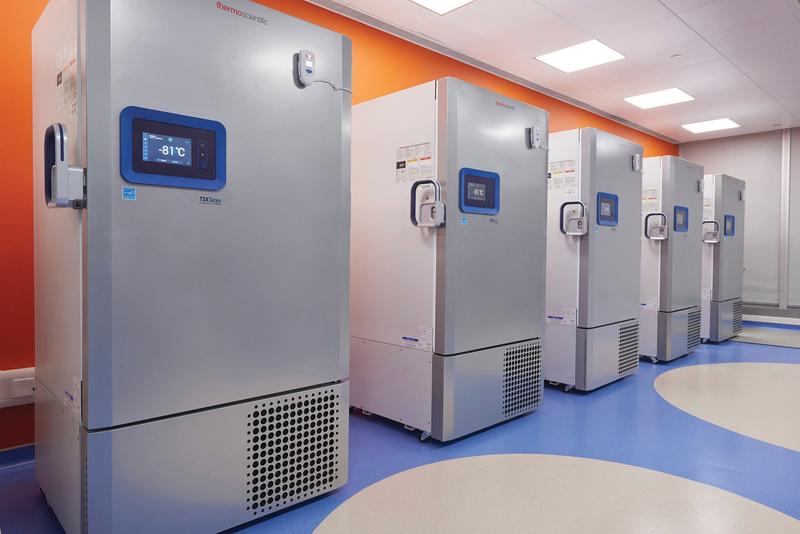
Riding on the rising biotech trend, more than 150 of Hong Kong's biotech startups are awaiting the eureka moment, eyeing the commercial jackpot.
They are being nurtured at the Hong Kong Science Park — the city's flagship technology infrastructure and services provider, at Pak Shek Kok in the New Territories, created to breed the city's scientific and innovative talent of tomorrow.
Among more than 1,000 technology companies being cultivated at the 330,000-square-meter park, a growing number are in the biomedical technology field, with healthcare and life sciences seeing the highest rate of growth so far.
With biotech companies in the United States drawing record capital inflows from 2000 to 2009 following a long slump and setting the stage for a revival, Hong Kong too has risen to the occasion.
More than 250 biotech-related enterprises have sprouted in the city, boosted by the SAR's 2018-19 budget that identified innovation and technology as key areas for future growth.
As of June, 67 new healthcare companies had gone public in the SAR, raising a total of nearly HK$210 billion ($27 billion), according to bourse operator Hong Kong Exchanges and Clearing. They included 33 pre-revenue biotechs which raised $87 billion. In 2020, 23 healthcare companies, including biotechs, were listed, raising $98 billion and turning Hong Kong into Asia's largest biotech investment hub.
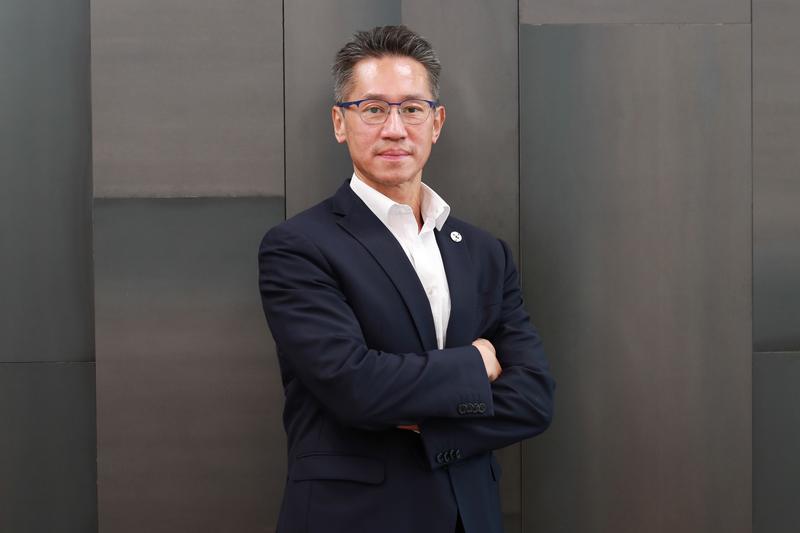
"We offer world-class infrastructure support for biomedical technology startups and companies," said John Kao, head of the Institute for Translational Research at Hong Kong Science and Technology Parks Corp (HKSTPC), which was set up two decades ago to manage the science park.
Infrastructure stepped up
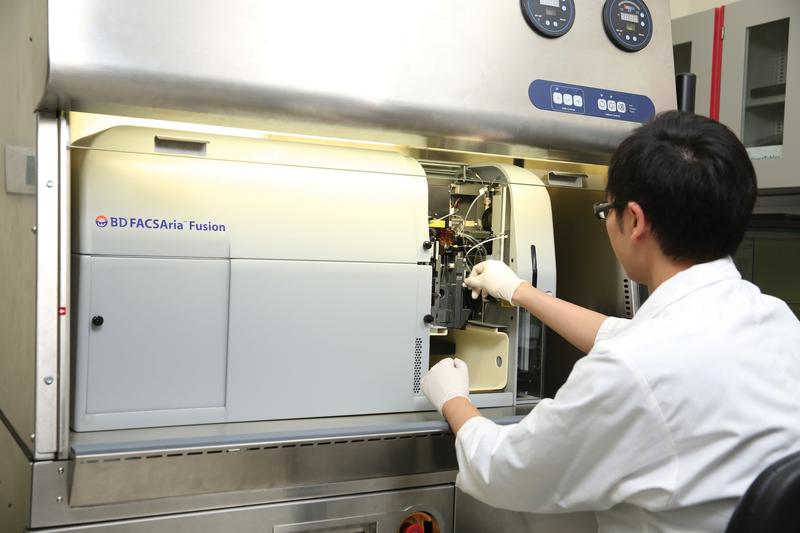
"The Biomedical Technology Support Center, which opened in 2009, is our core facility cluster that reduces startups' financial burdens by offering sophisticated equipment in over 12,000 square feet (1,115 square meters). More than 130 pieces of ready-to-use life sciences and laboratory equipment, such as flow cytometers, bioanalyzsers, micro-injection and fast protein liquid chromatography systems, can be used in research and development," Kao said.
"The central facility also offers quality technical support for research and allows knowledge sharing and networking opportunities to improve research efficiency and foster partnerships."
The new Institute for Translational Research covers all "critical components", and will help to articulate research-based entrepreneurship better to the world, he said.
Among the park's high points were the listings of Sinomab Bioscience in 2019 and Zhaoke Ophthalmology this year on the Stock Exchange of Hong Kong. Both were listed under Chapter 18A regulations for pre-revenue biotechs. Artificial intelligence drug discovery company Insilico Medicine has raised $255 million after a Series C funding round, reinforcing the quality of the park's companies.
Besides the science park, HKSTPC operates three industrial estates in Tai Po, Yuen Long and Tseung Kwan O, as well as InnoCentre in Kowloon Tong. The park has five technology clusters covering information and communications technology; electronics; biomedical technology; material and precision engineering; and green technology.
Funding demonstrates the park's strength as a connector between startups and investors. Public and private capital comes through the HKSTP Venture Fund, which has more than HK$600 million in assets. Every $1 invested is matched by over $10 in private capital. Standout investments include ACT Genomics — an innovation-driven cancer-solution provider in Asia, whose next-generation sequencing technology helps to provide treatment and drugs for cancer. More than HK$40 billion has been raised by companies incubated at the park including biomedical technology firms, in the past four years.
Early next year, a drug safety testing center will help promising the rapeutics and medical devices to get from the pre-clinical phase to the clinical stage, Kao said. The center will adhere to the highest international and industry standards, and will be the first of its kind in Hong Kong. It will offer preclinical services compliant with good laboratory practice principles in areas like toxicology, safety pharmacology and reproductive toxicology.
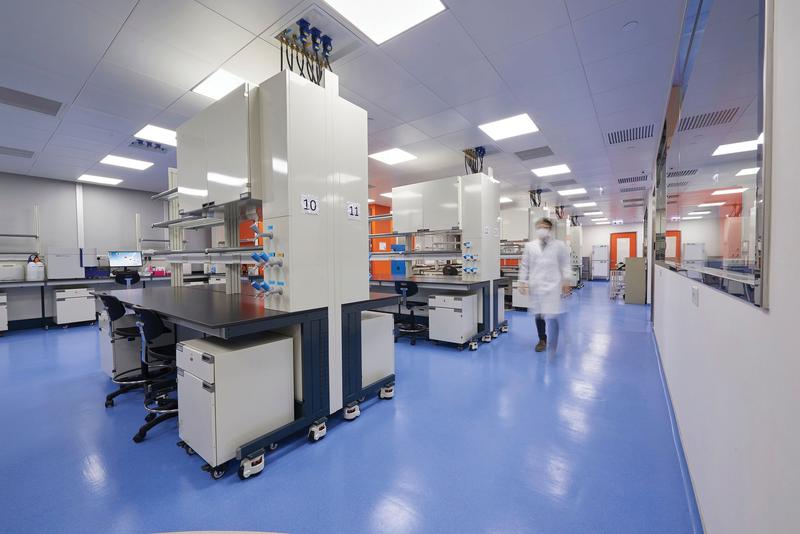
Biotech companies also benefit from the Biobank and the Biomedical Informatics Platform.
Biobank, set up under global guidelines, is a central repository which processes, securely stores and distributes biospecimens for research to foster innovative discoveries and improve treatment options. "It's run by experienced practitioners, including registered medical laboratory technologists, making it well positioned to facilitate cross-border transfers of biosamples in future," Kao said.
The Biomedical Informatics Platform is cloud-based. It's for exchanging data and research collaboration between the industry and academia. The platform makes it possible to visualize, explore and analyze data without downloading datasets, and provides secure cloud data storage and scalable computing resources for biomedical analysis, Kao said. Currently, there are 63 projects on the platform.
Infrastructure is also being stepped up for the thriving I&T sector. Encouraged by the central government's support and the success of InnoHK research clusters, Chief Executive Carrie Lam Cheng Yuet-ngor proposed in her latest policy address the creation of an InnoLife Healthtech Hub at the Hong Kong-Shenzhen Innovation and Technology Park (HSITP) to build on the life and health sciences strengths. She also pitched a "technopole" at Sha Tin, a high-tech cluster that will focus on technological innovation.
At an Oct 11 event in Sha Tin to outline HKSTP's 20th-anniversary year initiatives, Kao said he was "personally happy" and encouraged with the ambitious Policy Address proposals related to the science park that were outlined on Oct 6.
Kao said the HSITP offers four times as much land area as Hong Kong Science Park, excellent manufacturing capabilities, and access to top talent in Hong Kong and other cities in Guangdong-Hong Kong-Macao Greater Bay Area.
HKSTP and the Shenzhen-Hong Kong Science and Technology Innovation Cooperation Zone Development Co recently signed an agreement to develop a Shenzhen branch of Hong Kong Science Park to boost I&T development in the Greater Bay Area.
Distinct advantages built
The partnership will maximize the distinct advantages of the two cities within the zone, establishing "one zone and two parks" to bolster I&T in the region.
The zone will include the Hong Kong-Shenzhen Innovation and Technology Park now being built, and the Shenzhen Innovation and Technology Zone, in which the Hong Kong Science Park Shenzhen branch will be located.
At the science park, there are also other value-added services for biotechs, including "Incu-Bio" — a four-year program that helps startups launch and commercialize research and development. Those eligible can have access to co-working labs and spaces, and technology and business support. They could access up to HK$6 million — a HK$4 million subsidy and upfront grant — and HK$2 million for regulatory activities such as clinical trials.
Molding biomedical companies from the pre-clinical to clinical stage is a big step in terms of lowering risks and increasing market valuation and public benefits. Once a company has completed the first phase of clinical trials, they are primed for listing via Chapter 18A.
HKSTP's "clinical translational catalyst" provides a platform for biomedical companies to conduct translational research (disease-targeted research, a concept that gained traction in the 2000s) from "bench to bedside" and strengthen Hong Kong and the Greater Bay Area's position as the "go-to" destination for translational medicine.
"We are gaining momentum in making Hong Kong a world-class R&D hub. The government-led InnoHK research clusters, focusing on two major areas — healthcare technologies, as well as AI and robotics — have established the first batch of about 20 R&D centers at Hong Kong Science Park," Kao said.
The regulatory framework to support the biomedical industry and to ensure treatment safety was also strengthened. Regulations for advanced therapy products (innovative pharmaceutical products based on genes, cells and tissues for human use) came into effect in August. The laws cover gene therapy products, somatic cell therapy products and tissue-engineered products. These products hold promise in treating genetic, hereditary, incurable and rare diseases.
The city's medical and healthcare industry — made up of medical and healthcare equipment and devices, as well as the biotechnology, medical and healthcare services sectors — is a multibillion-dollar export business, with products shipped largely to the Chinese mainland, the European Union and the United States.
Hong Kong, Shenzhen and Guangzhou were ranked as the world's second-largest science and technology cluster by the Global Innovation Index 2020, ahead of Seoul, Beijing and San Jose-San Francisco, based on patents and scientific publications. Tokyo-Yokohama was the top performing cluster. In the same index, compiled by the World Intellectual Property Organization, Hong Kong ranked 11th in technology infrastructure among 131 economies.


- Labubu lights up Shanghai lantern show
- Cherry blossom festival in Yongfu town celebrates agricultural innovation and cultural exchange
- China's first domestically built cruise ship welcomes its 1 millionth guest
- The Devil Still Dances: High Vigilance against Japanese Militarism's Infiltration in Sports and Culture Fields
- 189 historical artifacts of Japanese invasion donated to museum in NE China
- Death toll rises to 8 in North China factory explosion












